





The war in Iran has become the third major economic crisis in the last 20 years, with fuel prices jumping and inflation once again starting to pick up. Australians are feeling worsening economic pain.
While the government has offered some relief on fuel prices, and ensured the immediate supply of Australia’s fuel shipments, there remains massive uncertainty about the future.
Amid the crisis the government is preparing for the May 12 budget, and is forecasting ambitious reform.
To discuss how the Australian economy is faring and its prospects, we’re joined by independent economist Chris Richardson.
On what the Reserve Bank might do, given rising inflation, at its May 4-5 meeting, Richardson says that will depend how bad it sees the crisis getting,
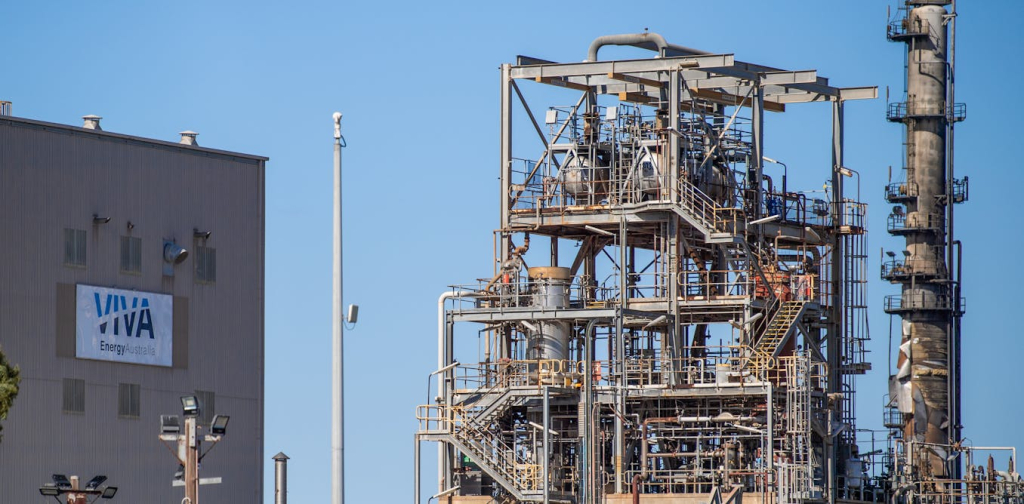
This refinery fire [at a Corio refinery] we’ve just had might actually be the thing that stops the Reserve Bank from raising rates.
If it’s really quite worried that it’s losing the trust of families and businesses, it will raise rates. If it started to be really quite worried that the pain in Australia’s economy could be notable, then – not immediately, but a little down the track – they could even be cutting rates.
While Richardson and other forecasters are predicting an economic slowdown and not a recession, he says risks are high.
It is a much bigger risk than it’s been for some time, and again we hit recession off the back of two potential things. One is actually running out of fuel and some industries are incredibly dependent on that. [Two] is through fear, if you like. The key measures of consumer confidence, how families are feeling, they are at truly terrible levels. Families are really, really worried about this and if they take those worries and decide to cut back on their spending, you could see that show up as a notable slowdown in the Australian economy.
Now, for what it’s worth, most forecasters, including myself, only have a fairly modest slowdown in the world [and] the Australian economies off the back of this so far.
On whether the government should be looking to tax gas exports more, given the increased price for Australia’s LNG, Richardson says reforms to the Petroleum Resource Rent Tax (PRRT) are needed but he’s opposed to an export tax.
[The PRRT] is something we’ve needed to change for decades. […] We just don’t earn enough by way of tax and we won’t by way of tax on this key national resource. So it has to change. I would much, much prefer that they fix the tax that we have.
The more likely thing, if it happens, is some sort of an export tax. I’d prefer my solution because you don’t add to prices on world markets at a tricky time. You simply change which shares of the pie go to the big companies that get out our gas and sell it to the world and the share that goes to taxpayers. I really don’t love the idea of the export tax. Think of Donald Trump’s tariffs.
On what more the government could be doing, Richardson says it should be bringing more fuel into Australia and should be looking at rationing.
So the major thing that the government can do for Australia right now is to get fuel to Australia in the first place. It is the, if you think back to COVID, it’s the essential equivalent of getting us vaccinated. The more fuel we get into Australia, then the greater the chance that we get through this with pretty modest damage.
The other thing the government can do and may have to do is be a bit more active around rationing one way or another. And again, it’s been very wary of that. The politics of that are tricky.
















Comments are closed.