


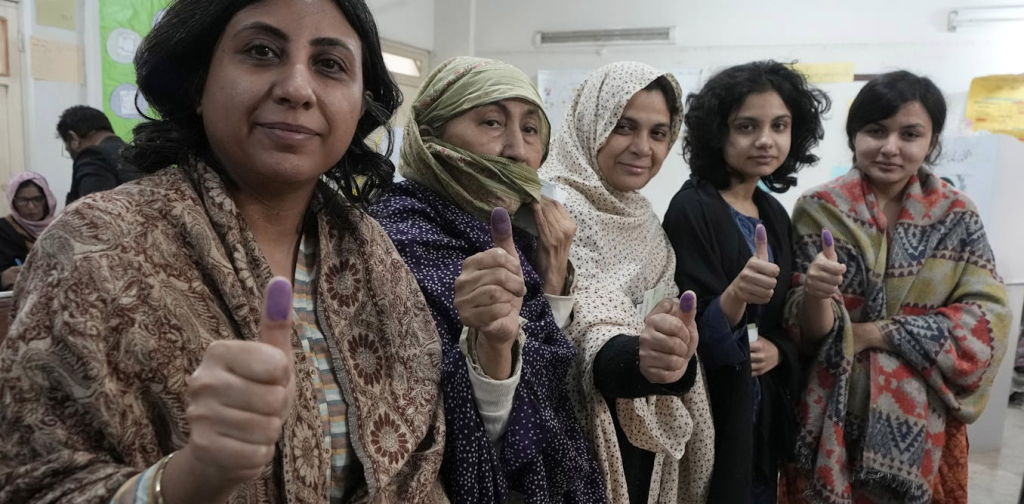

Pakistan has made measurable progress in reducing the gender gap in voter registration. More women are now listed on electoral rolls than ever before.
Yet this administrative success masks a troubling democratic reality: while the number of registered women voters increased significantly before the 2024 general elections, overall voter turnout declined from 52.1 per cent in 2018 to 47.6 per cent in 2024.


The contradiction raises an important democratic question: why are more women registering to vote while fewer citizens, including many women, are turning out on election day?
According to the Election Commission of Pakistan (ECP), Pakistan’s electoral rolls for the 2024 general elections included approximately 128.6 million registered voters.
Of these, around 69.3 million were men and 59.3 million were women. In comparison, about 105.9 million voters registered for the 2018 general elections, including nearly 46.7 million women voters. This means that between 2018 and 2024, the number of registered women voters increased by more than 12 million.
Turnout drops
These figures reflect substantial administrative progress.
Over the past several years, the ECP and the National Database and Registration Authority (NADRA) intensified efforts to reduce Pakistan’s gender gap in voter registration through mobile registration campaigns, drives to provide them with national identity cards and awareness initiatives targeting women, particularly in rural and under-served areas.
Historically, many Pakistani women were excluded from electoral rolls simply because they lacked ID.
Nonetheless, voter registration and voter participation are not the same thing. While millions more women were added to electoral rolls, Pakistan experienced a notable decline in turnout during the 2024 elections as national turnout dropped significantly compared to 2018.
The decline suggests that formal inclusion through registration did not automatically translate into active electoral participation. Why? The explanation lies in the difference between legal access and political agency.
Social barriers
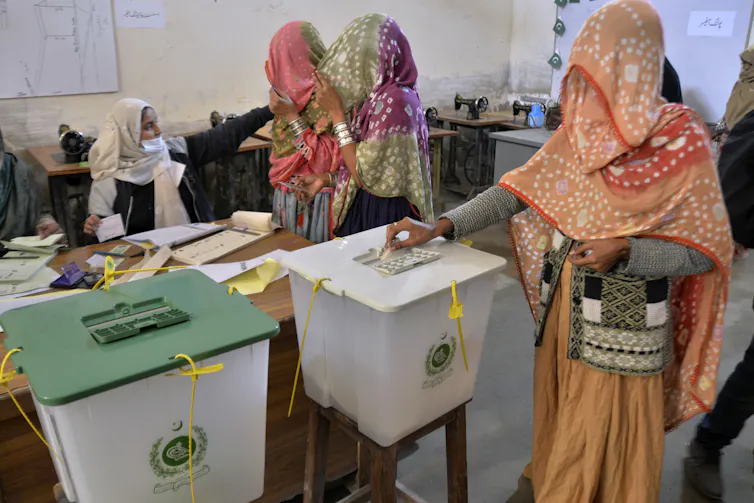
Voting is not merely an administrative act. It’s also shaped by social norms, family structures, economic conditions and political trust. In Pakistan, many women continue to face structural barriers that limit their ability to cast ballots even after they become registered voters.
One major factor is patriarchal gate-keeping.
In many parts of Pakistan, women’s mobility and public participation remain influenced by male family members or local community dynamics. Research on electoral participation in Pakistan has consistently shown that household decision-making strongly affects women’s turnout.
In some communities, women require permission, accompaniment or logistical support from male relatives to travel to polling stations. Even where women are officially registered, these social barriers can prevent them from voting.
The problem is particularly acute in rural and conservative regions, where informal restrictions on women’s political participation sometimes persist despite legal protections.
In previous elections, reports emerged from certain constituencies that local agreements among political officials discouraged or blocked women from voting altogether.
Other factors affecting turnout
Pakistan’s electoral laws already recognize that women’s exclusion from voting is a serious democratic problem. Under provisions of the 2017 Elections Act, the ECP has the authority to declare polling or even an entire election in a constituency void if women are prevented from voting.
The ECP exercised this authority following the 2018 general elections, when it annulled the results in Shangla and North Waziristan due to female voter turnout falling below the legal threshold and ordered fresh polls.
The political environment surrounding the 2024 elections also contributed to declining turnout. Pakistan entered the election period amid economic instability, inflation, political polarization and institutional tensions. Such conditions often reduce public confidence in electoral politics. When voters feel disillusioned or uncertain about whether elections will produce meaningful change, participation tends to decline.
This creates an important democratic paradox. Pakistan has become more successful at documenting women as citizens, but less effective at ensuring their meaningful political participation.
The distinction matters because democracy cannot be measured solely by the size of electoral rolls. Expanding voter registration is an important achievement, but democratic inclusion requires more than adding names to a database.
Overcoming entrenched inequality
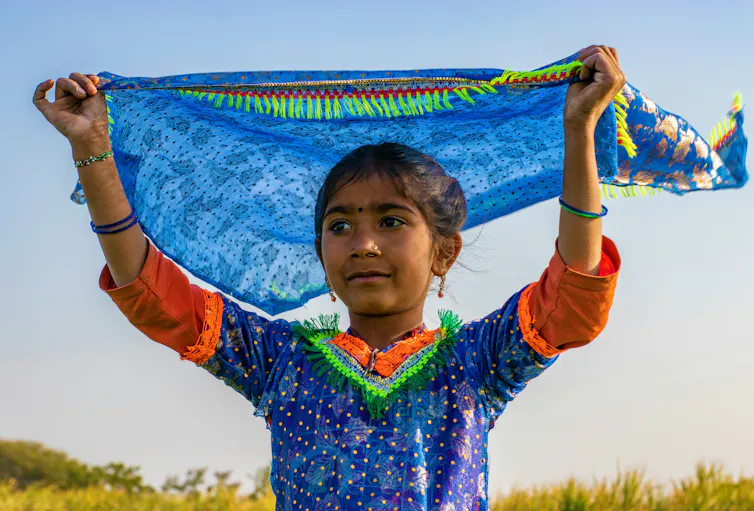
A woman may possess an identity card, appear on electoral rolls and still face obstacles on election day. She may lack transportation to polling stations. She may face family pressure discouraging political participation. She may not trust political institutions or feel represented by existing political parties.
Registration gives formal access to democracy; turnout reflects whether citizens are actually empowered to participate in it.
Pakistan’s experience offers a broader lesson for democracies worldwide. Administrative reforms can improve electoral inclusion, but they cannot alone overcome entrenched social inequalities.
The country’s next democratic challenge is therefore not only registering more women voters, but ensuring that women are able — and motivated — to cast ballots. This requires stronger voter education campaigns, safer polling environments, transportation support, greater political outreach to women and stricter enforcement against practices that suppress women’s participation.
Until the gap between registration and turnout is addressed, the promise of equal democratic representation will remain only partially fulfilled.








Comments are closed.