


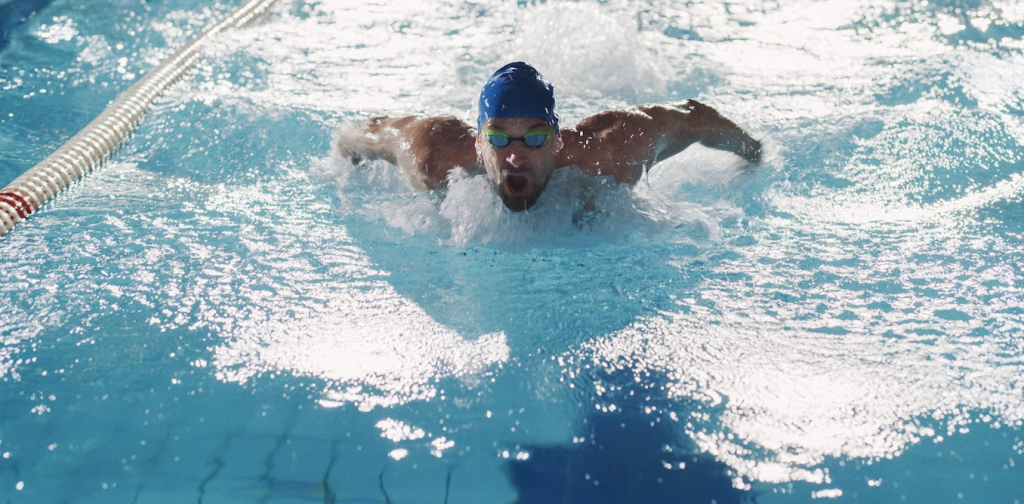

Las Vegas has always had a reputation for doing things bigger, louder and glitzier than everyone else. On Sunday, May 24 2026 it continues that tradition when the inaugural Enhanced Games take place at a purpose-built entertainment centre at Resorts World, a giant hotel complex on the city’s famous strip.
A one-day sports competition showcasing just three disciplines, the Enhanced Games openly embrace the use of legal performance-enhancing drugs (PEDs) and technological advances that maximise human potential.



Conceived by London-based entrepreneur Aron D’Souza and backed financially by billionaires Peter Thiel, Christian Angermayer and Donald Trump junior, the one-day extravaganza will see 42 athletes competing in swimming, track athletics and weightlifting.

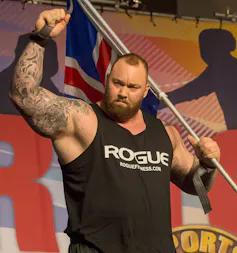
With substantial appearance fees and an unprecedented US$25 million (£18.6 million) in prize money – including US$1 million bonuses for breaking world records – the lucrative payouts have attracted some big names. These include Olympic medallists Cody Miller and Ben Proud for swimming; Olympic medallist Fred Kerley for track; and record-breaking weightlifter Thor Björnsson.
The Enhanced Games has drawn widespread criticism from international and Olympic sport. The World Anti-Doping Agency (Wada) has labelled them a “dangerous and irresponsible concept”, threatening to test athletes involved to “protect the integrity of legitimate sport” – despite the majority being retired from traditional sport. Wada also urged US authorities to shut down the games – which evidently didn’t happen.
The International Olympic Committee (IOC) also issued a formal statement calling the games “utterly irresponsible and immoral … a betrayal of everything we stand for”. Travis Tygart, CEO of the US Anti-Doping Agency dismissed the Enhanced Games as “a dangerous clown show”.
In response, D’Souza argues that Wada is hypocritical and points to Olympic corruption scandals, claiming the Olympics are no longer fit for purpose. Other supporters have also promoted the idea of self-determination, and the need to break free of the IOC’s rules and regulations.
As sport researchers, we might be tempted to dismiss the event as a publicity stunt. However, based on our ongoing research into Olympic swimmers and coaches’ perceptions of the Enhanced Games (we have spoken to more than 20 so far), we believe the event is symptomatic of bigger issues. It represents a critical inflection point, and a unique opportunity to reflect upon the current shortcomings of traditional sport.
Sport’s ideological war
Deeply entrenched battlelines have been drawn on both sides of this complex debate. Recent events, such as Enhanced Games swimmer Kristian Gkolomeev breaking the former 50m freestyle world record, the games’ filing of an US$800 million anti-trust lawsuit against Wada, World Aquatics and US Swimming, and the Enhanced Group’s recent floating on the New York Stock Exchange are telling. They all appear to be the first shots fired in a potentially long and protracted ideological war over the future of sport.
Proponents argue that permitting PEDs such as testosterone, anabolic steroids, growth hormones, peptide hormones and stimulants could potentially unlock unprecedented human potential, allowing athletes to transcend current biological limits. Here, the Enhanced Games and the Olympic Games share a common goal of maximising human potential; the difference lies in precisely how it should be achieved and the transparency surrounding those methods.
Supporters of the Enhanced Games also argue that a regulated approach to using PEDs under strict medical supervision is safer for athletes, transforming what is currently an illicit, underground practice into a controlled medical environment, akin to legalising substances like cannabis.
Conversely, defenders of traditional sport argue that this approach contradicts the fundamental integrity of sport. They assert that Olympism is based on natural talent, dedication and rigorous training, free from artificial advantages. Concerns have also been raised about the long-term health consequences for athletes who use PEDs, and the negative role modelling for young athletes who may see drug use as a shortcut to success.
Threat or revolution for sport?
Another critical battleline relates to whether the Enhanced Games exacerbate or alleviate existing issues of integrity within traditional Olympic sport. Proponents of the Enhanced Games – including many of the Olympians that we interviewed – argue that the current system is fundamentally flawed.
These athletes cite what they see as the rampant and pervasive use of PEDs (meaning it’s an open-secret), the misuse of therapeutic use exemptions, the ineffectiveness and erosion of trust in anti-doping authorities, and the need to better compensate athletes for their contribution to sport.
Many people within traditional sport view the Enhanced Games as a profound existential threat to the moral legitimacy of Olympism. However, far from being a circus sideshow, its emergence is symptomatic of deep-rooted, longstanding issues and continued failings that need to be resolved within traditional sport.
Instead of perceiving the Enhanced Games as a rival or threat to the Olympic Games – which we do not believe it is – its emergence should be viewed as a wake-up call. Traditional sport needs to direct efforts to solve these fundamental problems and reflect upon the true value of sport and its role in society.
In this light, we see the emergence of the inaugural Enhanced Games as a window of opportunity for much-needed conversations within international and Olympic sport.





















Comments are closed.