



Spend time on social media and you will see debates with titles like “I destroy MAGA mom on vaccines” or “Conservative philosopher owns feminist student.” These popular videos focus on clip-worthy gotcha questions, one-line zingers and screaming matches edited for virality.
These “debates” would be unrecognizable to the Founding Fathers, who enshrined debate as a primary tool of legislative deliberation. Even the passionate exchanges of Abraham Lincoln and Stephen Douglas, whose 1858 “great debates” about slavery drew crowds of thousands, are tame compared with today’s vitriolic exchanges. While Lincoln and Douglas exchanged insults, played to the crowd and took a few logical leaps, they could still communicate respectfully.


Then, as now, Americans were deeply divided. But today’s wars of words seem designed to fuel intense polarization, not to change minds.
Debate is broken as a tool to inform, explore ideas and persuade an audience. It’s time to find another way.
That’s a difficult conclusion for me. As a communications professor, I believe presenting an argument, listening thoughtfully to the response and responding with a rebuttal is excellent critical thinking and public speaking practice. However, when I assign a shortened Lincoln-Douglas structure, many students ask when they get to “really” debate – meaning the ruthless online back and forth.
Research says that persuasion is possible in other ways. But the process requires understanding, perspective-taking and collaboration. People must choose communication, not competition.

Us vs. them
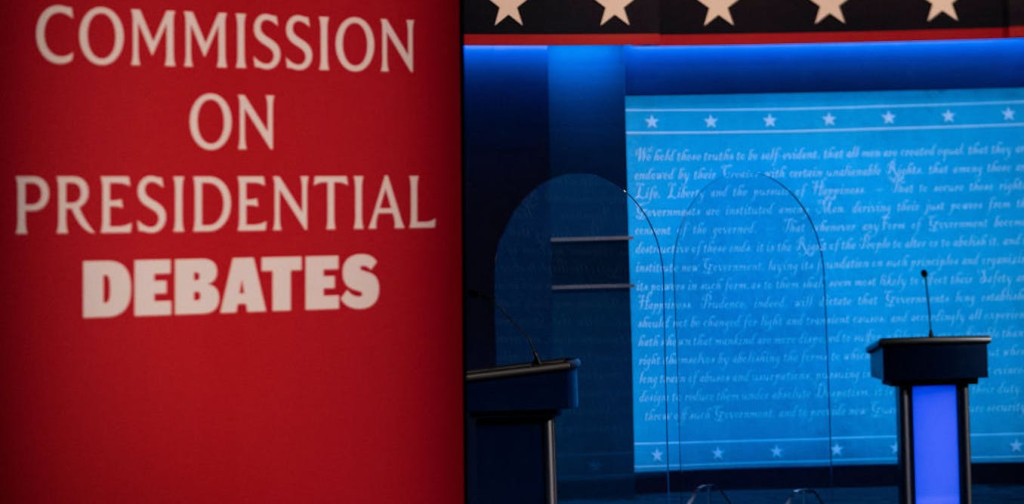
How did even presidential debates become so combative, so filled with personal insults, that moderators have to mute microphones to stop constant interruptions?
Political scientist Lilliana Mason says a major factor is that political affiliation has become central to Americans’ personal identity. Her 2018 book, “Uncivil Agreement,” argues that in the wake of the Civil Rights Movement, political parties started aligning less with specific policies and more with social identities, such as race, class, religion and sexual orientation.
As the parties became less diverse, both demographically and ideologically, political affiliation became an umbrella-like mega-identity that stacks different aspects of personal identities together and has created two large teams: conservative and liberal. In some ways, the two parties form different cultures, though no group is a monolith. There are surface differences, such as where liberals and conservatives tend to live, and deeper ones about values and beliefs. Ultimately, mega-identity creates a sense that the “other side” is a threat.
These identities contribute to a person’s sense of self and shape how they see others too. The more someone aligns with a political party’s constituent identities, the more partisan they become, and the stronger the influence of mega-identity.
When political affiliation becomes tied to self-concept, it links to a person’s deepest values: their sense of right and wrong. That’s why conversations about controversial issues frequently elicit defensiveness. Hearing conflicting ideas feels like you are being attacked, as though you need to defend yourself and your community or lose face.
Want to talk?
With tensions this high, avoiding politics in conversation is tempting – but often hard to avoid. And sidestepping tough topics could do just as much harm as tackling them, since deep conversations are important for the health of our relationships.
So, what can be done to sway someone on controversial issues? One successful method with research behind it is called deep canvassing. The technique was originally built for door-knockers advocating for ballot initiatives but can be adapted to other kinds of fraught conversations.
First, decide which topics you can really be civil about. If something feels so personal that any contrary opinion makes you throw up internal walls, it may not be the right topic for bridge building.
Next, cordially invite the other person into a conversation, building rapport without putting them on the spot. Something like, “I saw your post on Facebook about immigration and I wanted to talk with you about it. Are you up for that?” or “I’m curious about why you think that way. Care to talk about it?” The tone should be friendly and casual.

If they accept, gauge where they are on the topic. Canvassers start by asking a person on a 1-10 scale where they stand on an issue and why. This allows the person to articulate their position and gives them time to process how they feel and why.
Often, the initial statements and opinions they’ll share are inflammatory ones they’ve heard elsewhere, including politicians’ talking points and media sound bites. It can be tempting to start building a counterargument or to interrupt.
Don’t. Stay open and let them talk. Remember, these issues might touch on their sense of identity and can easily trigger defensiveness, so saying, “Well, actually …” could shut down the conversation.
Sharing stories
As the conversation deepens, the goal is to move past talking points into storytelling. Journalist Mónica Guzmán, in her 2022 book “I Never Thought of It That Way,” suggests questions like, “What shaped your views on this?” or “Do you know someone who…” or “What experiences have you had that make you think this way?”
Listen for connection points, such as shared values, emotions and experiences. In a conversation about voting rights, fairness could be a shared value, no matter where you stand on a given policy. Talking about gun control? Safety could be a starting point. Canvassers link that underlying value to a story or experience of theirs that shows the other side of the issue.
For example:
“I hear what you’re saying about wanting everyone to have an ID to vote. I can see we agree on wanting elections to be fair. However, I remember when REAL ID came out, I had to go to one county to get a copy of my first marriage license, another to get a copy of my divorce decree, and then dig out my new marriage license and all the other required documents. If I couldn’t take time off, or if I didn’t have reliable transportation, I might have just given up.”
Exchanging stories can go around defensive walls and open people up to conversation, making us more open-minded and curious about each other – a moment of humanization.
“I worry that this proposal could make it hard for everyone to have a voice, and that feels unfair to me. I’m curious, do you think there might be a better way to prevent fraud and make sure the process is accessible?”
Notice the lack of sources and statistics? Not focusing on data can drive a traditional debater crazy. But someone’s political stance can actually change how they interpret raw data, a process called motivated numeracy. Statistics that contradict a strongly held belief are often discarded as “fake news.”
The conversation usually ends with the canvasser asking the other person whether their rating on the issue has moved at all. If it took 21 hours for Lincoln and Douglas to talk through their issues, it is unrealistic to assume one short conversation will make a dramatic difference. But civil experiences with someone who holds a different opinion can stick with the person long after the conversation ends.
I think debate, with its competitive point scoring, no longer serves us, but techniques drawn from deep canvassing can build bridges. Perhaps with patience and practice, conversations like these can build empathy, promote compromise and begin to disassemble the walls dividing us.








Comments are closed.