


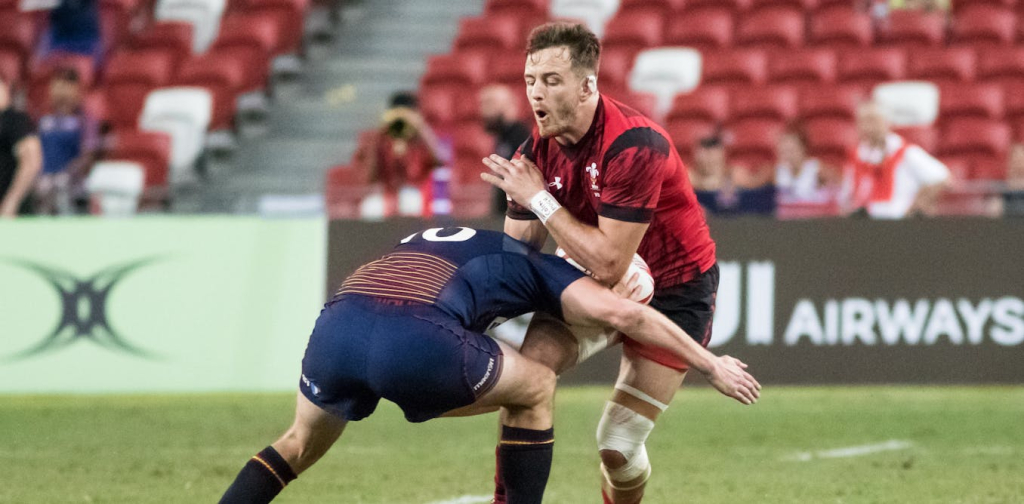




Rugby is a physical sport, and nowhere is that more apparent than in the tackle. In amateur and school rugby union, tackles are responsible for well over half of all match injuries, making them the single biggest source of injury risk in the game. That reality has prompted growing efforts to make tackling safer without changing the essence of rugby itself.
Our new study suggests one simple change may be making a significant impact: lowering the height of the tackle.
The study, published in the Journal of Science and Medicine in Sport, found that reducing the legal tackle height led to a substantial decline in injuries, particularly concussions. Among amateur women’s rugby players in Ireland, concussion rates fell by 63%, while male players experienced a 38% reduction. Overall injuries also declined, dropping by 30% in men’s rugby and 18% in women’s rugby.
Our findings make it clear that lowering the tackle height can make the game safer and reduce the risk of serious injury.
The rule change was introduced by the Irish Rugby Football Union (IRFU) in 2023, lowering the tackle target area from armpit level to the base of the sternum – often described as a belly tackle. To help players and coaches adapt, the IRFU launched an extensive education campaign built around a simple message: “belly tackle = safest tackle”.
As part of the trial, ball carriers were also penalised if they dipped late into contact (dropping their body height by bending at the knees and hips) – a movement that can increase the likelihood of head impacts.
The logic behind the lower tackle is straightforward: by encouraging contact lower on the body, the heads of the tackler and ball carrier are kept further apart, reducing the chance of dangerous head-to-head collisions and, ultimately, concussions.
Ireland’s initiative formed part of a wider World Rugby trial examining whether changes to tackle laws could improve player welfare in the amateur game.
What makes our study particularly significant is its scale. We were able to draw on almost a decade of injury surveillance data, making it one of the most comprehensive investigations yet into how tackle height influences injury risk in amateur rugby.
The Irish Rugby Injury Surveillance Project has been tracking injuries across amateur men’s, women’s and schoolboy rugby since 2016. Our study analysed injury records collected through a dedicated online reporting system used by clubs and schools throughout Ireland.
In each participating team, trained injury recorders – typically doctors, physiotherapists or other qualified personnel – documented details such as the type of injury, where it occurred, how it happened and how long players were sidelined.
Using this data, we examined about 86,000 hours of match play, covering 3,700 recorded injuries from 239 men’s, women’s and schoolboy teams, involving more than 8,800 players. Crucially, the study compared five years of injury data before the tackle law change with two seasons after its introduction.
Less clear in school rugby
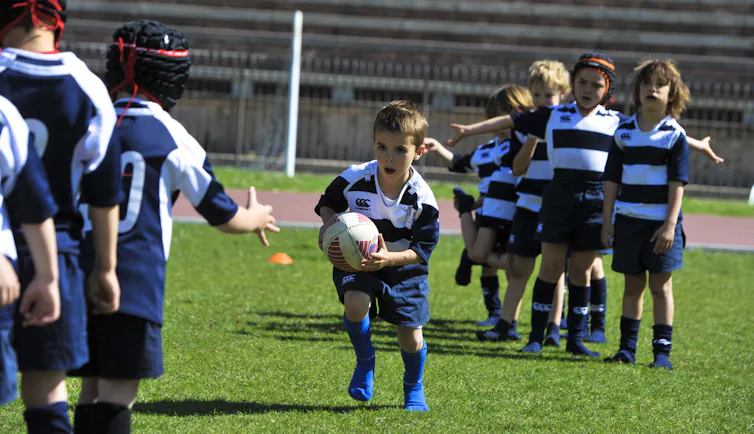
While the results were encouraging in the adult game, the picture was less clear among schoolboy players. Overall injuries in school rugby fell by 19%, but concussion rates did not show a significant reduction.
That raises an important question: why did the benefits seen in adult rugby not translate to younger players? There are several possible explanations, including differences in tackle technique, physical development, strength, stability and fitness levels.
Despite that uncertainty, our study provides some of the strongest evidence yet that law changes can improve player safety. The positive results have helped secure the continued use of the lower tackle height in Ireland’s amateur and school rugby.
The implications extend beyond Ireland. World Rugby has approved the adoption of the lower tackle height across the amateur community game, with the new law taking effect internationally from July 2026.
For a sport under growing pressure over head injuries, it’s rare to get evidence that is this clear. The next challenge is working out how to make it work for the youngest players too.






















Comments are closed.