



April 26 marks the 40th anniversary of the explosion at Reactor 4 of the Chernobyl nuclear power plant in Ukraine. The accident caused the largest ever release of radioactive material into the environment, and at the time people predicted that the affected area would be rendered uninhabitable, devoid of life for thousands of years. But the reality is quite different
Four decades after the accident, Chernobyl has become one of Europe’s largest nature reserves. Covering an area of over 4,500 km², it is larger than almost any other national park on the continent. With next to no human activity at all, the land has been left entirely to nature.



Chernobyl’s wildlife today
Research carried out over many years by Ukrainian and international scientists has found that Chernobyl is now home to exceptionally diverse, abundant wildlife. It boasts the highest density of wolves in Europe. The brown bear, which had been hunted to the brink of extinction, once again inhabits its forests. The area is a natural habitat for Eurasian lynx, as well as beavers, otters, capercaillies, black storks, white-tailed eagles and many other species. Over 200 species of birds have been recorded in the area, many of which are threatened at the continental level.
One of the most famous examples is that of Przewalski’s horse. This species was saved from extinction with just twelve individuals, and the exclusion zone is now home to one of its largest natural populations in the world. Since being released in 1998, the population has increased sevenfold. The horses show no signs of ill health, and have even moved into the Red Forest, one of the areas initially most affected by radioactive contamination.
Read more: The mystery of Chernobyl’s wild horses

The area is undergoing significant environmental change. With farmland replaced by forests, the area of woodland has doubled since the accident. Species dependent on agricultural activity, such as swallows, harriers and kestrels, have seen their numbers decline, while forest species such as white-tailed eagles, spotted eagles and Eurasian hobbies have increased in number. These processes are a consequence of ecological change, not radiation.

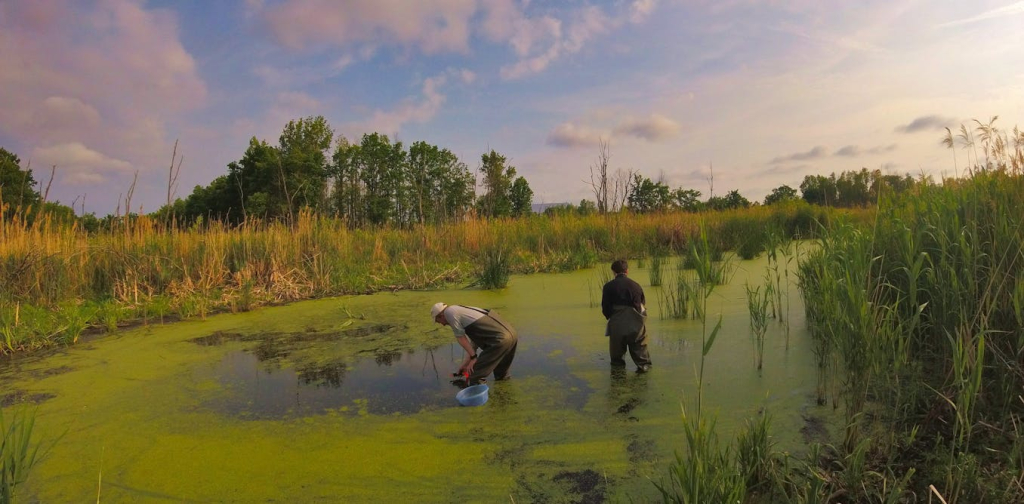
Since 2016, we have been working in Chernobyl to assess the state of the environment in the exclusion zone. Through sampling campaigns lasting several weeks and laboratory work, we have examined the condition of many organisms, ranging from bacteria to vertebrates.
Much of our research has focused on the health of amphibians such as the Eastern tree frog (Hyla orientalis). We have found that these frogs show no differences in physiological indicators, nor in their lifespan, between Chernobyl and other areas of Ukraine without radioactive contamination. Current radiation levels in Chernobyl do not seem to affect their health.

However, our research has found examples of adaptation and rapid evolution in these frogs. Specimens living in areas severely affected by radioactive contamination are darker. Darker skin, containing more melanin, would have given these amphibians a greater ability to survive exposure to radiation.
Read more: Chernobyl black frogs reveal evolution in action
Chernobyl and the war
In February 2022, Russian troops launched a large-scale invasion of Ukraine via Chernobyl. In addition to the suffering endured by the Ukrainian people, the ongoing war has radically altered the situation in the exclusion zone.
Several experts who had spent years studying the area’s natural environment have been killed in the war. Military activity has increased considerably on the nearby border with Belarus, fencing off areas that were previously completely open and preventing the natural movement of wildlife. The bridges spanning several rivers in the area have also been destroyed, making it almost impossible to access the eastern part of the exclusion zone.

It is estimated that 22,000 hectares were burned during the Russian invasion of Chernobyl. Several Przewalski’s horses have died after stepping on landmines within the exclusion zone. The full impact of increased human activity on wildlife has yet to be assessed.
Many research laboratories in the exclusion zone were destroyed and looted during the months of the Russia’s occupation of Chernobyl. Numerous vehicles, computers and pieces of scientific equipment disappeared or were deliberately damaged.

International research has almost entirely ceased in the area, but even under these circumstances, staff at the Chernobyl Nature Reserve continue to carry out some of their work monitoring species and ecosystems. Thanks to their efforts, we have access to information that will be essential for understanding the state of Chernobyl’s natural environment in the future.
Read more: 40 years on from the disaster, why there are foxes, bears and bison again around Chernobyl
A precious natural laboratory
Chernobyl remains an area of outstanding natural beauty, and a unique laboratory for studying the mid and long-term impacts of a nuclear accident. It has also become a global symbol of the renaturalisation processes that occur when human activity ceases in an area.
Preserving the area must be a priority, not only as a memorial to the disaster, but also as a key site for the conservation and study of biological diversity. Once the war is over, the area must be protected as a nature reserve, and Chernobyl restored to the vital hub of international scientific cooperation that it once was.

A weekly e-mail in English featuring expertise from scholars and researchers. It provides an introduction to the diversity of research coming out of the continent and considers some of the key issues facing European countries. Get the newsletter!


















Comments are closed.