


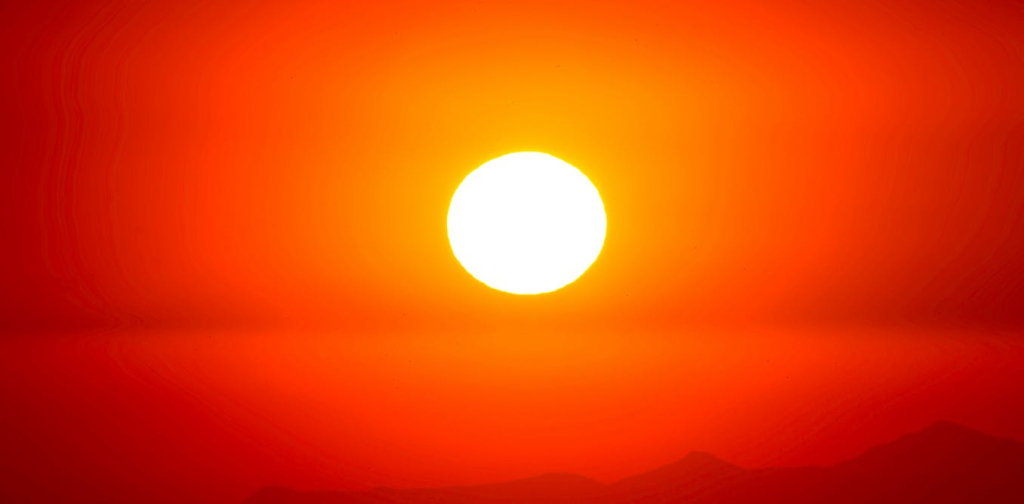

People often think of a heatwave as a temporary event, a brutal week of sun that eventually breaks with a cool breeze. But as the climate changes globally, in parts of Africa, that level of heat is becoming a permanent part of the weather.
Research shows Africa’s exposure to dangerous heat is rising rapidly. Until now, estimating how severe this heat would become was challenging. This was because many widely used global climate models struggled to capture the local factors that shape heat in Africa’s diverse climate zones and habitats (humid tropics, dry savannas and rapidly changing agricultural areas).


It is very important to analyse how these different local factors cause dangerous heat because they all play a role in causing it. For example, rapid changes to the way land is used, such as deforestation, alter soil moisture and humidity. Turning forests into crop land therefore becomes a driver of extreme heat.
Read more: Heat and health: Dar es Salaam’s informal settlements need help
We are a team of hydroclimate and land-atmosphere scientists who study heat extremes, water resources, the way land use changes, and hydroclimate risk. We set out to produce reliable, locally relevant projections of future heatwaves. Our team realised that to understand the true heatwave risk in Africa, we had to look down as well as up. It is not only the warming atmosphere from above, it is also the way people are transforming the land below.
To better understand how heat is likely to affect African countries, and to avoid relying on any single climate model, we developed a framework built on four pillars:
-
To get the most accurate data, we studied 10 global climate models rather than betting on one model.
-
The global climate model outputs were adjusted so they matched observed heatwave patterns (the frequency, duration, magnitude, amplitude, number and timing of heatwaves) and showed the links between temperature, wind, radiation and humidity.
-
Artificial intelligence (AI) was used to quantify how much the different drivers of heat (such as temperature, humidity, soil moisture, wind, radiation, land use) contributed to heatwave changes. We also used AI to highlight how these drivers made heat worse when they interacted.
-
We compared what would happen in a high-pollution future as opposed to one where governments and industry managed to reduce carbon emissions.
Our research found that by the late 21st century, most regions in Africa will stop having occasional heatwaves and will suffer from extreme heat lasting most of the year. The study shows that by 2065-2100, many parts of Africa (apart from Madagascar) could experience heatwaves on 250-300 days per year.

Some areas, such as the western side of southern Africa, will experience heatwaves that are 12 times as long and frequent as they are now, even if global emissions are reduced. Many heatwaves will last longer than 40 days at a time.
This is not just a slight warming; it is a fundamental change in how people will have to survive on the continent. Once regions in Africa enter a state of almost continuous heatwaves, the human body will have no window of time to recover.
Africa’s heat risk comes from global emissions and local land choices. This means that cutting greenhouse gases matters, and so does protecting and restoring the land’s natural ways of cooling the planet down.
How heat will build dramatically across Africa
In places with intact forests that cool the air, heat and humidity usually remain below a deadly limit. Forests act like natural air-conditioners, preventing fatal heat.
But when forests are cut down and replaced with cropland, the local climate changes. Crops release large amounts of moisture into the air, raising humidity. Heat and moisture build, and the surface heats up faster during the day and stays warmer at night. The land becomes a heat trap. A hot spell that would have been tolerable under forest cover becomes a prolonged, hazardous heatwave.
Read more: Extreme heat hurts human health. Its effects must be mitigated – urgently
Rising background heat can affect entire regions. Rural communities, including smallholder farmers, are also highly exposed because they work outdoors and often have limited access to cooling, healthcare or heat-resilient infrastructure.
Heatwaves will affect shack or informal settlement areas more because they generally lack trees and vegetation, and homes built from metal are harder to cool. Without shade, heat will build and linger.
A ‘deadly threshold’ will be reached
Our modelling shows that there is a specific combination of heat and humidity where conditions can intensify heatwaves very quickly, especially in landscapes dominated by cropland.
This is a different kind of heat risk. It is not the familiar “dry heat” driven by parched soils. It is a crop‑driven humidity effect that pushes the atmosphere into a danger zone. For example, in west Africa, extreme heat will peak at about 26.5°C-26.8°C with 74%-75% humidity, producing heatwaves that last 30-35 days.
In southern east Africa, heatwaves will happen even at lower temperatures (23.6°C-23.8°C) and humidity (70%-72%). The danger there is that even small increases in heat or moisture, including those caused by cutting down forests, will make heatwaves more common and longer.
Read more: Heat stress is rising in southern Africa – climate experts show where and when it’s worst
Across all nine African climate regions, our research found that heatwaves will stop being rare events and start becoming a regular part of the year.
The good news is that local land choices will offer immediate protection. Keeping forests, restoring vegetation and using climate-smart farming (where animals and crops are farmed with trees) are not just environmental actions. They are public health defences that weaken the intensity and duration of heatwaves.
What needs to happen next
This research highlights something simple but powerful: a forest is a shield.
This study also shows how planning in cities and in rural areas can keep “nature’s air‑conditioner” working.
Protecting the continent means acting on two fronts. Globally, we need to keep reducing fossil fuel emissions, because even moderate cuts lower the chance of long, near-permanent heatwaves.
Read more: Climate change will cause more African children to die from hot weather
Locally, every land-clearing decision matters. Removing natural vegetation adds heat to communities, but keeping forests and cover on the land helps hold temperatures down.
The message is straightforward. Countries cannot control global warming on their own, but they can control how the land responds to it.
















Comments are closed.