


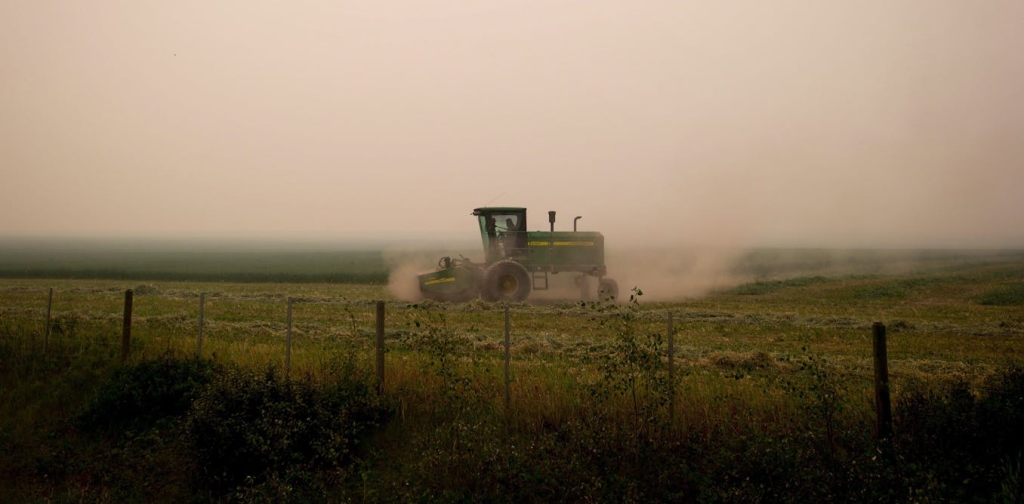

In mid-July, parts of Ontario woke up under a yellow sky. Nearly 200 forest fires were burning, most of them in the northwest, and Toronto briefly had the worst air quality of any major city in the world. Within days, the smoke had become a cross-border political issue, prompting criticism from lawmakers in the United States and a sharp response from Ontario Premier Doug Ford.
Lost in that noise were Ontario’s more than 48,000 farms, drawing on guidance spread across multiple organizations to make difficult decisions. Should farm crews remain in the field, and is livestock feed or water safe? While Canada has announced further investments in tackling wildfires, farm-specific advice remains scattered and unclear.


Producers often turn to online peer networks and agronomists, veterinarians and local Indigenous Knowledge Holders when something goes wrong. However, online misinformation is drowning out the legitimate advice.
In a 2025 study, we sought to understand how producers, advisers, policymakers, researchers and industry representatives use social media to get and share advice. We surveyed 51 Ontario agri-food professionals about the impacts of misinformation, online toxicity and why they stopped going online for advice.
Sixty per cent said they had encountered misinformation often or very often. Over half rated the platforms “not at all effective” at handling it. Around 20 told us they had recently reduced or stopped using at least one social media platform. The most common reason for leaving was misinformation itself.
Our sample is small and not statistically representative. However, it aligns with what we’ve heard in interviews: some people with relevant expertise are reducing their presence in places where false claims circulate.
Smoke and misinformation
Dense wildfire smoke can reduce sunlight and constrain corn photosynthesis during critical growth stages.
The Ontario Federation of Agriculture warns that smoke can also cause respiratory stress in livestock and cut feed intake, and that ash can contaminate feed supplies and surface water sources.
Beef Farmers of Ontario warns that smoke can worsen respiratory illness or mask early signs of infection. Meanwhile, a 2022 study of California farm workers projected wildfire-smoke exposure days rising 35 per cent under future climate conditions.

General health advice exists. The problem is translating it into timely, farm-specific decisions. For example, an Air Quality Health Index reading of 8 tells a producer that the human health risk is high. However, it does not provide a livestock-management threshold for deciding whether to move a herd.
During the record 2023 fire season, false claims that fires were deliberately set spread widely online, although reporting showed arson was rare. Analysts documented how quickly those narratives gained traction.
Climate resilience is a national security concern and depends partly on whether people trust emergency warnings. Canada has endorsed international action on climate information integrity, while domestic responsibility for climate misinformation remains fragmented.
Advisory systems build resilience
In our ongoing research, we asked 22 experts to rank relational approaches highest: community storytelling, on-farm demonstrations, farmer-to-farmer networks and training advisers to address false claims.
Wildfire knowledge becomes actionable through trusted relationships, lived experience and Indigenous land-based approaches — not information transmission alone.
Some Ontario farm organizations already work this way. In July, the Ecological Farmers Association of Ontario ran a field day under smoke-filled skies, shortened it for safety and discussed pressures farmers were navigating, including extreme weather.
An older precedent exists in Indigenous land stewardship. Many Indigenous communities have long used regular, low-intensity cultural burning to manage landscapes before colonial fire suppression became policy. Our research with Woodland Cree First Nation shows how land-based knowledge and relationships shape community-led disaster adaptation. However, governments often pay lip service to Indigenous knowledge without genuinely incorporating it into adaptation and prevention policy.
Extension and advisory services should recognize Indigenous Nations and Knowledge Holders as governing partners in wildfire resilience, rather than treating Indigenous knowledge as an additional source of advice. Indigenous-led stewardship and cultural burning require authority, resources and institutional support as integral components of wildfire preparedness — not simply recognition.
Three fixes before next season

The Senate agriculture committee’s June report, Canada on Fire, says Canada’s wildfire response remains mostly reactive, mobilizing resources after fires become disasters. Three practical additions could help.
Advisory services should be treated as part of disaster management and prevention. The U.S. Extension Disaster Education Network offers one model connecting academic research with disaster preparedness and response.
Canada could similarly connect farm advisers, producer organizations, local networks and Indigenous governments, with Indigenous knowledge and practices remaining Indigenous-led.
Governments can help train advisers to handle false claims. Veterinarians, agronomists and other experts need practical tools for responding when clients repeat false or misleading claims they’ve seen online.
Fund the relational work. Field days, peer networks, Indigenous-led cultural burning and post-fire stewardship should be treated as core resilience infrastructure, with communities resourced to lead.
Consultations are currently underway for the next federal-provincial-territorial agricultural policy framework slated for 2028. Smoke seasons will not wait. Canada must invest now in the people and knowledge systems that make warnings usable.

















Comments are closed.