


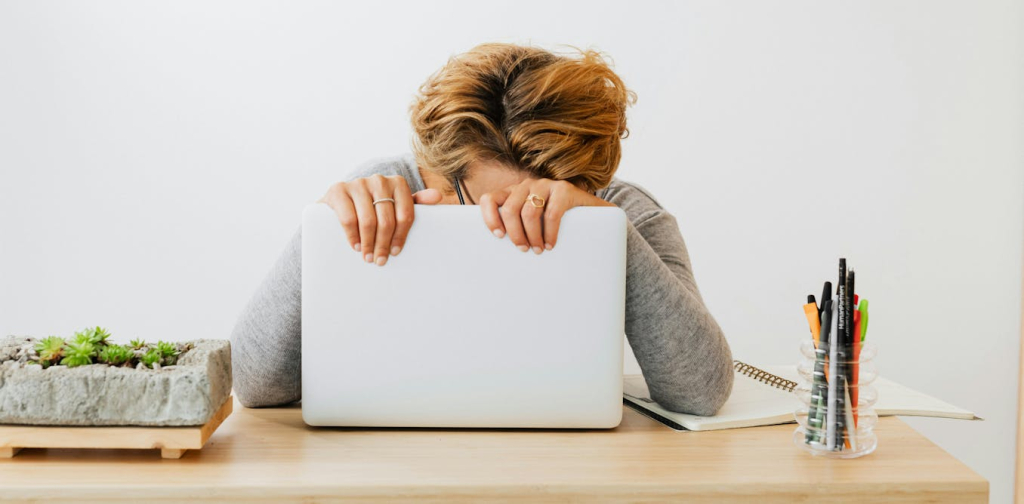

While period pain and heavy menstrual bleeding are common, they’re often dealt with privately. Yet they take a profound toll on a person’s health – and finances.
Now, our new study has calculated how much these menstrual symptoms cost the broader Australian economy.


Our study was based on a survey of 1,796 Australian working women and is published today in The Australian Journal of Social Issues. We found period pain and heavy bleeding costs the Australian economy about A$14 billion every year in lost productivity.
Women aged 35–44 reported significantly higher lost productivity than their younger counterparts.
Our findings highlight the substantial economic rationale for government and workplace policies to help people manage menstrual symptoms.
Periods can be debilitating
In Australia, girls experience their first period (menarche) around 12 years of age.
Periods (menstruation) typically happen every 21–34 days. Most women (and those who menstruate) have regular periods until around 45–55 years of age. Then, menstrual cycles become less regular before stopping altogether at menopause.
Most women will experience around 400–600 periods over their lifetime, unless their menstrual cycles are suppressed by hormonal contraception.
For the majority of women, periods often have significant negative impacts on overall wellbeing.
Two common causes of problematic periods are dysmenorrhea (period pain) and heavy menstrual bleeding.
The most common type of period pain (primary dysmenorrhea) affects around 90% of young women under 25 in Australia.
This type of period pain is often worst during the first two days of bleeding. It is primarily caused by high levels of prostaglandin hormones, which are responsible for cramps. Many women also feel fatigue, dizziness, back pain and headaches.
Heavy menstrual bleeding is when the period is so heavy that excessive blood loss affects health and quality of life. This affects 20–25% of women of reproductive age in Australia.
People with heavy menstrual bleeding often also experience moderate to severe period pain.
Excessive iron loss due to heavy bleeding also contributes to fatigue.
The stigma and taboo associated with menstruation means many women feel they must work very hard to conceal period problems at work. This labour is usually invisible and exhausting. Some women quit work altogether.
What we did and what we found
Our research aimed to investigate:
- how common period pain and other menstrual symptoms are for Australian women in paid employment over 18 years and
- the impact of menstruation on work productivity (via presenteeism and absenteeism).
Presenteeism accounts for productivity losses at work while an employee is present but not working at full capacity. It’s like going to work with a migraine: you might be physically present but you aren’t doing your best work.
Absenteeism is being away from work on paid or unpaid sick leave.
We collected data via an online survey of 1,796 Australian working women.
Survey participants were over 18, currently living in Australia and had had at least one period in the last three months. They were in paid employment (including self-employment) and/or volunteering for at least three months.
Our study found that 97% of women who responded had period pain in the last three months, and 75% said they always have period pain when menstruating. Previous research in Australia has found that over 90% of young women report period pain and around 71% worldwide.
Because of this we used more conservative estimates of 90% of women experiencing period pain (high) and 70% experiencing period pain (low) to calculate our range of economic figures for the population.
We estimated lost productivity in Australia associated with menstrual symptoms at A$7,176 per person annually, with an estimated total annual economic burden of $14.005 billion.
Together, presenteeism and absenteeism accounted for 46% of total productivity loss.
And remember, our study only looked at paid employment among full‑time and part‑time workers. The implications for unpaid labour, particularly women’s unpaid care work and its profound economic and social importance, demands further study (which we are progressing).
We also note that the impact of menstruation on the Australian economy is more complex than is established through our current data set, which doesn’t account for things such as the economy-wide costs of medical care and treatment.
In other words, our estimate is conservative.
Why does this matter?
Given the substantive economic impacts demonstrated through our study, menstrual symptom management in the workplace is not a private concern to be managed by individual workers.
Menstrual symptoms affect the broader economy and society. Workplace policies and guidelines are needed to support employees experiencing period pain, fatigue and associated symptoms.
At the workplace level, employers have an opportunity to start a dialogue with staff about changes to workplace conditions that could enhance employee productivity, health and wellbeing.
This could, for instance, include things such as reproductive leave (on top of the usual sick leave provisions), remote and hybrid work arrangements and flexible time management policies (including rest periods).
Our study findings also highlight the significant economic rationale for government to address this workplace issue with laws and policies.
Enshrining minimum standards for workplaces to support employees impacted by menstrual symptoms reduces the burden on individual workplaces to formulate policies and eliminates reliance on senior management’s interest.
If governments and employers want to increase productivity, our research shows the answer could be hiding in plain sight.


















Comments are closed.