



The past 48 hours in Australia has showcased the dramatic complexities of the country’s migration and asylum landscape, and the power of ministerial intervention in this federal portfolio.
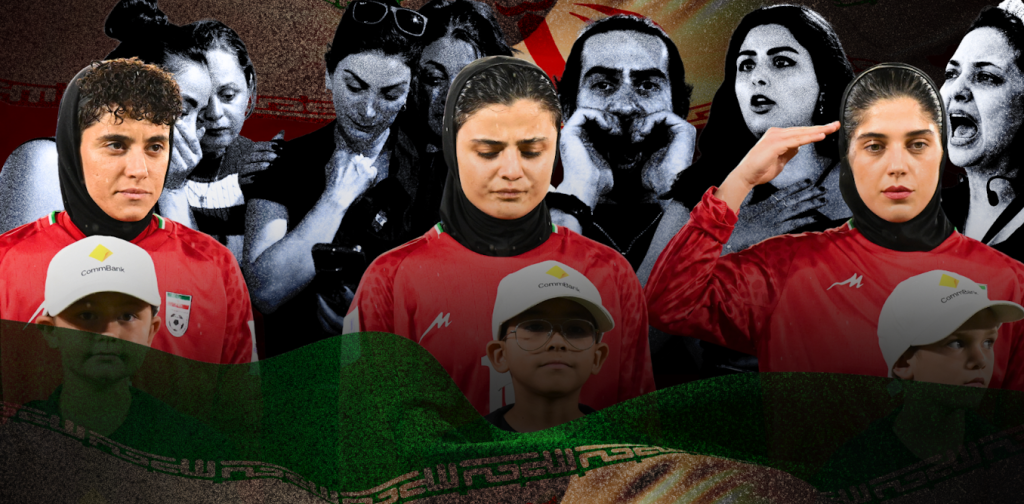
On the one hand, the federal government pulled out all stops to safeguard members of the Iranian women’s soccer team from returning to Iran – after competing in Australia at the Asian Women’s Cup – by providing them with refugee status.


On the other hand, as this drama was unfolding in Queensland and then Sydney Airport, the government announced it was also introducing legislation to ban people entering Australia for set periods of time if they held temporary visas from designated countries.
So, why have authorities bent over backwards to help some people stay in Australia, while banning others from entering the country?
How the soccer players were helped
The Iranian soccer team drama started when players refused to sing the national anthem before their first match on the Gold Coast.
The silent protest sparked fury in Iran, with the athletes labelled “war traitors” on state television. It is a crime that attracts the death penalty in wartime in Iran.
Read more: Australia has granted some Iranian soccer players asylum – but 2 questions remain
This sparked grave concerns about the safety of the athletes if they returned home.
On Monday night, it was announced five athletes were granted humanitarian visas.
Then on Wednesday, Home Affairs Minister Tony Burke confirmed two more people (a player and a support staffer) had sought asylum in Australia.
He said the rest of the group – with the exception of a “small number” – were given a chance to discuss their options with Department of Home Affairs officials before the flight home. Some spoke with family members but ultimately declined the chance to stay.
A toughening of immigration laws
As Australian officials were helping the Iranian soccer team, news broke the federal government was planning to toughen immigration laws by banning people from some countries travelling to Australia even if they held valid visitor visas.
Assistant Minister for Citizenship Julian Hill introduced the proposed laws to parliament only ten days after US/Israel-Iran war began.
This action could be seen as a way of future-proofing the case of the Iranian women’s soccer team being repeated on a wider scale.
No specific countries were listed but this could be applied to citizens from Iran or any other country affected by the current Middle East conflict, or future conflicts.
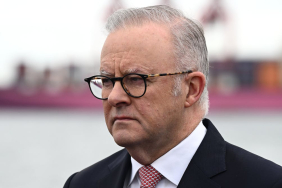
Foreign Minister Penny Wong defended the timing of the announcement on ABC’s Radio National:
I know there’s been some political criticism but it should be based on fact. It’s not legislation that targets humanitarian visas – it’s legislation which enables us to manage temporary visas. We have to work out how we manage our borders in the context of a very large-scale event.
The law, if passed, would likely be used to prevent some people from nominated countries from travelling to Australia if their visa was issued before the US and Israel struck Tehran, and if there are concerns they may overstay their visa or apply for protection while in Australia.
Power would rest with the minister for Home Affairs to determine the specific countries and visas this would apply to – for instance student, tourist or business visas.
People holding valid visitor visas would have paid their visa application fees and possibly already made travel arrangements. They might be coming to study or visit family.
Some endure long waits
Managing borders in the instance of a large-scale event was treated very differently by former Prime Minister Bob Hawke who offered asylum to about 42,000 Chinese students after the Tiananmen Square massacre in 1989.
Other groups of Iranians living in Australia have not received similarly preferential treatment like the soccer players.
For instance, several hundred Iranians are in the so-called “legacy” caseload of people who claimed asylum in Australia more than a decade ago and are still waiting for permanent visas.
Former Immigration Minister Alex Hawke has publicly implored the federal government to resolve this situation.
Iranians who have been granted postgraduate research (student) visas waiting to take up their places in Australian universities could be affected if the proposed changes go through, delaying their chance to travel.
Department of Home Affairs statistics indicate this could affect more than three hundred people.
Additionally there are Iranian students currently studying in Australia who may be unable or unwilling to return to Iran after the completion of their studies.
Migration policies should be equitable
Australia’s migration program is complex, resulting in a form of “manifactured precarity”.
Just three weeks ago, Australian women and children – families of so-called Islamic State fighters – were refused permission to return. This was despite groups like Save the Children calling for their safe and dignified return on humanitarian grounds.
Fit for purpose migration policies need comprehensive approaches that are transparent and applied equitably.
Policy on the run, as we’ve seen in the case of the legacy caseload of people on temporary visas and the Iran soccer team drama, can lead to bigger issues down the track.















Comments are closed.