


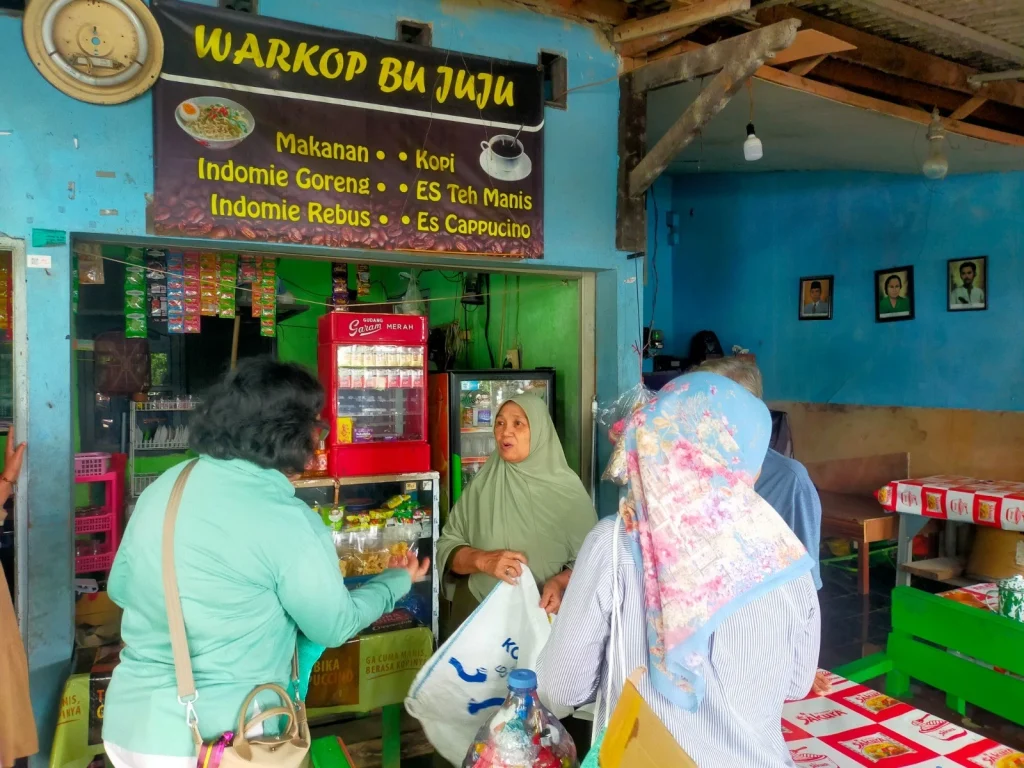

Tika (42), a resident of Terjun Village, Medan, sifts through trash piles that reach tens of meters high every day.
Around ten in the morning, she always rides her motorized rickshaw to the garbage mountains, searching for items that still have resale value.

“This is how it works: I pick things out of the pile one by one, like glass bottles, cans, plastic bottles, jute sacks, and mineral water bottles. After that, I sort them by type,” said this mother of three.
After sorting, the trash is put into burlap sacks and sold to a middleman. The selling price varies, ranging from Rp 500 to Rp 1,000 per kilogram, depending on the type of material. In a day, the amount of trash Tika and her husband manage to collect is unpredictable, sometimes 80 kilograms, sometimes 90 kilograms.
“If we’re lucky, we can make up to Rp 80,000 to Rp 90,000 a day from everything we collect. That’s if we’re diligent; if we’re lazy, it’s around Rp 50,000. We don’t just stick to one type of trash. Some people focus on just one thing, like ‘asoy’ plastic. But I take whatever sells,” she explained.
Scavenging trash has been Tika’s main job alongside her husband and younger sister since 2018. She was forced to take up this work after no longer being hired in the formal sector, such as factories, due to her age and limited education.
The income from scavenging is relatively sufficient to meet daily needs, including the educational expenses for her three children, who are currently attending junior high school (SMP) and vocational high school (SMK) in Medan.
“About two million rupiah a month. I save just a little, just in case I get sick, it can cover medical expenses. I can’t save much,” she said with a laugh.
Read More: Why Period Poverty Is a Social Justice Issue
Nevertheless, Tika is aware that this job is highly prone to health risks. Exposure to dust, pungent odors, and leachate from piles of trash are risks she must face every day. However, to this day, she admits she has no other job options.
“So far, the worst is just itching on my legs from jock itch, especially when it rains and my shoes leak. But when it’s this hot, I get a cough because of all the dust. Thank God I’ve never had to be hospitalized for an illness; if I start feeling sick, I just get a shot,” she said.
Tika herself hopes the government will pay more attention to the health conditions of waste pickers and residents living near the landfill. She wants regular and free health checkups, given the health risks they face every day.
“But if possible, it should be free. Sometimes they do come, but it’s limited to the elderly,” she hopes.
The Terjun Landfill is not far from Tika’s home. The proximity of the location is indeed advantageous in terms of operational costs, but at the same time, it presents environmental issues. The pungent smell from the piles of trash is often strongly noticeable, especially when the wind blows toward the residential area.
“When the wind blows toward our homes, the smell is really strong. But as far as the water goes, it’s still safe so far,” said Tika.
On the other hand, pressure for change continues to grow. Several members of the Medan City Council have even urged the government to close or relocate the Terjun Landfill, as it is deemed overcapacity and no longer suitable to be near residential areas. The Medan City Government itself has stated it is currently planning a transition to a sanitary landfill system and the utilization of waste as an alternative energy source, a process not without criticism.
Read More: Why Gender Sensitivity Matters for Disaster Risk Reduction in Indonesia
Amid this controversy and criticism, the lives of waste pickers like Tika continue as usual. The mountains of trash, viewed by many as an environmental problem, serve as their livelihood, a stark reflection of the disparities in waste management in Medan.
The conditions Tika faces align with the findings of several environmental organizations, including Wahana Lingkungan Hidup Indonesia (WALHI) North Sumatra. They assess that waste management in the City of Medan, particularly at the Terjun Landfill, has reached an alarming stage. WALHI highlights the government’s reliance on a single final disposal site, without being balanced by a source-separated system and adequate waste processing technology.
Medan, one of the metropolitan cities in Sumatra, has so far been deemed to have shown no significant changes in its efforts toward sustainable waste reduction and management. Yet in 2022, Medan was awarded the Adipura award as a city with a clean environment.
Yet every day, tons of waste from various parts of Medan are transported to the Terjun Final Disposal Site (TPA) located in Terjun Village, Medan Marelan District, North Sumatra. The volume of waste entering this site has remained relatively stagnant year after year, ranging from 1,300 to 1,700 tons per day.
A significant surge even occurred when Medan was hit by floods in late November 2025. At that time, the volume of waste entering the Terjun TPA reportedly reached around 5,000 tons per day, though this lasted only three to four days. This figure far exceeded normal daily capacity and highlighted the fragility of the city’s waste management system during a disaster.
Read More: No More Silence, Let’s Talk About Unwanted Pregnancy
The Terjun Landfill itself has been in operation since 1993 and is now considered to be nearing its capacity limit. Several studies and statements from local government officials indicate that, without significant breakthroughs, this landfill is projected to reach full capacity within the next few years. To date, waste management methods at the Terjun Landfill remain dominated by the open dumping system, which is considered high-risk for both the environment and public health.
Amid the government’s slow response to waste management, this situation has been exploited by some members of the community as a source of livelihood, and even as a primary income to meet their families’ basic needs.
The Irony of Surabaya as a Model City for Cleanliness
Conversely, Surabaya is often portrayed as a model city for cleanliness.
With eight consecutive Adipura Kencana awards, the city’s parks appear lush, and the main streets look spotless.
Surabaya’s waste management system actually involves a rather lengthy process. At the Bratang Transfer Station (TPS), for instance, waste arrives from various sources—mostly household waste transported by RT/RW officials using carts. There is also waste from the Bird Market and the Flower Market.
There was only one female waste collector operating in the Manyar Jaya area who was depositing her waste at the Bratang TPS when we met her there.
Kodama is a widow who supports her child by pulling a motorized cart from house to house.
Kodama’s job is not without its challenges. She has to wrestle with heavy household waste every day.
“Her salary is around 1.7 million rupiah,” revealed Supriadi, the Bratang TPS attendant (January 24, 2026). This salary is paid by the local RT, not by the Surabaya City Government (Pemkot), because she works independently to serve the residents of the housing complex.
“It depends on who’s doing the hauling, sometimes two people, sometimes one. The RT hires them. The RT-RW also pays the salary,” explained Supriadi. “It doesn’t matter if they’re sick or anything; there’s no one to replace them if the neighborhood waste collector is out.”

Supriadi, a Bratang TPS attendant currently on duty managing waste. (Ika Ariyani/Konde.co)
Read More: The ‘Fault’ in Our Feminism: Rethinking The Conceptions of Gender Empowerment and Failure
The burden of environmental management often falls on the shoulders of the most vulnerable groups. Most of these informal waste collectors also work as construction laborers or in other daily wage jobs. This system creates job insecurity, as well as complaints from residents who only receive a collection quota of three times a week.

Uniform trash bins at every home in Surabaya, which are small in size, are collected only three times a week. (Ika Ariyani/Konde.co)
Housing officials like Kodama do not collect large items such as mattresses and sofas.
Residents must take such items themselves to a waste collection site that accepts bulky waste, such as the Bratang site. Supriadi explained that residents often dispose of items that should not be thrown away at the collection site, such as spring mattresses.
“Technically, it’s not allowed, but where else are residents supposed to dispose of them?” he lamented.
At the Bratang Transfer Station, this waste is then sorted. Items that still have economic value, such as cardboard and plastic bottles, are immediately sold for recycling. The rest, which consists mostly of household waste and food scraps, is transported by compactor trucks ( ’s modern waste collection vehicles, which are more enclosed and efficient than the old dump trucks) to the Benowo Landfill.

The Bratang Temporary Waste Storage Site (TPS) is overflowing with trash carts from upstream. (Ika Ariyani/Konde.co)
At the market, there are market staff who collect trash in one designated area. At Mangga Dua Market, for example, each vendor has a regular collection system.
Read More: 2025 Year-End Edition: A Season of Persecution Without Transition in the Age of #DemocracyApocalypse
According to an interview with one of the market’s waste management staff, each vendor’s trash is carried by internal staff to a waste disposal area in the open field near the main road.
“From that field, the trash is picked up daily by a trash collection truck,” he explained. From there, the city government’s trash collection truck picks it up daily to be taken to the Benowo Landfill. According to konde.co’s observations, on Saturday (January 24, 2026), the trash had piled up to the top.

Piles of unsorted trash at the Mangga Dua Market waste collection point in Surabaya. (Photo: Ika Ariyani/Konde.co)
Organic waste from the market, which should be processed into compost, is instead mixed with other waste and ends up at the landfill.
According to a WALHI study on waste-to-energy plants in Indonesia, Surabaya’s waste composition is dominated by food scraps (55.48%). Combined with wood and branches (2.25%), the potential for waste to be processed via composting reaches 57.73%. Meanwhile, recyclable materials (cardboard, plastic, metal, fabric, rubber, leather, and glass) account for 25.31%.
This means that more than 80% of waste in Surabaya can be managed through the 3R approach and does not need to rely on incineration or landfilling, provided there is a proper source-separation system.
Addressing various waste management issues, the Head of the Surabaya Environmental Agency (DLH), Dedik Irianto, stated in his remarks to Konde.co(January 27, 2026) that the current state of waste management in Surabaya is already quite adequate. According to him, the number of waste collection points (TPS) spread across various locations, the transport fleet (including the compactor trucks mentioned by Supriadi), and the human resources (HR) assigned to the task are sufficient to handle the volume of waste generated by Surabaya residents.
Read More: 2025 Year-End Edition: Women’s Resistance in the Season of Arrests and the Year of #DemocracyApocalypse
However, data from a study by the Indonesian Forum for the Environment (WALHI) titled “Sowing the Seeds of Destruction: A Study of the National Waste-to-Energy Power Plant (PLTSa) Project in Indonesia in 2024” highlights the issues. Surabaya is the largest contributor of waste in East Java, with a generation volume reaching 657,016 tons in 2023 (approximately 10.7% of the province’s total waste). Although physical infrastructure such as 190 waste collection points, 9 waste transfer stations, and 26 composting facilities is already in place, the daily waste load remains a significant challenge for landfills (disposing of waste in sunken land).
The final destination for Surabaya’s waste is the 37.4-hectare Benowo Landfill in West Surabaya. Since 2012, management of this landfill has been outsourced to the private sector, PT Sumber Organik, through a Build-Operate-Transfer (BOT) scheme. Its primary focus is converting waste into electricity (waste-to-energy).
Although praised as a modern solution, WALHI has raised critical concerns.
First, the budget burden (tipping fee). The Surabaya City Government is required to pay a tipping fee or waste management fee, which amounts to nearly Rp73 billion per year. This contract mandates that the City Government supply a minimum of 1,000 tons of waste per day. If the volume falls short, the City Government must still pay the full amount.
Second, waste composition: over 80% of Surabaya’s waste could actually be managed through the 3R approach (Reduce, Reuse, Recycle) and composting, as it is dominated by food waste (55.48%) and plastic (22.01%).
Third, the incineration method at the waste-to-energy plant produces significant greenhouse gas emissions if not managed with truly clean technology.
Read More: Stop Tech Misogyny: Misinformation on Social Media Used to Trap Victims of Human Trafficking
WALHI’s in-depth study on waste-to-energy plants in Indonesia reveals several critical findings regarding the Benowo plant that differ from the government’s official narrative.
Most fundamentally, the issue concerns transparency. WALHI East Java submitted a request for the Benowo PLTSa Environmental Impact Assessment (EIA) to the Surabaya City Government, but it was rejected on the grounds that the EIA document is exempted due to copyright protection. This rejection clearly contradicts the Law on the Protection and Management of the Environment (UUPPLH) and the Law on Public Information Disclosure.
This lack of transparency is exacerbated by the minimal public outreach regarding health risks to residents living near the PLTSa. Based on WALHI’s investigation, leachate generated from processing activities flows into the Lamong River. Worse still, this leachate has caused a worker to resign from their job due to exposure to the toxic waste.
Next, regarding public health. Data from the Benowo Community Health Center shows an increase in cases of Acute Respiratory Tract Infections (ARTI), particularly among children, which rose significantly from 2020 to 2021, the period when the Benowo waste-to-energy plant began operations.
According to a WALHI report, the gasification technology used by the Benowo PLTSa produces flammable syngas through the thermal transformation of solid waste at temperatures exceeding 600 degrees Celsius. This process generates toxic substances in the form of solid and liquid materials, as well as charcoal waste (slag) and ash. The emissions from this technology contain dioxins, mercury, and heavy metals that can contaminate the surrounding air and water.
Government Regulation No. 22 of 2021 stipulates that thermal treatment using incinerators must meet a minimum dioxin destruction and removal efficiency standard of 99.99%. Dioxin monitoring should be conducted every 3 or 6 months. However, dioxin testing is extremely costly, and the necessary infrastructure is not yet available in Indonesia, as samples must be sent abroad.
Read More: Stop Tech Misogyny: When AI Becomes a Tool for Manipulating Women’s Bodies
Furthermore, there is the issue of problematic land use. The Benowo landfill site was historically a salt pond area before being converted into a landfill. However, even though it has become a landfill, salt production activities continue and have already obtained an operating permit.
Research by Selly K. and Sudarmaji (2008) found that salt produced in the Benowo area was detected to have lead levels higher than the standard due to exposure to leachate. Inappropriate land use that endangers the public, such as this, highlights the weak governance in the development and operation of the Benowo Landfill.
With 1,800 tons of waste per day, Surabaya still faces a major challenge in waste management. Surabaya’s waste collection system remains heavily male-dominated, prioritizing the procurement of heavy machinery and expensive downstream technology while neglecting the human-centered details at the source, such as elderly informal workers earning wages far below the minimum wage.
At the household level, the burden of waste in Surabaya once again falls on women’s shoulders. Women are often the target of stigma regarding issues like sanitary pad waste and household waste. Women are frequently blamed for disposing of single-use sanitary pads, which are perceived as polluting the environment. The state and companies produce single-use sanitary pads without providing an inclusive disposal system, yet the moral burden is shifted onto individual women.
The government believes the problem is solved simply by burning trash and converting it into electricity. In reality, this process disrupts the circular economy of waste pickers and creates toxic risks for residents.
According to WALHI, the open dumping practices still in use at the Terjun Landfill have the potential to contaminate soil and groundwater due to leachate seepage, increase methane emissions, and worsen air quality around residential areas. These conditions are deemed contrary to the principles of sustainable waste management and pose a risk of long-term health impacts for residents.
A number of academic studies have also indicated the potential for heavy metal contamination, such as lead (Pb) and cadmium (Cd), in the groundwater around the Terjun Landfill area, with concentration levels influenced by the distance from the disposal site. These findings reinforce concerns about environmental impacts that may not yet be fully recognized by the local community.
Residents Taking the Initiative to Manage Waste at the Source
Among residents, several initiatives related to waste management at the source have emerged. Examples include the efforts of residents of RT 11 in Srengseng Sawah Village, Jagakarsa, South Jakarta, and the parishioners of Danau Sunter St. John Bosco Church in Sunter, North Jakarta.
That Sunday morning, on the porch of Susi’s house, the Head of RT 11 in Srengseng Sawah Village, Jagakarsa, a group of women and youth from the local youth organization had already gathered. Among them were representatives from the Village Community Institution (LMD), staff from the Environmental Implementation Unit (Satpel LH), and officials from the Jakarta Provincial Environmental Agency (DLH).
That day, they went around to residents’ homes distributing bags for the sorted waste that residents had been separating all along. There were two types of bags to be distributed: one green and one white. The green bags were for paper, cardboard, and similar items, while the white bags were for plastic bags, plastic wrappers or packaging, plastic bottles, and similar items.
Representatives from the Environmental Agency and the women of Kompak distributed the waste sorting bags to residents of RT 11 in Srengseng Sawah Village who run small shops in the Setu Babakan area on Sunday (January 25, 2026).
The Environmental Agency was intentionally involved in that day’s activity because, while residents felt they had been sorting waste, they needed to see the government’s commitment and support in the waste management process.
The group of women was then divided into two teams and went door-to-door distributing bags used as containers for sorted waste. As they moved from house to house, they sang a jingle they had created to energize their activities. While distributing the bags, they also educated residents about the waste sorting process through posters and illustrations.
“So, which bag should the snack wrapper go in, dear?” asked a Kompak member to a resident’s child.
“The white one,” the child replied.
“Yes, smart,” she replied.
Read More: More Women, Same Inequalities: How Symbolic Violence Quietly Persists in Indonesian Diplomacy
Part of RT 11 also covers the Setu Babakan tourist area, so some residents run food stalls in the vicinity. Therefore, the outreach and bag distribution also included stall owners.
Over the past year, Susi has been busy with activities to educate and encourage residents in her RT to sort waste. Each month, she targets outreach to ten residents or households.
She undertook this effort following an outreach session at the RW level regarding Governor’s Regulation (Pergub) No. 77 of 2020 on Waste Management within the RW Scope. This regulation requires residents to sort their waste and imposes a fee if they fail to do so. Initially, Susi focused on how to prevent her residents from being charged the fee.
“Back then, my focus was solely on making sure my residents didn’t get hit with waste fees. I started by educating 10 households; I talked to them about how to sort waste,” said Susi.
When educating residents, Susi wasn’t alone; environmental enforcement officers usually joined her. Over time, more and more residents began sorting waste at their own homes. They separated organic waste and placed it in plastic bags hung in front of their homes. The waste was then collected by officers three times a week.
In this process, Susi became involved in the Kompak program led by Ade Amelia from LabTanya, in collaboration with a social designer from the Netherlands. While they had already been sorting organic waste, through Kompak they also began managing inorganic waste.
Amelia and her team then conducted a study to find solutions on how residents could sort waste very easily. Through asking questions, discussing, and observing, Amelia identified three key elements. First, community-based incentive benefits, meaning encouraging residents to share a common goal. Second, tools, specifically bags to hold the sorted waste. Third, a WhatsApp group as a support system.
Read More: Stop Tech Misogyny: The Long Chain of Gender-Based Cyber Attacks and Disinformation
“So we experimented with these three elements and translated their implementation into the ‘Kompak’ initiative. ‘Kompak’ aims for a comprehensive approach—not only in waste management but also in fostering greater unity among residents through regular meetings. We want to make waste management a shared issue to be discussed in various community gatherings,” explained Amelia.

The women of Kompak conducted waste sorting education while distributing sorting bags to residents of RT 11 in Srengseng Sawah Village on Sunday (January 25, 2026).
Similar initiatives are also taking place in other areas of Jakarta. In church communities, efforts to manage waste at the source are also underway. One such example is at the Danau Sunter Parish, St. John Bosco Church.
That Sunday afternoon, around 100 people, men, women, the elderly, the young, laypeople, and clergy gathered in the church hall. They were playing the “Low-Waste Home” (RMS) card game, guided by Wilma Chrysanti. Shouts of joy and laughter filled the room throughout the game.
That day, the Parish Environmental Committee held a seminar and workshop for Environmental Awareness Ambassadors (Darling). They were representatives from neighborhoods, sections, and categorical groups who were willing to commit and continue learning to carry out the ecological conversion movement.
Meliana, Chair of the Justice and Peace Section of Danau Sunter Parish, explained that Environmental Awareness Ambassadors have the task of setting a concrete example, conducting outreach, and mobilizing parishioners to reduce waste and engage in environmental conservation activities. This is done both within the parish community and in collaboration with external non-parish entities, such as neighborhood associations (RT/RW) in their residential areas.
Read more: 2025 Year-End Edition: Women’s Resistance in the Season of Arrests and the Year of #DemocracyApocalypse
The Environmental Awareness Ambassadors of Danau Sunter Parish participated in a SESAWI workshop using the “Minimal Waste Home” card game, facilitated by Wilma Chrysanti from the “Zero Waste City” program at LabTanya, on Sunday (January 25, 2026).
After attending the workshop, the Duta Darling were appointed by the parish priest to begin carrying out their duties. Kartini, First Secretary of the Parish Council, explained that the formation of the Duta Darling stemmed from the idea that collective behavioral change cannot happen on its own. A team is needed to consistently drive, support, and oversee implementation across all levels of the Danau Sunter Parish. Starting from grassroots communities in each neighborhood, across the district, within the parish, and extending out to the wider community.
According to Meliana, the Environmental Awareness Ambassadors did not appear out of nowhere. She explained that the Danau Sunter Parish had actually been conducting environmental initiatives (going green) for quite some time. These included bringing reusable water bottles, sorting waste, planting trees, and other activities. However, since the onset of COVID-19, these habits particularly waste sorting have become lax. Consequently, they decided to organize an awareness campaign regarding ecological conversion.
“We thought it would be good to hold an awareness campaign on ecological conversion. Besides seminars, we believe this ‘low-waste house’ card game workshop is very engaging because the reflection on ecological conversion is presented in the form of a fun game that can be enjoyed by people of all ages,” said Meliana.
To ensure that these efforts don’t remain a one-time event but instead help build shared habits, there needs to be a driving force. Meliana explained that it’s impossible for these efforts to be carried out solely by the Parish Environmental Committee. Instead, it would be easier to collaborate with various parties.
“That’s why, with the support of the parish priest, we were finally able to gather a group of ‘Darling Ambassadors’ who are committed to carrying out their duties,” she said.
Read more: Stop Tech Misogyny: The Long Chain of Gender-Based Cyber Attacks and Disinformation
Wilma Chrysanti, one of the initiators of the ‘Zero-Waste City’ program from LabTanya, stated that a zero-waste city is very much achievable. Up until now, waste has been the root of the problem because there is something wrong with the production and consumption processes we engage in.
The movement she conceived essentially emphasizes waste management at the source. This is achieved by implementing systems and a culture of consumption and production that align with nature’s logic through its unbroken circular cycle.
This effort can be implemented by applying a three-door strategy: the front door (pre-consumption), the middle door (consumption), and the back door (post-consumption). In short, it involves managing the consumption cycle so that it does not generate waste, guided by the core principle of consuming only what is necessary, using resources as minimally as possible, and producing as little waste as possible.
From the mentoring process she has conducted with residents in several regions, Wilma recognizes the importance of involving all stakeholders in waste management. However, so far, each party has been blaming one another without being willing to see the bigger picture.
So residents feel the government is unwilling to support their efforts, while the government feels residents are difficult to get to sort their waste. Therefore, the challenge is for the government to come down to meet and listen to its citizens.
“Through numerous joint initiatives and experiments with residents, the residents themselves have proven that they are willing and able to take action. The only question is: is the government ready?” said Wilma.
She added, for example, once residents have sorted their waste, what happens to the organic waste which makes up the largest portion, around 50–70 percent after it’s been sorted?
Read more: Stop Tech Misogyny: When AI Becomes a Tool for Manipulating Women’s Bodies
According to her, it’s important to remember that not all residents can process organic waste. For that reason, the government needs to take a role in the subsequent process.
“In our view, residents are basically willing to sort their waste; the question is, what steps will the government take after they’ve sorted it? Because residents often lose motivation after seeing the waste they’ve sorted get mixed back together right before their eyes during the collection process,” she explained.
So the system isn’t ready yet because the transportation process should also be done separately. Meanwhile, not all residents can afford to buy carts to transport waste separately.
On the other hand, we also need to consider the disposal of organic waste, which is in large quantities, because residents cannot be burdened with processing it. Even if residents can process organic waste, their capacity is very limited. Similarly, if some communities can process it themselves, where will the resulting liquid compost go? Because, for example, if it’s to be used as fertilizer, it requires a lengthy process.
“So, residents should be asked to sort their waste, and the government or the system should be ready to collect it. We shouldn’t burden residents with processing it. Sorting is the most feasible effort residents can make,” explained Wilma.
Upstream Initiatives That Haven’t Become a Priority
Unfortunately, low-cost waste management efforts at the source have not yet become a priority. So far, the government’s efforts have primarily focused on downstream management, using technologies such as RDF or PLTSa.
Upstream management does indeed require continuous support for residents. According to Wilma, this involves long-term, labor-intensive maintenance work that not all parties are willing to undertake especially the government, which hasn’t yet reached the capacity to engage directly with residents. Yet, the upstream management process would make downstream operations significantly easier.
“These maintenance tasks are what should be carried out. Even if, for example, the government is deemed unable to handle it, why not open opportunities such as collaborating with Kota Tanpa Sampah or LabTanya, or others,” she concluded.
Regarding the transportation process after residents have sorted their waste, Pretty Hutasoit from the Waste Reduction and Management Division of the Jakarta Environment Agency (DLH) stated that currently, the DLH, Sub-District Environment Offices (Sudin LH), and Environmental Service Units (Satpel LH) have provided sorted waste carts. However, she acknowledged that their availability is not yet uniform across the entire region.
“Regarding waste collection, we at the Environmental Agency, as well as the Sub-District Offices and Field Units, already have sorted waste carts. But it’s true that they aren’t yet evenly distributed across Jakarta,” said Pretty.
She explained that in areas where sorted waste bins are not yet available, field staff use an approach by placing two bins inside a single cart. If residents have not sorted their waste, the staff will not collect it.
As for organic waste management, so far the government still relies on resident or community initiatives. Pretty stated that the Department, Sub-district Offices, and Field Units support the existence of waste banks and maggot composting initiatives.
“We, both from the Department and the Sub-District Office, continue to monitor and evaluate what has been done. But as I mentioned earlier, we haven’t been able to reach all areas yet. Hopefully, with the Field Units being closest to the residents, the residents’ sorted waste, the inorganic portion will go to the waste banks, and the organic portion will go to composters or maggot farms,” said Pretty.
Closing Landfills: Is PSEL the Solution?
Indonesia is currently facing a waste emergency that is far more serious than it appears at first glance.
According to data from the Ministry of Environment’s National Waste Management System (SPSN), by 2025, 21,658,606.99 tons of waste are projected annually. Of this total, the majority, 64%, ends up in open dumping sites. Only 35% of the waste is managed. This means that more than 14 million tons of waste are unmanaged, and more than 6 million tons of waste that are said to be managed are still being disposed of through open dumping.
In this context, Minister of Environment and Forestry (KLHK) Hanif Faisol Nurofiq has openly acknowledged this national waste emergency. At a joint working meeting with the Indonesian House of Representatives (DPR RI) in early 2026, he stated that the national waste management rate has only reached around 25 percent, far below the target in the National Medium-Term Development Plan (RPJMN), which aims for 63 percent. “The target set in the RPJMN is 63 percent. Today, national waste management stands at 24.9 percent or 25 percent,” said Hanif.
This figure indicates that the government’s efforts to address the waste problem are still far from expectations. In fact, field survey data from the Ministry of Environment and Forestry (KLHK) shows that administratively reported management figures often differ from on-site verification; the truly effective management rate is feared to be in the range of 9–10 percent when viewed through the actual capacity of recycling and recovery facilities at landfills.
One of the widely discussed indicators of the waste emergency in Indonesia can be seen in the case of South Tangerang (Tangsel), specifically regarding the closure of the Cipeucang Landfill. Since early December 2025, the central government, through the Ministry of Environment and Forestry (KLHK), issued a decision to temporarily suspend operations at the Cipeucang Landfill due to open dumping practices that violate Law No. 18 of 2008 on Waste Management and environmental management standards.
An excavator left idle following the closure of the Cipeucang Landfill (1/16). (Luthfi Maulana A/Konde.co)
Piles of waste at the Cipeucang Landfill in South Tangerang, which has now been closed. Waste is still being left in open dumps that exceed capacity (Jan. 16). (Luthfi Maulana A/Konde.co)
This closure has triggered the accumulation of household and market waste on the city’s main roads because the landfill’s capacity has exceeded its limits and cannot accommodate more waste, while waste collection services are insufficient to handle the surge. Piles of trash along the roadside have become a common sight at several locations due to the inability to accommodate household waste. This situation reflects just how fragile the current system is for managing city-scale waste generation.
The accumulation of trash around Jombang, South Tangerang, is a result of the closure of the Cipeucang Landfill. Trash is still left there, and signs prohibiting littering in the area have been posted. (1/16) (Luthfi Maulana A/Konde.co)
“(They’re) intentionally left piled upin front of the shop because no one’s taking them. It does smell, though but what can we do?” said a female bakery shopkeeper who preferred not to be named in the Jombang area of South Tangerang.
The Director General of Public Works’ Cipta Karya Directorate noted that Cipeucang Landfill’s maximum capacity of only around 400 tons per day is clearly insufficient compared to South Tangerang’s daily waste production, which ranges between 800–1,000 tons per day. This situation highlights a significant gap between infrastructure capacity and daily waste management needs, ultimately leading to the accumulation of trash in public spaces. The Tangsel local government has subsequently sought to reorganize the Cipeucang facility by opening new access points, maximizing other landfill sites, and even planning the construction of a waste-to-energy power plant (PLTSa); however, these steps are still in progress and have not yet resolved the fundamental issue of waste generation exceeding service capacity.
“The Cipeucang Landfill is proof that the government is still struggling with waste management. In fact, it’s become a justification, so to speak, for building PLTSa projects,” said Ibar Furqonul Akbar, Plastic Campaigner at Greenpeace Indonesia.
This case has sparked public outcry and social protests; students even staged a demonstration by dumping trash trucks in front of the South Tangerang City Hall as an expression of frustration over the city’s failure to manage waste.
In response, approximately 5,000 residents of RW 014 in Rawa Buntu Village, Serpong, South Tangerang City, officially filed a class-action lawsuit with the Tangerang District Court, with the first hearing scheduled for February 4, 2026.
The lawsuit was filed against three main parties: South Tangerang Mayor Benyamin Davnie, the Head of the South Tangerang City Environment Agency, and PT Sinar Mas Land Tbk as the developer of the BSD City area, which shares responsibility for the alarming environmental conditions around the Cipeucang Landfill.
Residents claim that the defendants have violated their right to a healthy and decent environment, particularly since early 2025 when pungent odors, air pollution, and trash accumulation in the neighborhood have become a daily, chronic problem. This legal action reflects the residents’ frustration with the local government’s slow progress in improving waste management.
A “No Littering” sign near a shop in the Serpong area of South Tangerang, related to protests over the closure of the Cipeucang Landfill. (1/16) (Luthfi Maulana A/Konde.co)
Observing this controversy, Ibar views the landfill closure and the mounting piles of trash as evidence of systematic and comprehensive governance failure at the governmental level, urging the government to establish policies to reduce waste generation at the source, rather than merely addressing it downstream.
According to data from the Ministry of Environment’s National Waste Management System (SPSN), by 2025, annual waste generation is projected to reach 21,658,606.99 tons. Of this total, the majority, 64%, ends up in open dumping sites. Only 35% of the waste is managed. This means that more than 14 million tons of waste are unmanaged, and more than 6 million tons of waste that are said to be managed are still disposed of through open dumping.
This data indicates that the waste crisis in Indonesia is not primarily a matter of technological deficiency, but rather a systemic failure in governance. In the report, Ibar emphasizes that since the enactment of Law No. 18 of 2008 on Waste Management, a paradigm shift from “collect–transport–dispose” toward the 3Rs or even the 6Rs today has formally occurred, but it has never been consistently and effectively implemented at the policy level. As a result, landfills remain the primary reliance.
The state has instead chosen a technocratic shortcut that does not address the root of the problem, and even exacerbates existing injustices. In recent years, the central and local governments have promoted PLTSa and RDF projects as “modern” solutions for waste management. However, from Greenpeace Indonesia’s perspective, these projects are not merely technically flawed, but also problematic from political and ecological standpoints.
Ibar noted that the state’s policies have deviated from the fundamental principles of waste management from the very beginning.
“The current government, by not adhering to the 3R principles, is not following the waste management hierarchy. Most of the solutions or policies adopted regarding waste management jump straight to the third ‘R’, the final ‘R,’ recycling or even to technology. Ultimately, many of these projects end up stalled as well.”
In a cross-case study conducted by WALHI in Jakarta, Bandung, Surakarta, and Surabaya, it was revealed that PSEL technology facilities such as PLTSa and RDF require a stable and large supply of waste, leading local governments to actually maintain high waste generation levels to ensure the financial viability of the projects. This creates a lock-in effect, where waste reduction policies at the source become counterproductive to projects that have already been built.
What Ibar said touches on the fact that the waste management hierarchy, reduce, reuse, recycle, is still applied as nothing more than a slogan on the ground. UNEP and the World Bank, in their report *What a Waste 2.0*, note that countries with high incineration rates tend to have higher per capita waste production, because incineration systems do not provide incentives for reducing consumption. In the Indonesian context, this means that waste-to-energy plants and RDF have the potential to lock the country into a pattern of resource-intensive production and consumption.
Displacing Residents with False Promises and Solutions
As the afternoon approached, when the rain began to subside and the wind carried the distinctive smell of trash, Usman Ismail sat in front of his small rice stall. He tidied up the spoons, covered the pot, and occasionally greeted passersby.
Some of those people, years ago, were neighbors of his house, which once stood alongside dozens of other homes.
For Usman, Bantar Gebang is a living space intertwined with his livelihood. It is there that he and other residents built their daily routines around trash, which for them is a source of income.
When the government decided to build a Refuse-Derived Fuel (RDF) facility, part of the government’s PSEL project, the chosen site was not vacant land. Usman clearly remembers how residents’ homes became part of the development plan. On that land lived 56 families who made a living from the nearby trash.
“The site for the RDF facility, you see, is where the residents’ homes are. Those homes cover an area of 7,000 square meters. There are 56 households there,” said Usman.
That number is more than just a figure. Behind it are schoolchildren, working parents, and families whose livelihoods depend on activities around the landfill. Initially, the residents did not immediately accept the eviction plan. They held their ground, fighting to preserve their daily way of life.
Usman, a resident of Bantar Gebang whose home and livelihood were displaced due to the construction of the Refuse-Derived Fuel (RDF) facility. (Luthfi Maulana A/Konde.co)
“Well, at first we held our ground. Being close to the trash makes it easier for us to make a living,” he continued.
Proximity to the trash was key. Many residents worked as scavengers, collectors, or vendors who depended on activities around the site. If moved far away, costs and time would increase. Income would decrease, and energy would be drained. That’s why resistance emerged.
Over time, Usman realized that the RDF project was no ordinary project, as the Bantar Gebang waste issue had become a national concern. At that point, residents began to open the door to compromise. Usman emphasized that they were not demanding money.
“We rejected it; we didn’t want to be far from the trash. Our people make a living from the trash. If it’s far away, just getting there takes time and costs money every day,” he said.
“But, well, in the end, we followed the nation’s needs. After all, this waste has become a national issue,” said Usman.
In mid-July 2025, Usman, along with hundreds of other residents, gathered in front of the RDF facility built within the Bantargebang Integrated Waste Management Complex (TPST).
From the very beginning of the discussions about the eviction, Usman’s demands have actually been simple and consistent. He doesn’t frame compensation in terms of cash or large-scale financial compensation, but rather the sustainability of their livelihoods after their homes and sources of work are taken away. For him, relocation without job security is simply shifting the problem from one place to another.
“Okay. But I need the compensation. Please. I’m not asking for material things. Just a job, that’s it.”
Usman stated that they were promised from the start that they would gain access to employment at the RDF facility, given their very close connection to waste management as their daily source of livelihood. However, in reality, according to Usman, the recruitment of workers was instead conducted through an online system deemed unfair and biased against local residents, particularly those accustomed to working informally and lacking digital access or skills.
That job as compensation was a promise made during the initial negotiation process. He recalled how that promise was made as a guarantee to get residents to agree to the eviction.
“At the time, it was fine; we were ready to be evicted. The compensation was that we’d be employed at this company (RDF). But, you know, in reality, nothing came of it.”
Time passed, the houses were leveled, and the residents scattered. Yet the promise that had been the basis for their willingness to make sacrifices never materialized. Out of the dozens of affected families, only one person ended up working, a far cry from the initial vision.
“There was absolutely no one (who got a job). There was only one person.”
Residents chose employment compensation over cash, as it was crucial for those relying on daily labor and lacking savings or long-term economic security.
For a community that makes a living from activities related to waste, relocation compensation money would be quickly spent. What they need is access to sustainable work so they can continue to send their children to school and meet their daily needs.
It was in that situation that Usman positioned himself as a liaison between the residents and the parties promising a solution. Usman reiterated that from the very beginning, the form of compensation had been agreed upon verbally, not in writing. He realized this was a manipulative aspect of the project that was displacing their homes. He relied on trust and good faith, without understanding the importance of a written document.
“I was the one who made the commitment back then. How foolish of me, I didn’t secure that agreement in writing; it was just a verbal. In the end, our agreement vanished because there was no proof,” said Usman.
Amid these limitations, Usman and other residents staged several demonstrations to demand that the promise be fulfilled.
Now, the RDF area is completely devoid of settlements. All traces of the old way of life have been completely erased.
“As for the RDF area, there are no houses left. They’ve all been completely eroded away.”
This trend has been criticized as a form of technology being used as a substitute for policy. Instead of limiting the production of single-use plastics and forcing corporations to change their business models, the state chooses to burn or shred waste to make it appear resolved.
Technically, waste-to-energy plants and RDF facilities are not designed to process organic waste or food scraps, which actually constitute the largest fraction of waste generated in Indonesia.
Data from the Ministry of Environment and Forestry’s National Waste Management Information System (SIPSN) shows that approximately 40–50 percent of national waste consists of food scraps containing organic material with high moisture content. This characteristic gives organic waste a low calorific value, making it unsuitable as fuel for incineration or RDF production.
In practice, both waste-to-energy plants (PLTSa) and RDF facilities require waste with low moisture content and high calorific value to ensure stable and efficient combustion processes. Consequently, food waste is often viewed as a technical burden that actually reduces facility performance ( ), increases emissions, and expands the volume of hazardous residues that must be managed.
At RDF facilities, the processing procedure explicitly requires sorting and drying, so that organic and wet waste is removed early in the process. RDF in Indonesia itself utilizes plastics, paper, textiles, and multilayer packaging, while food waste is still sent to landfills or left to decompose in the facility’s buffer zones. Thus, RDF not only fails to resolve the dominant issue of organic waste downstream but also perpetuates reliance on landfills as the final disposal site for the largest fraction of waste.
Transparency regarding PSEL is also an issue. The case of the Benowo PLTSa, shrouded in EIA documentation, is one example that Ibar considers problematic from the very start. WALHI itself has documented several findings regarding issues at Benowo, which holds the title of a pilot PSEL in Indonesia:
1. Facility operations were suspended during the FIFA U-17 World Cup period due to concerns that operational activities would disrupt the event held at Gelora Bung Tomo Stadium, located approximately 2 km from the PLTSa
2. Liquid waste from processing at the PLTSa flows into the Lamong River; the treatment methods within the facility are unknown, and it is unclear whether they meet standards
3. Vehicle traffic related to salt production activities entering and exiting the Benowo Landfill area, where food production should not occur within the landfill premises.
Conversely, upstream practices such as composting are the most ecologically and technically suitable methods for managing organic waste. Food waste that is sorted at the source and processed through composting or biodigesters not only significantly reduces waste generation but also minimizes greenhouse gas emissions from decomposition at the landfill, particularly methane.
Various studies indicate that composting can manage the majority of organic waste fractions at lower costs, with minimal environmental risks, and provides direct benefits to the community in the form of fertilizer and improved soil quality.
Furthermore, composting systems and 3R waste transfer stations are labor-intensive and have proven to be more inclusive for women, particularly female waste pickers, as they provide safer working environments and allow for the integration of productive work with caregiving responsibilities.
By promoting PLTSa and RDF as the primary solutions, the government is effectively ignoring the most relevant methods for the largest fraction of waste. This policy is not only technically ineffective but also counterproductive, as it hinders the development of organic waste management systems based on sorting, composting, and community participation.
In this context, PLTSa and RDF fail to process food waste—which lies at the base of the waste problem pyramid—and prolong the crisis by sidelining solutions that should be the top priority.
“Our research clearly shows that the waste processed at PLTSa and RDF facilities is newly generated waste. It is not waste that has already accumulated in landfills. Nor is it waste that has been left unprocessed by waste pickers—so-called ‘ ’—and then taken by PLTSa and RDF. The fact is, the waste being collected is new waste,” explained Ibar.
Ibar also emphasized that the logic behind PSEL, including PLTSa, which the government is promoting today, is not the logic of waste reduction, but rather capitalist logic.
“This government views waste too much as a source of money. It’s actually a source of money, an economic resource—but it’s still waste that needs to be managed, not a source of money anymore, right? Well, if the government sees this waste as an economic resource, a source of money, then inevitably they’ll see that waste needs to be continuously produced to generate more money,” he continued.
This argument is reinforced by the legal and policy framework that explicitly places the PSEL within the regime of national priority projects. The designation of PSEL as a National Strategic Project (PSN) refers to Presidential Regulation No. 3 of 2016 and its amendments, which grant these projects special status in the form of expedited permitting, land acquisition facilitation, and fiscal and non-fiscal support from the state.
In the context of waste management, the PSN status places PSEL projects, including PLTSa and RDF, in a position that is relatively immune to re-evaluation based on social and ecological impacts, as the logic of “national strategic interest” is often used to dismiss the objections of affected residents and communities. Rather than being treated as public policy that must adhere to principles of environmental precaution and meaningful participation, PSEL is positioned as an investment project that must be implemented immediately.
Furthermore, the transfer of PSEL management to Danantara is seen as reinforcing this orientation. As a state investment management entity, Danantara operates with the primary mandate of ensuring the financial viability and attractiveness of projects for investors. Within this framework, waste management is no longer positioned as a public service grounded in the right to a clean and healthy environment—as guaranteed by Article 28H of the 1945 Constitution—but rather as a long-term asset portfolio that must generate a stable revenue stream.
Consequently, the design of the PSEL policy tends to prioritize the certainty of waste supply, tipping fee schemes, and energy purchase guarantees, while aspects of waste reduction at the source, protection of vulnerable groups, and ecological restoration become secondary or even marginalized.
“With (PSEL) entering Danantara, this already shows that waste management is viewed merely as a project,” Ibar criticized.
Legally, this orientation also has the potential to conflict with the fundamental principles of waste management as stipulated in Law No. 18 of 2008 on Waste Management, which emphasizes that waste reduction and management must be carried out in a hierarchical manner with priority given to source reduction.
However, through the PSN mechanism, this hierarchy is effectively reversed: large-scale downstream technologies are accelerated and guaranteed by the state, while community-based policies for reduction, sorting, and management do not receive equivalent protection and funding. In other words, PSN status not only accelerates projects but also shifts the legal orientation of waste management— —from the principles of precaution and ecological justice toward the logic of investment certainty.
In this context, waste is no longer positioned as a problem to be reduced, but rather as a commodity whose supply must be maintained to keep projects bankable. The state, through the legal and institutional frameworks it enacts and implements, actually creates structural incentives to maintain and even reproduce waste generation. This represents a complete reversal of the logic of ecological justice and the right to a healthy environment, where the financial sustainability of projects is prioritized over ecological and social sustainability, as well as over the safety and lives of the most affected communities.
“Yet we frequently find that these communities face significant financial difficulties in managing their waste,” said Ibar.
Here, waste is no longer viewed as a problem to be reduced, but rather as a commodity whose supply must be maintained. This is a complete reversal of the logic of ecological justice. Under the PLTSa scheme, the more waste that is incinerated, the more electricity is generated, and the more financially viable the project becomes. This means that this policy structurally requires the continued production of waste.
This means that the mountains of old waste remain piled up. Jeanny added that PLTSa does not address legacy waste that has been polluting the air, soil, and water for decades. It merely competes with waste pickers for new waste that still holds economic value.
“The effect on our waste-picking friends is that they end up with ‘leftovers,’ so to speak, the old waste that no longer has any economic value,” Jeanny remarked.
According to Jeanny, this means the state is taking the best economic resources from the informal sector, while the health and environmental risks are left to the waste pickers and residents near the landfill. Female waste pickers are the most affected group because they work more frequently in sorting areas with old residues, while also bearing the burden of caring for their families.
“Women, as I mentioned earlier, are also involved in sorting, so naturally, those residues will exacerbate the existing impacts,” she explained.
From a technical standpoint, the high reliance on landfills renders this solution inadequate. Annabel noted that this does not even address other issues such as new pollution risks and evictions, which only compound the existing problems at Bantar Gebang.
“The high reliance on landfills and the primary function of the landfill as a final disposal site haven’t fundamentally changed, even with the presence of PLTSa and RDF. RDF leaves behind residues whose future disposition remains unclear. Meanwhile, PLTSa produces ash that requires special handling due to its potential to endanger the local community. This means that even though the volume of waste has decreased, these risks haven’t truly disappeared, they’ve merely taken on a different form,” explained Annabel.
Jeanny also debunked the claim that the waste-to-energy plant generates significant energy. The energy contribution from RDF and the waste-to-energy plant in Bantar Gebang is minuscule compared to Jakarta’s electricity consumption. Carbon emissions from waste incineration, toxic ash residues, and high operational costs make this project far from a climate solution.
“The electricity that this system can generate is only sufficient to supply power to the Bantar Gebang area.”
WALHI data shows that the electricity contribution from waste-to-energy plants generally never exceeds 1% of a city’s electricity needs. With high carbon emissions and substantial operational costs, the claim that waste-to-energy plants are a climate solution is unfounded.
“So, the reality is that the waste is massive, both the waste from unprocessable trash and the emissions and the electricity generated is minimal and can’t solve the trash problem in Bantar Gebang today. So, the downsides actually outweigh the benefits,” explained Jeanny.
At this point, it becomes clear that the PLTSa is not a solution, but rather a new machine for shifting the crisis from one crisis to another, disguised as green.
While the state pours trillions of rupiah into high-tech projects, far more humane community-based initiatives are left to die a slow death. Jeanny explained how the 3R Waste Management Center, developed together with female waste pickers, had previously served as a safe space for them.
“There are several things that the women there, as waste pickers, actually identified as solutions amidst the double burden they face. For example, there’s the 3R Waste Management Facility. They can work at the 3R facility. Why is the 3R facility considered safer? Because it usually has its own separate space. So usually their children are placed there, and then they sort the waste at the 3R waste sorting station.”
In this small space, caregiving and productive work can be somewhat balanced. The risk to the children’s safety is reduced. The physical burden on the women is slightly lighter.
“They don’t have to go to the field, so the risk is lower.”
However, the government has never seriously supported this scheme.
“But the reality is that out of the 20 or so active 3R waste processing stations, only one remains. The other one was almost demolished, but fortunately that didn’t happen.”
The state’s failure to scale up community-based solutions is cited as evidence of a lack of political will. The state prefers large-scale projects that benefit contractors and investors, rather than funding small-scale infrastructure that actually saves lives.
The Network of Interests Behind the Piles of Trash and Untouched Upstream Areas
Jeanny points to a network of interests that benefits from this chaos.
She explains that the failure of waste management in Bantar Gebang and indeed the national waste crisis is not merely a result of weak technical capacity, but rather a systemic and political failure. This failure, she argues, is not neutral, as it involves power dynamics and economic interests operating consciously.
“We found that there is an economic system that actually benefits certain parties on the ground.”
“So it’s almost as if this was intentionally designed this way; the responsibility or reduction of waste at the source seems to be hindered, because there are indeed those profiting from the accumulation of waste at Bantar Gebang.”
When reduction at the source that is, at the production stage is never a priority, landfills like Bantar Gebang are positioned as the primary buffer, as well as a space for profit accumulation. Waste accumulation, rather than being seen as a failure, actually becomes a profitable condition for certain actors.
The parties benefiting from this situation, she continued, are not limited to local governments or landfill operators alone.
“One of them is not just manufacturing companies, but also companies that process plastic waste for recycling.”
It is at this point that the waste crisis is directly intertwined with the interests of large industries, particularly fast-moving consumer goods (FMCG) companies and industries that position themselves as part of the solution through recycling. The circular economy model frequently promoted actually relies on a continuous supply of plastic waste. Without a steady flow of waste, the recycling industry including RDF-based operations loses its raw materials and the justification for its existence.
Greenpeace and IPEN have long demonstrated that these recycling claims are largely illusory. Collected plastic is rarely actually recycled into products of equivalent quality. Instead, it undergoes downcycling into low-quality products or is simply incinerated as RDF. In practice, the solutions offered are not about reducing plastic, but rather shifting the problem: from waste to emissions, from landfills to incinerator stacks.
In this context, the PSEL designated as a National Strategic Project and managed under Danantara emerges as a new regime of accumulation within the waste sector. Through its PSN status, the state actively intervenes in existing hierarchical structures by formalizing the control of waste by capital-intensive actors, while sidelining the waste reduction and sorting work traditionally carried out by waste pickers.
Waste is positioned as a long-term investment asset whose continuity must be maintained, so that its economic value can be stably extracted by operators, the energy industry, and recycling corporations. Under this regime, the work of waste pickers is not recognized as an ecological contribution, but rather viewed as an obstacle to efficiency and the certainty of raw material supply.
Danantara’s management of the PSEL further highlights this shift. As a state investment management entity, Danantara operates within a framework focused on asset value preservation, revenue stream certainty, and project financial viability. Consequently, the entire waste management system is geared toward meeting the needs of large-scale projects including waste-to-energy plants and RDF which require high volumes of waste and materials with calorific value. Within the hierarchical structure of the waste sector, this orientation strengthens the upper layers industry, operators, and large-scale collectors while pushing waste pickers further to the margins of the system.
“These waste pickers are already the most exploited, and they are being exploited even more by the presence of these (PSELs),” said Jeanny.
Policies are made for them, not with them. Annabel cites this exclusion as one of the main reasons why waste management solutions in Indonesia continue to fail, because they do not stem from the knowledge of the people who live from and with waste.
According to her, this exclusion stands in stark contrast to the accumulation of profits at the top of the chain.
“The actors who benefit the most are actually from the upper tier of the chain—large waste dealers, landfill operators, and the industry where there are also many recycling plants, as well as RDF and PLTSA operators who receive a cheap and stable supply of raw materials without having to bear significant social, health, and environmental costs. So they truly enjoy the added value from market access management and stronger legal protection. Meanwhile, these environmental and health risks are inevitably shifted onto the waste pickers,” explained Annabel.
For this reason, Ibar emphasized that the root of the problem actually lies upstream, in the very mindset of industrial capitalism.
“As for the actual solution, first of all, it’s about reducing production, meaning plastic production. Because so far, the government’s mindset has been that ‘reduction’ only applies once the waste has already been generated.”
In her view, the government is more preoccupied with discussing sorting, transportation, and processing after waste is generated, rather than questioning why single-use plastics continue to be produced on a massive scale. With this approach, responsibility is shifted from producers to the public and affected communities, including residents near landfills.
She emphasized that waste management must not stop at the management stage, but must begin with changes to production and business systems.
“Reduction must start at the production stage. FMCG companies must change their business systems shifting from a single-use model to a reusable one.”
Without a radical shift toward a reuse and refill system, the entire narrative of waste reduction remains merely cosmetic policy. The ecological and social burden continues to be borne by communities downstream, while profits continue to accumulate upstream.
However, instead of strengthening regulations to force such changes, government policies are actually considered extremely weak.
The much-touted EPR (Extended Producer Responsibility) roadmap, touted as a key instrument, in reality lacks enforcement power. There are no effective sanctions, oversight mechanisms are weak, and producer compliance is largely administrative. Data from the Ministry of Environment and Forestry (KLHK) itself shows that EPR compliance rates in Indonesia remain low, with the majority of companies failing to meet packaging reduction targets. Under these conditions, EPR resembles symbolic legitimization more than a corrective function for the industry.
“Even though there is now Minister of Environment and Forestry Regulation No. 75 on the roadmap for waste reduction by producers, it’s still not very strong, right?” concluded Ibar.
The waste management crisis in Indonesia, as seen in Bantar Gebang, is a political-ecological crisis that reveals how the state shifts the burden of environmental damage, disease, and impoverishment onto marginalized communities, particularly women and children. This is a crisis of ecological justice deliberately produced through policies that prioritize urban convenience and corporate interests over the right to life of the most vulnerable.
Bantar Gebang has already shown that waste always finds the poorest bodies to be piled upon and buried.
As long as upstream approaches are consistently neglected, as long as the plastic industry is not halted, as long as waste pickers are not recognized as policy subjects, as long as women continue to bear a double burden, and as long as the state continues to side with capitalist logic, then every PSEL project in the form of a PSN is merely a tombstone erected from tons of urgent waste problems.
(Translator: Theresia Pratiwi Elingsetyo Sanubari)












Comments are closed.