


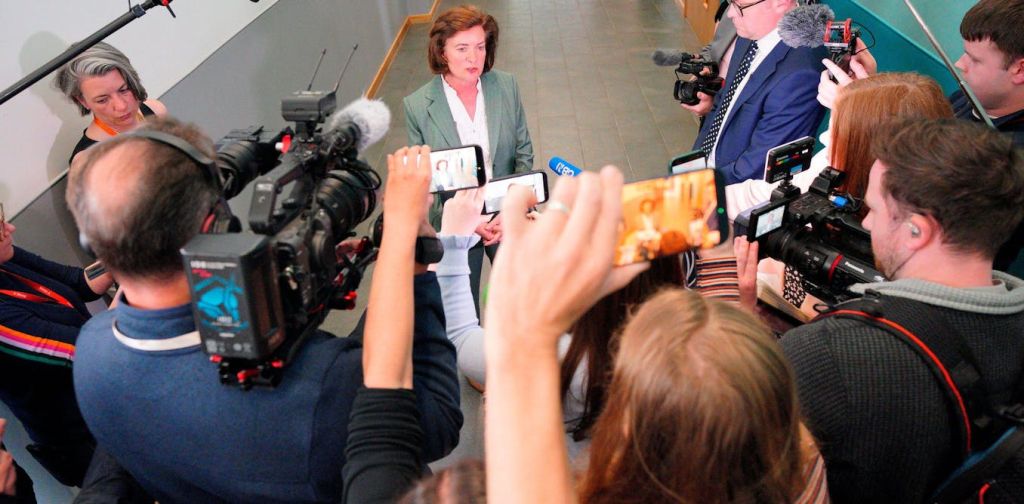

After all the predictions, projections and polling permutations, Welsh Labour’s defeat has been confirmed.
In 1985, Welsh historian Gwyn Alf Williams described Labour majorities standing “like Aneurin Bevan’s memorial stones”. Forty years on, the stones have finally been eroded. On the worst day for the party in its history in Wales, even its leader, Eluned Morgan, lost her seat.



After more than a century as Wales’ dominant political force, the figures and symbols that once anchored Welsh Labour now lie broken.
The scale of the defeat is difficult to overstate. Losses in historic heartlands that have voted Labour consistently for more than a century represent a devastating indictment of a party that has long mistaken dominance for consent. This is not a routine electoral setback, but a collapse.
Short-term factors played their part. Welsh Labour’s decision to abandon its “standing up for Wales” rhetoric and attach itself to an unpopular Keir Starmer-led UK government led the party to surrender one of its strongest political identities.
Read more: Elections 2026: Experts react to the Reform surge and Labour losses
Furthermore, the short-lived, scandal-ridden leadership of Vaughan Gething, and an incumbency backlash among certain voters, contributed to Labour’s worst-ever Senedd result. But while these factors shaped the timing and scale of the loss, they cannot by themselves explain it.
This election marks a reckoning that has been coming for a while. After more than a century of political dominance, the myths and symbols that sustained Welsh Labour (and the idea that Labour is Wales, and Wales is Labour), have finally withered. The defeat reflects not simply a bad campaign or unpopular leaders, but a party that has run out of steam and ideas.
Since devolution, Welsh Labour has spoken the language of radical politics while failing to realise radical outcomes. Limited powers and constrained budgets are real obstacles, but they do not excuse the absence of political ambition from a party that has governed Wales uninterrupted for nearly three decades. Few parties in democratic systems have enjoyed such long-term dominance; Welsh Labour has failed to take advantage of it.
Longer-term decay
The electoral collapse reflects a deeper unwillingness to confront Wales’ long-term material decline. Across health, housing, education and the economy, rhetorical ambition has been undermined by narrow, managerial interventions. Child poverty remains entrenched, educational standards have declined and the NHS is under sustained pressure. Progressive language has failed to translate into material improvement.
In defending Wales against Tory austerity, Welsh Labour neglected the harder task of articulating what Wales could become and how devolved powers could be wielded effectively to improve people’s lives. The result has been a politics that speaks the language of progress while leaving the structures of inequality largely untouched.
Over time, this gap between promise and experience has eroded trust. In an era of weakening party attachment and fluid political identities, historical loyalty can no longer be relied upon. The continued invocation of figures such as Aneurin Bevan may still resonate within the party but beyond this, their power has faded. Nostalgia has become a liability, especially when it substitutes for critical reflection or ideological renewal. Welsh Labour came to mistake familiarity for consent.

The Senedd election result is not a rejection of progressive values, but of Labour’s symbolic performance of them. Many voters were not turning away from radical ambition when they voted for Plaid Cymru; they were seeking a party they believed could still embody it. Welsh politics has often been defined by its radical traditions – and progressive voters have put their faith in Plaid to inherit them.
One-party dominance insulated Welsh Labour from the pressures that force political renewal. When that dominance finally fractured, the party found itself unable to articulate an alternative sense of purpose.
The collapse, therefore, is not a sudden termination, but the culmination of a prolonged period of stagnation. The majorities once symbolised by Aneurin Bevan’s memorial stones have been gradually eroded, enduring for decades but now standing merely as reminders of a Labour legacy that no longer finds resonance in Wales.























Comments are closed.