


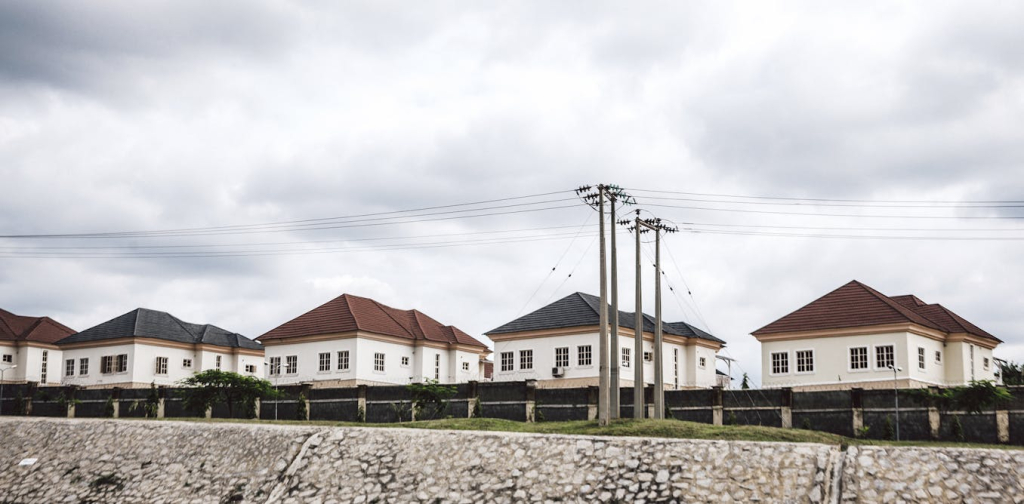

Abuja, Nigeria’s federal capital city, has witnessed remarkable urban growth since its development in the 1980s. The city’s population has increased from 776,298 in 2006 to an estimated 2,057,985 in 2026.
A serious housing crisis has developed: high rents and developments focused on luxury force lower income earners into peripheral settlements.



Over the decades the city’s authorities have taken steps to address the challenge. They have followed national housing policies and encouraged private sector investments, yet there are still gaps in addressing housing challenges in Abuja. Abuja has a housing deficit of over 1.7 million units.
My doctoral thesis focused on access to housing for low-income earners in one of the six councils that make up Nigeria’s Federal Capital Territory.
In a recent paper I looked at how state-led policies in Abuja shape access to housing for low earners. I argue that state-led housing intended to correct market failure reinforces inequality. It puts high-income earners first and neglects the majority in society.
My research drew on qualitative and quantitative data, including policy document reviews, stakeholder interviews and household surveys.
I identified four key factors that contribute to the city’s housing crisis:
-
poor monitoring of current policies
-
state-led programmes that privilege middle and upper-income groups
-
a lack of affordable financing
-
planning that fails to account for cultural preferences when designing houses.
The housing crisis in Abuja
The demand for housing in Abuja has increased due to rapid urbanisation and population growth. As Nigeria’s political and administrative hub, Abuja attracts thousands of migrants who perceive the city as safer than other parts of the country.
Its centrality also attracts unemployed migrants searching for jobs, economic opportunities and political connections.
But the supply of affordable housing has not kept pace with demand.
National housing policies such as the National Housing Fund and various affordable housing initiatives have aimed to alleviate the problem, but without success.
There are a number of reasons for this.
Monitoring and enforcement
My research found that there’s a lack of monitoring and enforcement of housing development policy. Affordable housing projects awarded by the Mass Housing Department to developers are not regularly monitored by the agency.
This has resulted in projects that benefit only the upper-income groups, particularly politicians, people in business, and senior government officials. Low income earners are systematically excluded.
High-end developments and gentrification
Government officials focus on high-end housing developments through designs, zoning and architectural plans.
Over 48.3% of Abuja residents are poor, according to the 2022 multidimensional poverty index. While some housing policies are designed as affordable and inclusive housing, they fail to accommodate low-income earners.
For example, Renewed Hope City, located in Karsana, Abuja, provides 3,112 housing units but allocates only 992 one- to two-bedroom units to low-income groups.
Added to this is the gentrification of areas initially occupied by low-income communities. Informal settlements, the only affordable option for many, are demolished. Over 30,000 settlements were flattened between 2024 and 2026 to make way for upscale developments.
Read more: How hot is your home? Nigerian study explores comfort levels in buildings
Access to affordable financing
The mortgage (home loan) system in Nigeria is biased against low-income earners. Despite the Federal Mortgage Bank adopting interest rates between 6% and 10%, commercial banks offer between 18% and 24%. Some people’s wages are not adequate to apply for a home loan. They do not have the money for a deposit or they can’t afford the monthly deduction.
Buying a luxury apartment requires an initial deposit of 10%, which far exceeds the wage of the average Nigerian worker, and there are strict criteria to qualify for home loans.
Low-income individuals often lack formal employment records or collateral. Where they are formally employed, many do not have sufficient savings in their housing insurance policy, making them ineligible for housing loans.
One of the respondents in my study said:
Many of us consider ourselves low-income earners in Abuja. Look at me, an average director who earns the sum of 400,000 naira, yet I must pay an annual rent of over 3 million per year. I will also pay for feeding, medical bills, and tuition fees for the children. Tell me, is my salary commensurate with the living expenses in the city?
The missing cultural dimension
Abuja’s housing development also neglects cultural dimensions. Housing is more than just shelter; it meets families’ social, cultural and psychological needs.
In Abuja, the average resident maintains connections with extended family. But urban planners overlook this. They design homes for nuclear families, disregarding larger households’ needs. Resident have to adapt by overcrowding studio apartments or sharing spaces to reduce costs.
Architects choose western-style designs over indigenous aesthetics and environmental considerations.
My view is that to improve affordability and sustainability, developers must use local materials, climate-sensitive designs and cultural elements that suit residents’ lifestyles.
Read more: Better-designed homes could cut three major child diseases by up to 44% – Tanzania trial
Addressing the gaps
My findings suggest a number of policy interventions are required.
Firstly, the government must help make housing more affordable by providing subsidies and revising mortgage systems.
Secondly, offering low-interest housing loans and rent-to-own schemes would help renters make the move to home ownership.
Thirdly, government should regulate private developers by granting tax incentives, providing land access, and closely monitoring projects to ensure they benefit the target demographic.
Fourth, instead of demolishing informal settlements, authorities should upgrade them. They should improve infrastructure, grant legal recognition, and provide access to essential services.
Fifth, urban planners and architects must incorporate cultural dimensions in housing designs by creating spaces for extended families, fostering communal areas, and using traditional materials.
Finally, civil society organisations should hold policymakers accountable and amplify the voices of low-income earners.
By meeting the needs of low-income earners and respecting the cultural context of housing, Abuja can progress towards a housing system that works for all its residents.






















Comments are closed.