


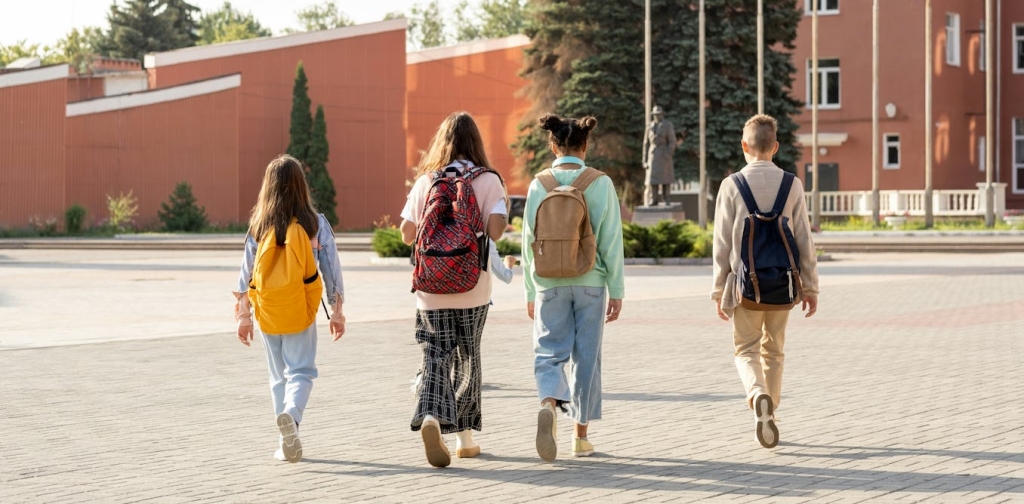

August always feels like one long Sunday to me. It is also a time of year when parents across Canada begin the ritual of preparing their children for September.
We buy the backpacks, lunch kits, running shoes and pencil crayons. There is a nostalgic excitement to it all. I have worked as a school psychologist for the past 15 years. Even now, I still remember the scent of a fresh package of Mr. Sketch markers.



However, research in school psychology and child development shows that the factors that matter most are not things you can put in a backpack. Children thrive when they feel they belong. They do better when they are emotionally regulated, when their routines are predictable and when parents and teachers work together.
In my experience, there are a few common misconceptions about “readiness” that I find worth challenging.
Myth: School readiness is mostly about academics
Parents often worry that their child has forgotten math over the summer or that their reading has lagged. While these concerns are valid, academics are only one part of school readiness.
More important questions are whether a child actually wants to go to school, and whether they feel connected to their school community. We should be asking if they believe the school is a place where they fit in.

While belonging won’t instantly raise a student’s grades, it supports the behaviours that allow learning to happen in the first place. It is what drives a child to show up, participate and keep going when the work gets hard.
These effects last well into adulthood. A stronger sense of connection during adolescence predicts lower symptoms of depression and anxiety in later years.
In a Nova Scotia study of foster parents, respondents noted that success was about more than grades. Feeling safe and knowing adults cared about them emerged as important indicators of a successful school experience.
Myth: Connection just happens
Belonging is not luck. It is something built intentionally by teachers, parents and peers.
I recently completed research with graduate student Natalie Lawy in which we listened to autistic young people talk about inclusion at school.
For these students, inclusion was about more than being physically present in a classroom. It was about being understood, accepted and supported, and having safe spaces where they could truly be themselves.
The same is true for all students. There is a critical difference between being in a classroom and feeling that you belong in it. For parents, a useful back-to-school question is: “Who will my child know they can turn to when things get difficult?”
Myth: Getting ready starts the night before
Readiness starts much earlier. Children benefit from predictability, but summer often erodes the structures of the school year. Bedtimes drift later and mornings slow down.
While consumer culture promotes August back-to-school sales, we should view the month as a time for rebuilding routines. This includes sleep and morning schedules, but also simpler acts like having family meals or reading for pleasure.
Research shows that family routines during the transition to kindergarten can lead to gains in reading and mathematics, as well as better overall health. Consistent sleep is also linked to stronger language skills and social competence. The goal here is predictability rather than perfection. Parents do not need to turn the final weeks of summer break into a boot camp.
Myth: Back-to-school anxiety is a problem to be fixed

When children are worried, it’s natural for parents to feel an urge to step in and remove those anxieties, hoping to make the first week as painless as possible. But some anxiety is normal, and indeed essential. It can signal that something matters.
The goal should not be to shut down the nerves. Instead, we can help children learn to experience uncertainty and still manage what comes next.
For example, it is common for some kids to feel social anxiety when they start high school. However, students who believe they can handle their own emotions are less likely to experience anxiety and more likely to adapt well socially later.
One of my favourite metaphors from cognitive behavioural therapy is the idea that rather than trying to make the butterflies disappear, we can teach children how to fly with them. This means listening rather than immediately reassuring, while also reminding children of previous times they successfully managed uncertainty. Kids can do hard things.
Myth: Wait until something goes wrong
It is much harder to build trust for the first time when everyone is already in crisis. I always encourage parents to introduce themselves to the teacher or attend an “unload your backpack” day.
These small gestures are about more than just logistics; they are about building trust. When parents feel involved and connected, students adjust more successfully.
Parents and teachers may see the same child differently, but this does not mean one is wrong. Children behave differently in different environments. Proactive communication allows these two perspectives to merge into a more complete picture of the child.
Myth: If my child struggles, they need testing

As a school psychologist, this is one of the most common questions I hear from parents. There is often a belief that a formal diagnosis is the only way to get a child the help they need. But testing is not magic. A test does not solve a problem. Instead, it answers a question.
When children struggle, effective schools do not jump immediately to psychological assessment. They start by observing the child and trying different strategies in the classroom to see what works. An assessment becomes truly useful when we need to understand why a student continues to struggle despite those efforts.
The question parents should ask is not “Should my child be tested?” Instead, try asking: “What question are we trying to answer?” A psycho-educational assessment should be a tool to help us make better decisions about how a child learns. It should lead to meaningful support rather than just providing a new label.
Packing for September
As August arrives, enjoy the new clothes and backpacks. There is something special about opening a fresh package of markers.
But there are other things children need that don’t fit into a backpack. They need to arrive rested, with a sense of what to expect and the confidence that they, too, can do hard things. They need a supportive bridge between home and school.
Most importantly, they need to walk through those doors believing they belong. That is the most important thing parents can help their children pack this September.




















Comments are closed.