


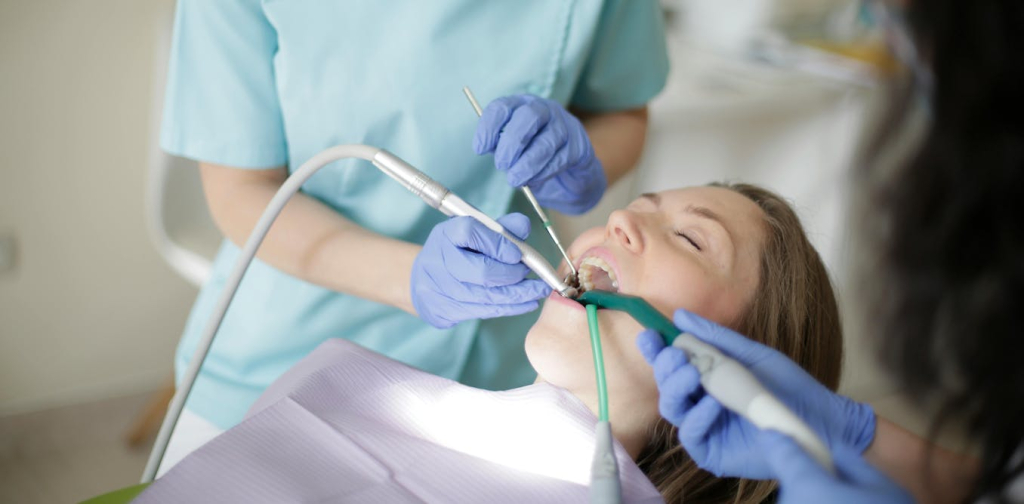

This week’s federal budget was meant to help tackle the cost-of-living crisis.
But Treasurer Jim Chalmers has done little to address a big out-of-pocket health cost millions of Australians face – dental care. This highlights the blind spot in the way successive governments think about oral health.



Yes, ongoing funding has been announced for two dental schemes – one for adults, the other for children.
These sound promising, until you dive into the details.
Read more: Urgent care clinics, medicines and vaccines: what the budget means for Australians’ health
What’s been announced for adults?
For the first time, the government will permanently fund the Public Dental Services for Adults agreement. This is where states and territories provide dental services to adults, usually those on a low income, in public dental clinics and dental hospitals.
This replaces a funding agreement with states and territories that started in 2012. This is when the Labor government agreed to provide A$345.9 million over three years to treat an additional 400,000 eligible adult public dental patients – generally low-income adults with a government concession card.
However, a change of government in 2013 saw changes to the agreement. This ultimately reduced the funding in 2017 to $107.8 million per year and has remained frozen at that level ever since.
The dental sector has been critical in the past of the one- and two-year extensions to the agreement, with the uncertainty placing pressure on public dental clinics and patients. So, this budget decision now to permanently fund public dental services is welcome.
But the real problem lies in the forward estimates. The budget projects ongoing funding of $107.8 million a year to 2029–30. That’s the same amount since 2017.
In that time, the Australian population has increased. Then there’s the impact of inflation. So in real terms, this amounts to a decrease in funding, for a larger pool of people who would potentially benefit. That potentially places even greater pressure on waiting lists.
Now we have a situation where many people are forced to wait months or even years to access basic and necessary dental treatment in the public system.
So many patients end up presenting to doctors or hospital emergency departments for their dental problems, other health issues linked to poor oral health (including diabetes and heart disease) worsen, and there’s a loss in productivity.
How about children?
The budget also announced extended access to the Child Dental Benefits Schedule to state and territory dental services, on an ongoing basis. This provides more certainty for families and providers.
This schedule currently provides $1,158 over two years per eligible child to receive basic dental care in either the public or private system.
But this is a demand-driven system, and fewer people than expected have used it since the scheme started. The actual spending has consistently fallen short of the $600 million that was originally budgeted in 2014–15.
This budget projects expenditure of around $330 million per year to 2029–30.
Given that fewer than 40% of eligible children each year access the scheme, there should be greater focus on measures that increase the uptake to improve early childhood oral health – including promoting the scheme to eligible families and streamlining the administration for both families and dental practitioners.
We need ambitious reform
This budget highlights a lack of appetite for the ambitious reform needed to improve access to dental care.
Australia’s National Oral Health Plan expired in 2024, and discussions for the next one are ongoing.
In 2021, the aged care royal commission recommended introducing a Senior Dental Benefits Scheme. In 2023, a Senate inquiry into dental services recommended expanding coverage under Medicare or a similar scheme for essential oral health care, over time, in stages.
Many in the dental profession and the broader community support these reforms. Yet we see no signs these recommendations will be implemented.





















Comments are closed.