


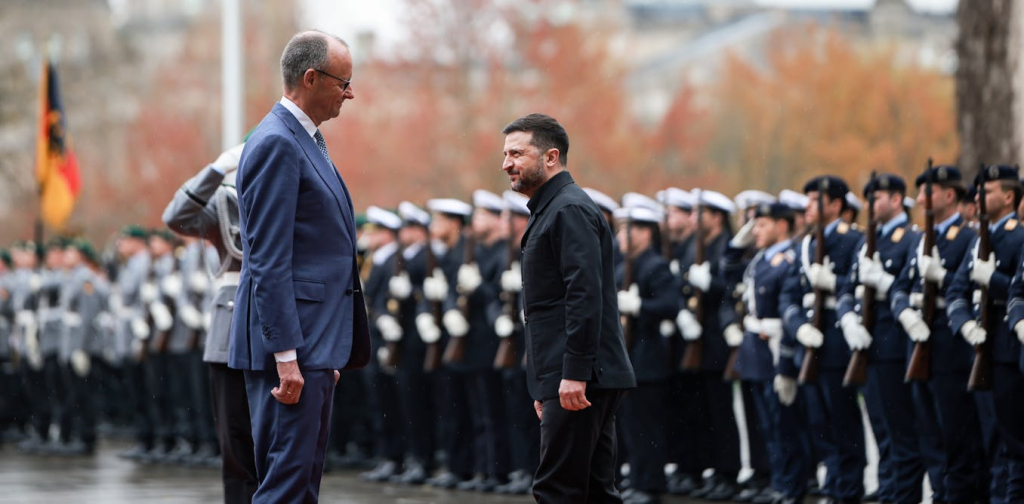

Compounding the alarm triggered by Russia’s 2022 full-scale invasion of Ukraine, the erratic unpredictability of the second Trump administration has made the need for European security autonomy obvious. On a number of occasions over the past year, Donald Trump has loosely intimated that he might leave the Nato defence alliance.
Washington’s recent move to withdraw 5,000 troops from Germany, plus unease over the US’s actions in Iran, have reinforced the imperative of European strategic independence. The US administration announced its planned withdrawal after the German chancellor, Friedrich Merz, criticised Trump’s Middle Eastern adventurism.



European rearmament is well underway. Governments still need to follow through on their promises to increase defence budgets to Nato’s new 5% of GDP target. But in 2025, European Nato members and Canada spent US$574 billion (£422 billion) on defence – an increase of nearly 20% on the previous year. This was the sharpest annual rise for 70 years.
The security debate should now move into a new phase in which European governments grasp the complex political implications of rearmament. These are gradually becoming apparent. Examples include a sharper trade-off between spending on defence and social programmes, and the prospect of Germany gaining military superiority as well as economic dominance.
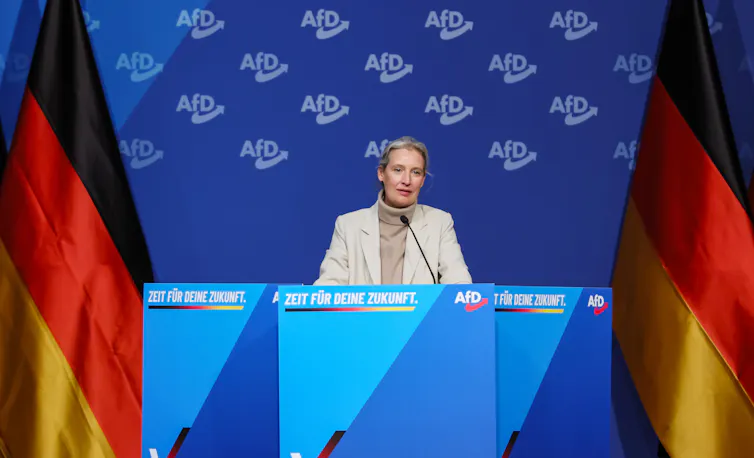
There is also the danger of rightwing populist parties taking power with hugely increased military arsenals. Such parties are currently leading polls in France, Germany, the UK and several other countries, on agendas that sit uneasily with longstanding European security cooperation.
European militarisation adds to the eye-watering military build-up globally, which is increasing the risk of major conflict. There is also the harmful environmental impact of rearmament, and the threat of over-militarisation crowding out Europe’s focus on non-military security – an approach rooted in social development and conflict prevention.
These challenges show that rearmament represents a foundational shift for the European order. Simply grafting this defence build-up on to unreformed EU and Nato structures is likely to create new imbalances.
The EU risks losing its value as a peace project if it morphs into a security union without a more balanced and comprehensive political settlement.
Addressing the consequences
Concerns are rising in several European countries about the need to embed and constrain future German military power within a more deeply integrated EU. Calls for a “European army” are resurfacing, most recently by the Spanish government – but still without political precision.
Defence spending is growing not just through national governments, but EU-level instruments that entail deeper collective security. Many European governments are pushing towards Nordic-style, whole-of-society security in which military and civilian resources mobilise in unison. The EU’s Preparedness Union Strategy, introduced in 2025, is aimed at this too.
Such considerations show that a securitised Europe must be underpinned by continent-wide political debate and channels of accountablity. As citizens are asked to mobilise around full-spectrum defence, they need a greater say in security policies. They need a voice in the trade-offs that higher defence spending will require, and how to manage issues such as Germany’s incipient military predominance.
However, the process of rearmament is currently being carried out in a way that reinforces the opaque, crisis-mode features of EU decision-making that have nourished illiberal populist parties. Europe will struggle to legitimise its security turn without rivitalising its collective political system in ways that provide stronger and more active societal input.
European powers are currently seeking to act more assertively in defence of their immediate geopolitical interests. They are doing so while not entirely jettisoning the liberal-order principles of rules-based cooperation and openness.
But they are struggling to inject this combination with clear, precise content. European governments have not, together, defined a common position on how far European rearmament should be used to project sharper-edged power externally, in addition to dissuading aggression against European territory.
European security deployments and conflict prevention elsewhere in the world have retrenched in recent years. The withdrawal of EU military forces from Africa’s Sahel region is perhaps the most notable example. It is unclear whether the current security turn aims to reverse this trend, or move further in the same direction.
Rearmament also raises questions about the organisational structure of the European order. Security dynamics are altering power balances and the relationship between different regional bodies. They are dragging the UK back into European affairs, for example, and prompting talk of new, flexible forms of alliance across the continent.
Upgrading European burden-sharing and coordination within Nato is overdue. But the alliance is unlikely to suffice as a structural, ordering principle for post-Trump security autonomy. Other formats will be needed to allow greater thematic and geographic adaptability.
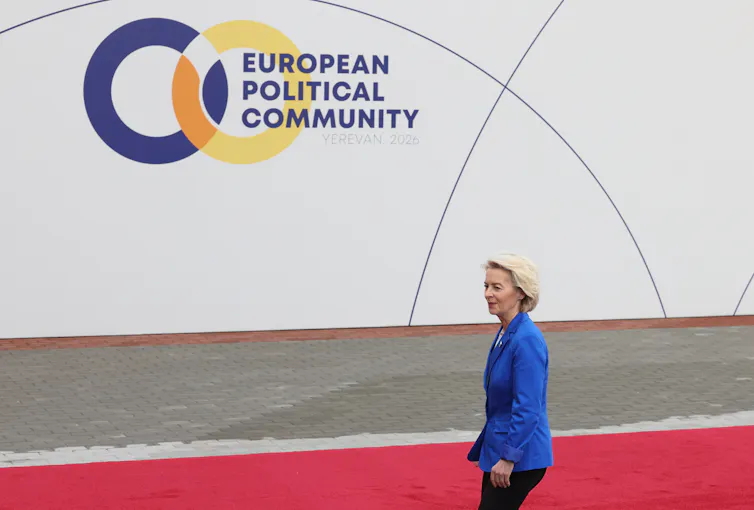
Discussions took place on defence and security matters at the European Political Community summit in Armenia on May 4. It involved not only EU member states but the UK and other non-EU European powers. Recent European coalition efforts covering Ukrainian security and navigation in the Strait of Hormuz may herald a trend towards functional and shifting clusters of states.
Security debates do not neatly match the EU’s economic and regulatory space – and this invites reflection on innovative formats. Excluded from EU security plans, the British government especially needs to be ready with proactive ideas that contribute to structural reordering, well beyond negotiations of the current EU-UK reset.
As the EU finalises its new security strategy and the UK moves forward with implementing its strategic defence review, European governments need to address the political ramifications of rearmament. These present harder, more structural challenges than hiking defence budgets – but currently, governments are pushing them down the road.
Until these challenges are resolved, European rearmament will rest on shaky foundations, and generate many difficulties in its wake.













Comments are closed.