


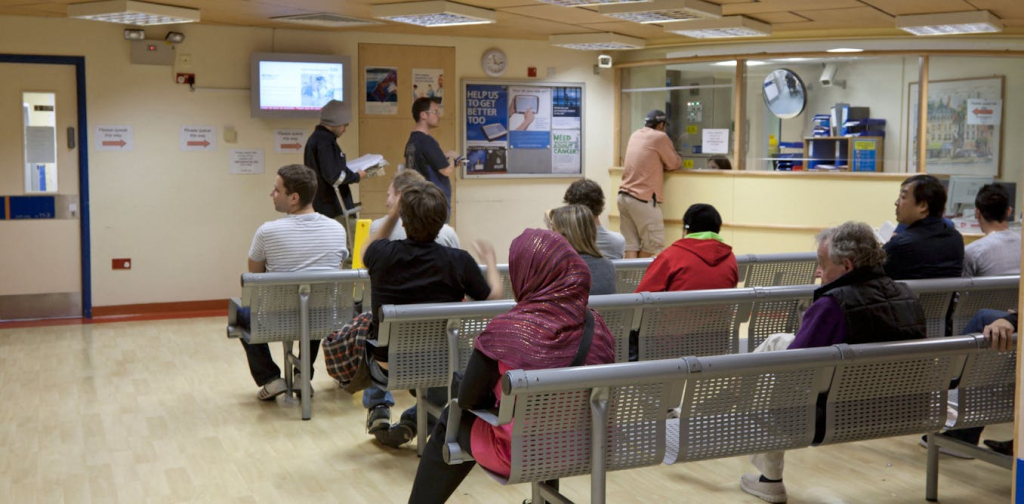

After years of grim records, the NHS in England finally has some good news to report. The waiting list for planned hospital care has begun to edge down, and the share of patients treated within the 18-week target has climbed, from 59.8% in March 2025 to around 63% a year later. Ministers, who have promised to restore the 92% standard by 2029, are keen to claim momentum.
Until recently, it was difficult to say whether that recovery was reaching everyone equally. That changed in July last year when NHS England began publishing waiting-time data broken down by deprivation, age, sex and ethnicity for the first time. New analysis of this data by the Health Foundation, an independent health policy charity, gives us some answers.



The charity found that, nationally, the differences are narrow. In April 2026, 62.5% of people living in the most deprived areas had waited less than 18 weeks, compared with 63.6% in the least deprived. That 1.1 percentage point gap is the smallest since the NHS began publishing this breakdown, down from around 1.8 points in June 2025.
It would be easy to file that under “problem largely solved”. But a percentage point stops looking small when you work out what it means for real patients.
That 1.1 percentage point gap may sound small, but it amounted to around 7,400 people in the most deprived areas waiting more than 18 weeks for treatment in a single month. Repeat that month after month and that “trivial” gap becomes a great many people waiting in pain and anxiety.
Where are the gaps biggest?
Inequalities between rich and poor areas exist across almost every speciality. They are largest in plastic surgery, where patients in the richest areas are seven percentage points more likely to be treated on time than those in the poorest areas. Dermatology and urology also have large gaps, at five percentage points each.
The national figure also hides big local differences. Nearly two-thirds of the NHS bodies responsible for planning health services (integrated care boards) in their local area have bigger gaps than the national average. In other words, averaging the whole country together makes the problem look smaller than it is in many places.
The ethnic differences follow a similar pattern. People from Indian, Pakistani and Bangladeshi backgrounds consistently wait longer, at 60-61% seen within 18 weeks.
Again, the aggregate understates it: in dermatology, just 54% of south Asian patients were seen within 18 weeks, compared with 63% of white British, Irish and other white patients – a nine-point gap. For Black African, Caribbean and other Black patients, the difference is around six percentage points.
However, people living in poorer areas and some minority ethnic groups are younger on average, and the NHS quite properly prioritises patients who are older, more seriously ill, or at greater risk if they wait.
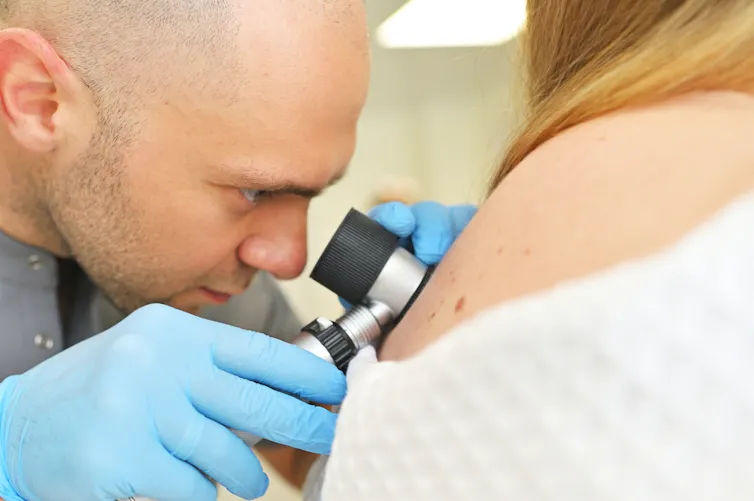
Dermatology illustrates this challenge. Patients suspected of having skin cancer are often moved up the queue, and skin cancer is more common in older people and those with lighter skin. So some differences in waiting time may reflect legitimate clinical priorities rather than discrimination.
But that explanation only stretches so far. Earlier analysis found that inequalities in waiting times persisted even after taking age into account. Combined with the fact that gaps appear across almost every speciality and much of the country, this suggests they cannot simply be explained by differences in patient populations or geography.
Research suggests that practical barriers may also play a role – from struggling to get to appointments and finding transport to problems accessing interpreters, taking time off work and navigating a complicated NHS system.
Reasons to be optimistic
Despite this, the findings are genuinely encouraging.
Inequalities in the longest waits (over 52 weeks) have narrowed substantially, driven largely by five areas with high levels of deprivation: Birmingham, Solihull, Greater Manchester, Lancashire and South Cumbria. Meanwhile, some of the best-performing systems, such as Gloucestershire, record among the smallest differences. Places are managing to be fast and fair at the same time.
That matters, because it lays to rest a stubborn assumption. Speed and fairness have long been treated as a trade-off, as though narrowing gaps must inevitably mean missing targets. The past year offers real-world evidence that this is a false choice: several of the systems that cut their longest waits fastest were those serving the most deprived populations.
None of this happened by accident. It took a decision to start publishing the data, and sustained work in places like Lancashire and South Cumbria to act on what they showed. How many people are waiting and who is waiting longest remain different questions – but for the first time we can answer both, and both answers are moving in the right direction.
This is a genuine opportunity, and now is the time to act on it, while the recovery is still gaining ground. It means sharing what the best-performing systems have learned, continuing to track progress as waiting times fall, and treating fairness as an ongoing part of the job – not something to deal with once targets are hit. The task now is to keep that going.











Comments are closed.