


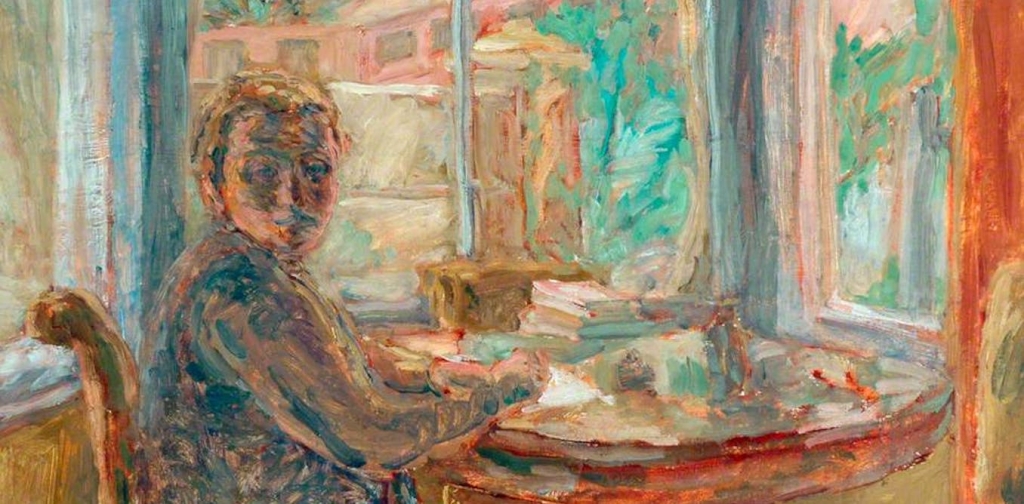

The Long Version is a new novel which follows a short period in the life of Sylvie, a middle-aged writer who has just published a best-selling yet critic-dividing feminist book.
We meet her at an event to launch her book. The Long Version opens in an engaging manner, as if we are already mid-conversation with Sylvie, as she offers us context on her relationships and the cultural backdrop to the experiences through which we will accompany her.



Sylvie is a gutsy narrator. She’s ready to dump a glass of beer over the head of a publisher who doesn’t pay her for editing a translation; berate her children for invading her privacy, and give a sound dressing-down to men in her festival panel audience who meekly protest at her brand of feminism. There are also more concerning negative responses to Sylvie’s latest book, with some women accusing her of a binary approach to gender or a complicity with patriarchal power structures.
However, despite the polarised responses to Sylvie’s professional and personal exploits, Hůlová refuses to allow Sylvie to come across as either a perfect model of feminism or a pitiable relic. She is caught between two generations she can never fully please. The first is her well-meaning but traditional mother, a woman to whom “the idea of gender as a matter of free choice is genuinely appalling”. The other is her daughter, Judita, an Instagram-savvy environmentalist incapable of putting an empty juice box in the recycling. As such, Sylvie finds herself torn between opposing attitudes, unable to embrace either what has gone before her or what is to come.
The novel’s main tension comes when Judita reads her mother’s old diaries and understands that Sylvie’s teenage relationship with the (much older) famous author Jan Síra constituted an abuse that has left her mother emotionally damaged. This causes Sylvie to reflect on the harassment she endured as a teenager, with incidents including another famous poet sticking his hand up her skirt and asking Síra to “borrow” her for the evening. However, she still refuses to acknowledge the validity of Judita’s concerns. This leaves the reader with an intriguing reflection on older women’s relationship to contemporary feminist movements.
Sylvie is furious with Judita, who she believes “thinks she has the right to hold [her mother] accountable for a life she not only knows nothing about, but can’t even imagine, since that whole era is irretrievably gone”. Sylvie, meanwhile, feels she has fewer certainties as she gets older. The companions of her youth, once radical publishers of clandestine literature, are now “long-haired pensioners from the second-tier underground” coasting on the memories of their glory days.
The novel’s syntactic complexity is brilliantly rendered by translator Alex Zucker. Even the opening sentence (“David and I met years ago, in a sleazy club where Oto was celebrating his 50th birthday and David was drowning his sorrows over his breakup with the girl before Marie”) could have been confusing, but Zucker captures both clarity of detail and Sylvie’s conspiratorial narrative style. Similarly, at the moments when the writing flips suddenly from everyday action to blinding emotion, Zucker succeeds in conveying this switch like a punch to the gut.
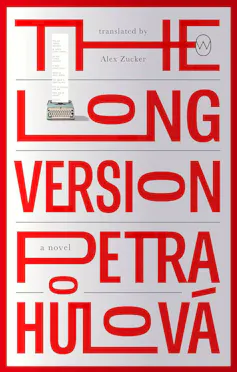
The Long Version is also a meditation on writing, and the cultural function of literature. Sylvie explains what drives her: “This is why I write, I think. Connecting with readers is what it’s all about. I often picture them lying in the bathtub at home, holding my book in their hands.”
Ideas for new books come to her while she goes about banal everyday activities, and she suffers from the perennial problem faced by women writers (always being asked in interviews and at public events what it is to be a woman who writes). There is also a comment on the global circulation of literature, when Sylvie observes that “without support from the state, there would be no Czech books published abroad”.
Above all, though, this is a human story about women as they get older, when society values them even less and their relationships dissolve or their trust is abused. Sylvie notes wryly that “success only increases your sex appeal if you’re a man”, and that every young woman experiences a “piercing realisation that she too will grow old one day”.
This underlines her own loneliness. Sylvie is divorced, involved in a companionable yet limited long-term sexual arrangement with her married publisher, masturbating in the ten-minute breaks between her seminars. She is spurned by a younger poet who she mistakenly thinks has shown an interest in her, and is forever the best friend to the real love of her life (who comes across as an obscenely introspective narcissist).
Hůlová’s anarchic focus on gender is not new territory for her. Her riotous Three Plastic Rooms and dystopian The Movement (both also translated by Zucker) challenge both everyday sexism and deep-seated cultural misogyny. But each of her books is entirely original.
In The Long Version, Judita refuses to engage with her mother until the past is confronted and laid to rest. This stubbornness leads the novel towards an inevitable confrontation, but Hůlová eschews simple resolutions. Sylvie is a complex and intriguing character, struggling to navigate a changing world while attempting to reconcile past and present, professional fulfilment and personal responsibilities, love and passion.
This article features references to books that have been included for editorial reasons, and may contain links to bookshop.org. If you click on one of the links and go on to buy something, The Conversation UK may earn a commission.























Comments are closed.