


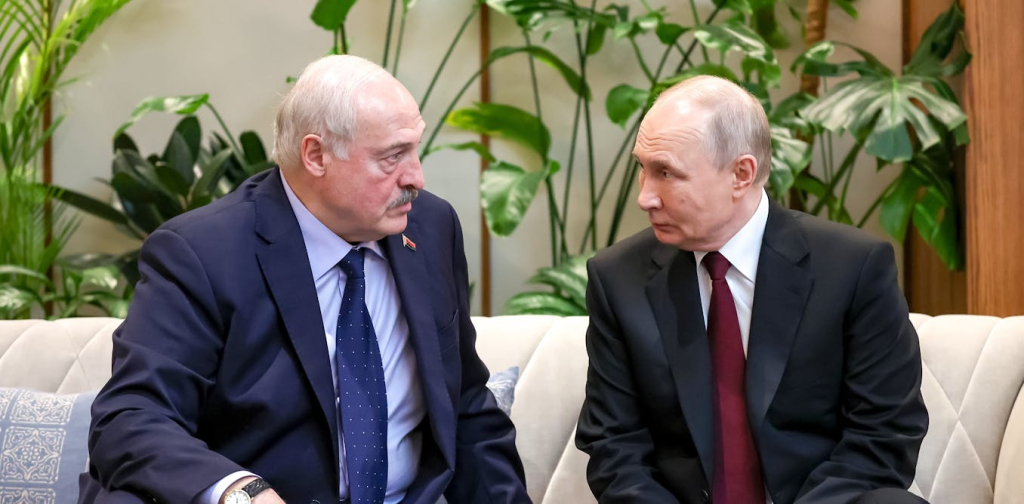

The Belarusian dictator, Alexander Lukashenko, spoke at a ceremony for military graduates and officers on July 6. He predictably mentioned the war in neighbouring Ukraine. “No one is going to send you into this slaughter,” he assured them, “we do not need war; it is tragic that it is going on in Ukraine.”
Yet, arguably, Lukashenko has in fact needed the war. After almost being toppled by mass street protests in August 2020 following a flagrantly rigged presidential election, it was Russia’s full-scale invasion of Ukraine a year and a half later that finally helped him cow his domestic opponents. He claimed to offer stability where political unrest could turn Belarus into another Ukraine.


Nowadays, however, the opposite might be the case. It is the exiled Belarusian opposition that could be helped by the tragedy in Ukraine, with Lukashenko facing reported pressure from Russia to become more deeply involved in the war and Ukraine ratcheting up the pressure on him not to.
Belarus is already involved in the war in many ways. Russia used Belarusian territory as a staging area for its full-scale invasion in February 2022 and, throughout that year, fired missiles into Ukraine from Belarus. Ever since, Lukashenko has sought to take advantage of the conflict while keeping his own troops safely in their barracks.
The war has boosted an economy weighed down by western sanctions. Belarusian factories produce weapons and ammunition for the Russian military, while others work on repairs or routine maintenance. More recently, as Ukraine has stepped up drone attacks on Russian oil and gas infrastructure, it has made sense for Russia to increase its use of two large oil refineries in Belarus which have been safe from attack.

For Lukashenko personally, the war provided an opportunity to reassert control over society. Having almost ousted Lukashenko in 2020, Belarusian citizens resigned themselves to the status quo. Chatham House opinion polls suggest that people swallowed Lukashenko’s claim that he was keeping Belarus out of the war.
The authorities could also take advantage of international observers’ distraction to double down on repressions inside the country, where hundreds of political prisoners remain. Silencing domestic dissent has been a wartime benefit to Lukashenko. But he has also had to walk a tightrope, giving enough support to Russia’s war effort to convince it he is a loyal and valuable ally and not enough for hostilities to spread to Belarusian territory.
Treading between two fires
Throughout 2026, as Russia has struggled on the battlefield, speculation has grown that the Kremlin wants Belarus’s involvement in the war to increase. In May, Ukrainian officials said their intelligence agencies had information that Russia wanted to mount a new offensive against Ukraine from Belarus.
With the impetus in the war on Ukraine’s side, the Russian leader, Vladimir Putin, might welcome the opportunity to open a new front in northern Ukraine. But there are drawbacks. The Belarusian oil refineries, which have not been treated as military targets while Belarus’s troops have stayed out of the war, would be vulnerable to attack. And as integrated as Belarusian troops are into Russia’s military planning, their lack of combat experience might create problems were they directly involved.
Lukashenko is also feeling a lot more pressure from Ukraine, which recently accused him of letting Russia use signal relay equipment in Belarus to guide drones towards targets. On June 19, the Ukrainian president, Volodymyr Zelensky, gave an ultimatum. He told Belarus to dismantle the relay stations or else Ukraine “would do it” itself.
This was understood as a threat to strike targets inside Belarus, and reports suggest the relay stations were switched off on June 22. In the meantime, Lukashenko hurried to Russia for closed-door discussions with Putin. The Wall Street Journal cited sources stating Moscow was trying to coax Belarus to abandon its pretence of neutrality.
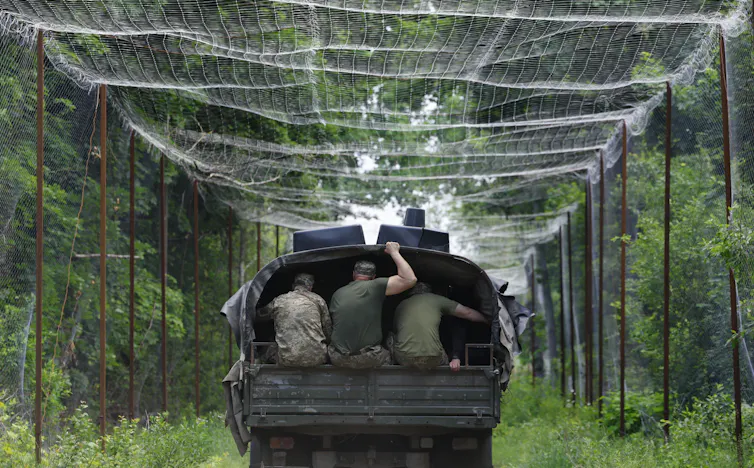
The less noticed aspect of these developments is the Ukrainian side’s growing engagement with the exiled Belarusian opposition. After February 2022, the Ukrainian authorities steered a pragmatic course in an effort to persuade Lukashenko to stay out of the fighting.
This meant not provoking the authorities in Minsk. As a corollary, the Ukrainians limited their contacts with the exiled opposition – the Belarusian democracy movement, as it prefers to be known – and its figurehead Sviatlana Tsikhanouskaya. However, from the beginning of 2026, Ukrainian officials have changed tack.
In late January, Zelensky and Tsikhanouskaya had their first official sit-down meeting. Tsikhanouskaya then travelled to Ukraine’s capital, Kyiv, for a series of high-level meetings in May. These included meetings with Zelensky and the Ukrainian foreign minister, Andrii Sybiha.
She has also opened a “diplomatic mission” for the Belarusian democracy movement in Kyiv, and meetings between Ukrainian officials and Tsikhanouskaya’s office are becoming commonplace.
As Lukashenko’s highwire act teeters, Ukraine seems keen to aid his opponents. They have, in turn, become more adept at drawing attention to Lukashenko’s possible war preparations, pointing to military modernisation and the militarisation of society in Belarus.
The deeper Lukashenko involves Belarus in the war, the greater the motivation for Ukraine to support the Belarusian democrats, who share its objective of resisting Russian imperialism. It is a bold bet by Ukraine. But after years of resisting Russia, it would be a mistake to underestimate their odds of success in helping Lukashenko’s opponents prevail.













Comments are closed.