


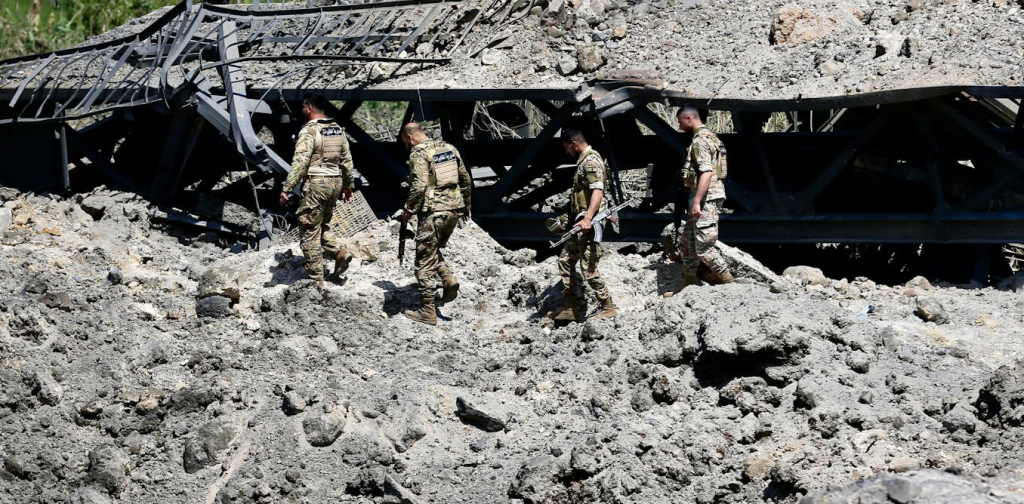

Following direct talks between Lebanese and Israeli officials, a ten-day ceasefire has been agreed between the two countries. It is currently unclear whether Hezbollah, the Iran-backed group that has been fighting Israel in southern Lebanon since early March, has agreed to observe the temporary cessation of hostilities.
If it holds, the ceasefire will be welcomed by the Lebanese government. This latest conflict has brought the state to its knees. Not only is Lebanon’s government logistically and administratively stretched, having to find shelter for and relocate over a million displaced citizens, it is also in a fragile position politically.



Having taken the decision to ban Hezbollah’s military activities and restrict its role to the political sphere on March 2, the government is now attempting to establish full control over the capital of Beirut. The cessation of hostilities between Israel and Hezbollah is thus essential to avoid a complete breakdown in state authority.
The ceasefire also comes despite Israel’s seemingly mixed stance on ending its conflict with Hezbollah. Hours after the signing of an earlier ceasefire between the US and Iran, Israel launched over 100 missiles towards Lebanese territory. The attacks, which came amid confusion over whether Lebanon was covered by the deal, killed more than 300 people in what has become known as “Black Wednesday” in Lebanon.
There has been much speculation about the strategy behind this attack. Some argued the Israelis were taking advantage of the unclear situation. Others saw the attack as a deliberate tactic to derail the entire negotiation process, knowing Iran would insist on Lebanon’s inclusion in any talks. But it soon became clear that the Trump administration preferred for hostilities to, at the very least, de-escalate in Lebanon.
With the US insisting that Israel preserves “its right to take all necessary measures in self-defense, at any time, against planned, imminent or ongoing attacks”, it is unclear what kind of ceasefire will be implemented. The most likely outcome is a scenario in which Israeli attacks on Beirut end, while troops continue their skirmishes with Hezbollah in and around the southern villages.
Hezbollah has already insisted the ceasefire must not allow Israeli troops freedom of movement in the south. However, the Lebanese army has reported that there have been “several Israeli attacks” in southern Lebanon since the ceasefire took effect.
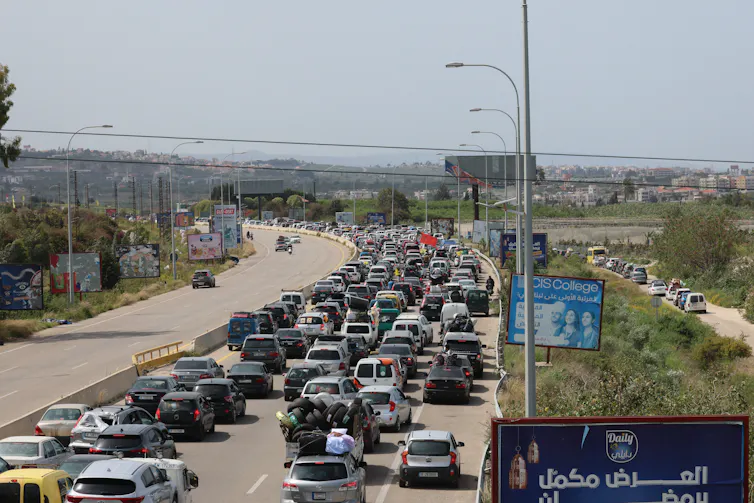
Long road ahead
With ten days to seek further agreements, there is still much left to be negotiated. An ultimate goal for the Lebanese government will be to secure full Israeli withdrawal from the territories it has captured along the border.
The Israeli military has taken full control of the first line of villages and towns along the border and is currently sitting a few kilometres inside Lebanese territory. There has been irreparable damage to buildings in the villages it has occupied, leading some to compare the destruction to that seen in Gaza.
But there is no obvious reason for Israel to withdraw. Local media has reported that Israel is insisting on a long-term security zone in Lebanon of up to 0.8km to provide protection from future Hezbollah rocket attacks. A second zone up to the Litani River – around 30km from the border – would remain under Israeli control and would be “gradually” handed back to the Lebanese armed forces.
A 2006 UN resolution demanded the withdrawal of all armed groups, except for the Lebanese army and UN peacekeepers, from this area. However, the resolution has been violated repeatedly both by Israel and Hezbollah. Israel’s defence minister, Israel Katz, has previously stated that this larger security zone is an objective for his country’s military.
There is also no real bargaining chip the Lebanese government can play. The only resistance to Israel’s presence on Lebanese soil in the current conflict is being provided by Hezbollah, which is not represented in the direct talks. And it is clear by now that Israeli officials simply do not trust the Lebanese state’s ability to control or rein in the Iran-backed party.
There are rumours that Israeli and Lebanese officials may be working on a possible peace treaty, emulating the 1978 Camp David accords. These accords allowed Egypt to reclaim the Sinai peninsula in exchange for peace with Israel. A similar treaty could make Israeli withdrawal from Lebanon possible.
But there are three factors that make a peace treaty unlikely. First, the issue of peace with Israel remains highly divisive in Lebanon. In 2022, surveys implied that roughly 17% of Lebanese people supported normalisation with Israel, a relatively high percentage among Arab countries.
After two conflicts since then, it is unclear how these numbers now break down. But recent Shia-dominated protests in Beirut show just how divided the country remains over this issue. At a protest on April 13, demonstrators called Lebanon’s Sunni prime minister, Nawaf Salam, a “Zionist” for agreeing to engage in talks.
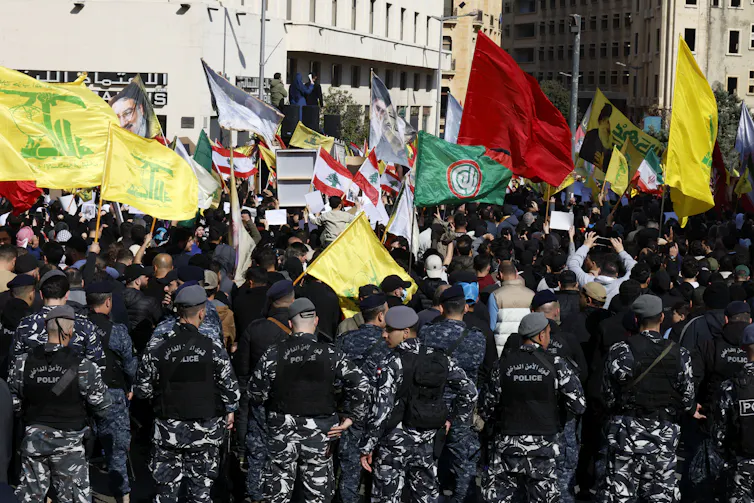
Second, it is unclear that the Israelis themselves are looking for peace. There is considerable division among members of the Israeli cabinet on this issue. While the foreign minister, Gideon Saar, has insisted that “peace and normalisation” are desired, the more extreme right-wing minister Bezalel Smotrich has continued to call for the permanent annexation of southern Lebanon.
And third, what remains an insurmountable reality for both countries is Hezbollah itself. The party’s reason for existence is to resist Israeli occupation and it has said over the years that it would only hand over its weapons in exchange for full Israeli withdrawal and if a Lebanese state emerges that showcases an ability to repel Israeli forces on the border.
The fact that the Lebanese armed forces have not entered the current fight with Israel and have evacuated positions in the south ahead of Israeli incursions will not encourage Hezbollah or its base to trust any peace process and lay down its arms peacefully.
All of this leaves Lebanon with few realistic outcomes. What people inside the country now fear is a return to the status quo: a fragile and unobservable ceasefire, Israeli troops stationed in Lebanese territory and a state stuck in gridlock.


















Comments are closed.