



As the US and Israel’s assault on Iran grinds on, the Trump administration has issued increasingly bellicose claims that American and Israeli forces are delivering ferocious blows to the Iranian regime.
The US secretary of defense, Pete Hegseth, warned of the “most intense” day of strikes yet on March 10. And Donald Trump followed with a claim that the war will end soon because there is “practically nothing left” in Iran for the US military to target.


This is all part of a campaign that the White House has declared is aimed at “systematically dismantling the Iranian regime’s ability to ever again threaten America, our allies, and global security.”
So far, this campaign has largely targeted Iran’s military and nuclear facilities. But some critical non-military infrastructure has also come under attack. Israel struck two oil refineries and two oil storage facilities near Tehran on March 8, with Iran accusing the US of attacking a desalination plant the same day.
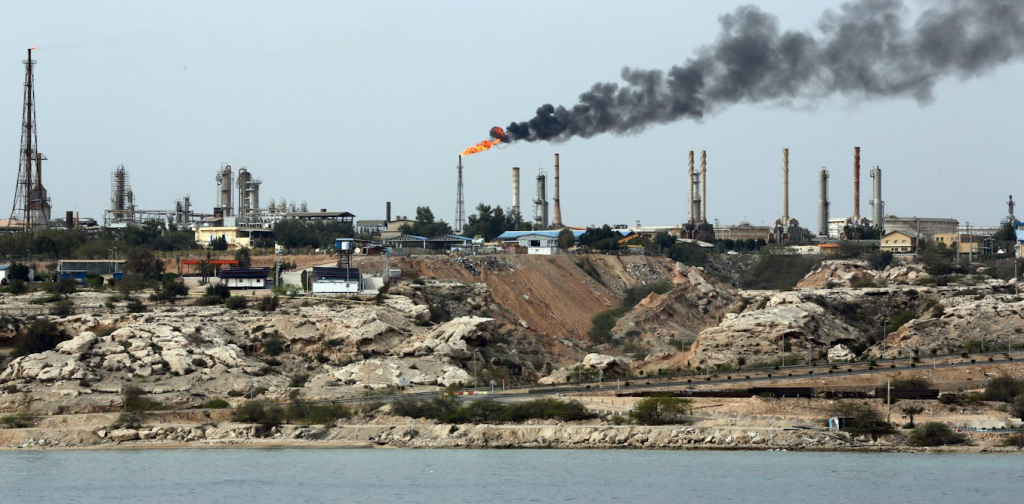
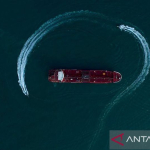
Yet one target vital to Iran’s economic survival, its largest export terminal for sending oil to international markets, remains unscathed. That terminal sits on Kharg, a small coral island off Iran’s south-western coast. This is where oil pumped across Iranian oil fields arrives via subsea pipelines to be loaded on to tankers, mostly bound for China.
At peak capacity, the terminal’s vast storage facilities and multiple jetties can handle millions of barrels of oil per day. Kharg accounts for an extraordinary 90% of Iranian crude exports and tens of billions of US dollars of annual government revenue.
No other major oil-producing country is so reliant on just one facility. Saudi Arabia, Kuwait and the United Arab Emirates in the Gulf, and massive producers elsewhere such as Russia, Mexico and Venezuela, do not concentrate almost all their export capacity in a single location.

Iran’s energy lifeline
Kharg Island became the linchpin of Iran’s oil industry due to a convergence of history and geography. Nowadays, Kharg is widely known among Iranians as the “forbidden island” because of the tight military restrictions and secrecy that surround it.
Yet behind its modern geoeconomic significance lies an ancient history, from early human settlements dating back more than 4,000 years to occupation by various empires that understood its strategic maritime importance as a trading post. The island also housed political prisoners in the mid-20th century, before the construction of Kharg’s modern terminal began in 1958.
The island quickly became Iran’s dominant export port for two reasons. First, it could be connected by pipeline to the major oil fields in south-western Iran. And second, its deep water location made it one of the only places on Iran’s western coast that could accommodate the new supertankers that were at the time dramatically reducing the cost of transporting oil.
Once the gigantic storage facilities, jetties and subsea pipelines feeding the terminal had been constructed, centralising exports there created significant efficiencies. Oil from multiple fields could share the same storage and loading infrastructure, thereby reducing overall operating costs.
Kharg’s dominance in the national oil export system was further reinforced after the Islamic revolution in 1979. This was because regional tensions and Iran’s emphasis on self-reliance discouraged it from using pipelines that pass through neighbouring countries.

At first glance, Iran’s reliance on one terminal for nearly all its oil exports seems like a major strategic vulnerability. There are also no significant operational challenges preventing the US and Israel from destroying it. Yet, paradoxically, this is precisely why it has not been targeted thus far.
Crippling Iran’s entire oil industry for months – if not years – would shatter the already fragile confidence in financial markets that Trump can achieve his vague war aims without long-term disruption to the global economy. Some analysts predict that oil prices could soar to US$150 (£112) a barrel if Kharg is hit.
To put that figure into context, Russia’s 2022 full-scale invasion of Ukraine caused Brent crude to rise to well over US$100 a barrel for four months. This was not the only cause of the roughly 9% surge in inflation seen at the time, but it was an important factor in the ensuing cost of living crisis.
Launching an attack on Kharg would likely expose Trump’s gamble in launching a war against Iran while simultaneously promising US consumers that virtually everything would become more affordable as a catastrophic error. American voters are indicating that inflation and the cost of living are their biggest concerns ahead of the upcoming midterm elections in November.
Of course, Trump’s intervention in Iran may lead to rising prices even if the US does not attack Kharg Island. The wider disruption to Gulf shipping in the strait of Hormuz has already caused oil prices to rise to around US$100 per barrel. And in his first statement since becoming Iran’s supreme leader, Mojtaba Khamenei vowed to keep blocking the waterway.
But at least for the moment, Trump seems to realise that Kharg Island needs to be left intact if he is to preserve the already shaky notion that he can end this war in a manner he can present as a success – which increasingly looks like degrading Iran but not forcing it to capitulate – without causing long-term economic pain for Americans.
One other factor preventing the US from destroying Kharg is that it would cause long-lasting damage to the Iranian economy. This would undermine any pretence that Trump is acting in the interests of the Iranian people, as he has claimed, since any new government would be financially crippled if the regime did collapse.
So Kharg Island survives intact for now. This is, in large part, due to the fundamental contradiction between Trump’s objectives in Iran and the political and economic costs he is willing to incur in pursuit of them.












Comments are closed.