



A former colonel in Syria’s Air Force Intelligence Directorate appeared in court this month in a landmark crimes against humanity case.
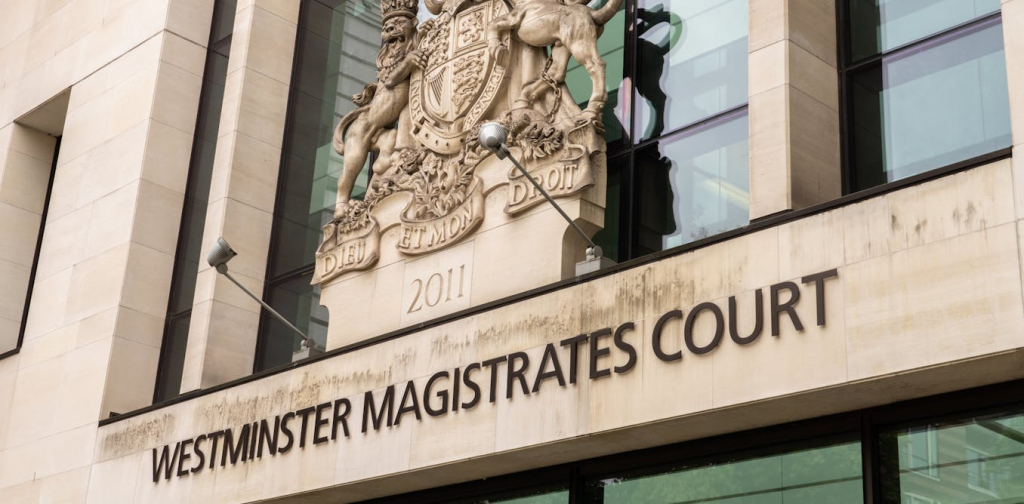
Salem Michel Al-Salem, 58, faces multiple charges, including murder as a crime against humanity and torture. The charges relate to his alleged participation in violent crackdowns on anti-government protests in Damascus in 2011. Al-Salem appeared at Westminster Magistrates Court in London earlier this month, where his case was sent to the Old Bailey. He has yet to enter pleas to the charges.



The court heard that Al-Salem had reportedly sought indefinite leave to remain in England.
This case is significant, not just because of the global effects of the Syrian conflict, which caused the deaths of more than 400,000 people and displaced 13 million. It is also the first case of prosecution in the UK for crimes against humanity allegedly committed by the defendant abroad.
For 25 years, the UK has had the power to prosecute individuals for crimes against humanity under the International Criminal Court Act 2001. It does not matter where in the world the alleged crimes took place, as long as the accused is a UK national or resident.
In recent years, there has been a wave of related prosecutions in Europe and beyond. In 2022, Germany sentenced a former Syrian intelligence colonel, Anwar Raslan, to life imprisonment for crimes against humanity. Similarly,France successfully convicted three Syrian senior officials to life imprisonment. Sweden held accountable a Swedish national who joined Islamic State in Syria, sentencing her to 12 years in prison for genocide, crimes against humanity and war crimes. Many other countries have carried out similar investigations.
These have all been under the principle of “universal jurisdiction”. This principle is recognised in customary international law – unwritten rules that arise from established practice. It gives criminal courts in any state the power to prosecute for serious crimes under international law, regardless of where they were committed.
Universal jurisdiction applies only to the most heinous crimes recognised as such by the international community: crimes against humanity, war crimes, genocide and torture, for example. It reflects the idea that such crimes harm the international community as a whole and cannot go unpunished.
The UK’s legal framework falls slightly short of universal jurisdiction, which is why it has – until now – been absent from the list of countries prosecuting for alleged crimes against humanity in Syria. The reason for this lies in the UK’s legal framework under the International Criminal Court Act 2001.
A limited legal approach
The 2001 Act was introduced by the Tony Blair government to enable the UK to ratify the Rome Statute, the founding treaty of the International Criminal Court. It made it an offence in England and Wales for any person to commit genocide, a crime against humanity or a war crime. It applies to offences committed after 2001, in England and Wales or abroad. However, for crimes committed outside the UK, prosecution is only possible if the alleged offender is a UK national or resident.
Before 2001, these crimes were not absent from UK law. Genocide and war crimes were prohibited under the 1969 Genocide Act and the Geneva Conventions Act 1957.
However, these did not allow for prosecution if the crime was committed abroad. Additionally, no UK law specifically criminalised crimes against humanity. Even if someone had committed an act identifiable as a crime against humanity, the UK courts had no power to charge them with that specific offence.
After 2001, the UK courts could finally prosecute crimes against humanity, but only if the alleged offender is a UK national or resident. This rule does not apply if the person is travelling through the UK or staying in the UK for a short period of time. The UK chose a minimalist approach for genocide and crimes against humanity.
In the UK, full universal jurisdiction is reserved only for crimes recognised by certain international treaties, like grave breaches of the Geneva Convention, or the UN Convention against Torture. For these crimes, it does not matter where the alleged perpetrator lives.
There is a reason for this limited approach. At the time it introduced the 2001 Act, the government did not want UK courts to assume a broad role as global enforcer. From a practical perspective, prosecuting foreign nationals for offences committed abroad requires costly investigations across multiple jurisdictions.

However, it does create loopholes for potential perpetrators. First, a suspect of these crimes can freely visit the UK without fear of prosecution, as they need to be either a resident or a citizen to be prosecuted. Second, the UK has no jurisdiction to prosecute crimes committed before 2001.
Before the Al-Salem case, the International Criminal Court Act 2001 had only been used once. In 2006, seven British soldiers were charged with war crimes following the death of Iraqi civilian Baha Mousa. Corporal Donald Payne, pleaded guilty to inhumane treatment, while the other six soldiers were acquitted.
The Al-Salem trial is a landmark moment, but it appears to be an exception, rather than a turning point. A single prosecution for crimes against humanity in 25 years reflects the UK’s limited commitment to accountability for mass atrocity crimes. Survivors from Syria, Ukraine, Darfur, Myanmar and Palestine have been directly affected by the UK’s inertia.
The UK legal framework needs structural reform. The International Criminal Court Act 2001 should be amended to allow prosecution regardless of the nationality, residence status or location of the alleged perpetrator – committing to true universal jurisdiction like so many other countries.


















Comments are closed.