



•
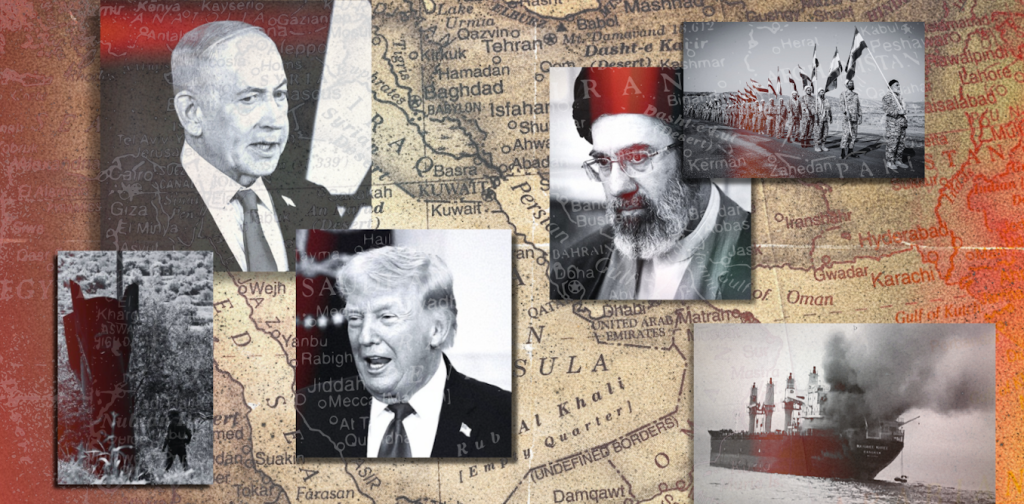
On February 28, the US and Israel launched a war against Iran following weeks of US military build-up in the region and threats from US President Donald Trump.


In the ensuing weeks, Iran has retaliated by striking US assets in the Persian Gulf states and targets across Israel. Israel has launched a ground invasion into southern Lebanon in response to attacks from Hezbollah.
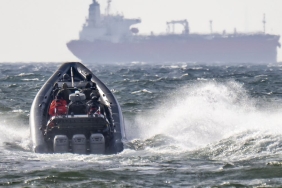
Oil and gas shipments through the Strait of Hormuz have come to a virtual standstill, threatening a global energy crisis. And thousands have been killed, most in Iran and Lebanon.
The entire Middle East has been affected by this war – and the region will no doubt be very different once it’s resolved.
We asked five experts in international politics and Middle East studies to explain the most important changes they see happening following the war.
The academic experts who shared their analysis of this topic are:
Scott Lucas Professor of International Politics, Clinton Institute, University College Dublin. He joined University College Dublin in 2022 as Professor of International Politics, having been on the staff of the University of Birmingham since 1989. He began his career as a specialist in US and British foreign policy, but his research interests now also cover current international affairs – especially North Africa, the Middle East, and Iran – New Media, and Intelligence Services.
Andrew Thomas Lecturer in Middle East Studies, Deakin University. He teaches units on International Relations, Middle East conflict and global governance. His book “Iran and the West: a non-Western approach to foreign policy” (2024) explores how non-Western perspectives on the Middle East and beyond can improve our understanding of intractible conflict.
Chris Ogden Associate Professor in Global Studies, University of Auckland, Waipapa Taumata Rau. He specialises in the interplay between identity, culture, security and domestic politics in India, China, South Asia, East Asia and the Indo-Pacific. His latest book is “The Authoritarian Century: China’s Rise and the Demise of the Liberal International Order” (Bristol University Press, 2022).
Jessica Genauer Academic Director, Public Policy Institute, UNSW Sydney. She is an expert in international conflict and provide regular analysis for national and international outlets on war and conflict. Her research interests include conflict, threat perceptions, and post-conflict institution-building with a focus on the Middle East as well as Russia / Ukraine and the US.
Kristian Coates Ulrichsen Fellow for the Middle East at the Baker Institute, Rice University. His research examines the changing position of Persian Gulf states in the global order, as well as the emergence of longer-term, nonmilitary challenges to regional security. Previously, he worked as senior Gulf analyst at the Gulf Center for Strategic Studies and as co-director of the Kuwait Program on Development, Governance and Globalization in the Gulf States at the London School of Economics.










Comments are closed.