


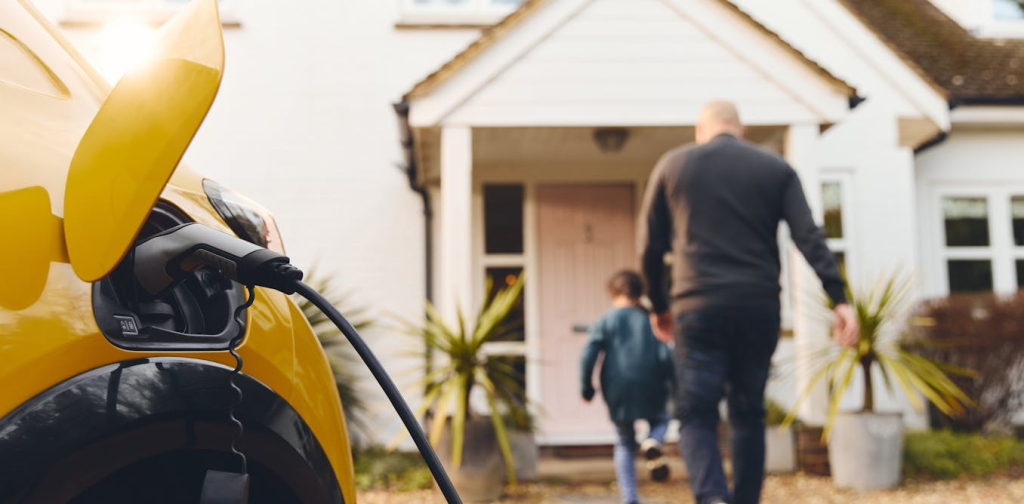

With oil prices skyrocketing following the US and Israel’s bombing of Iran, and the subsequent closure of the Strait of Hormuz, motorists around the world have been looking for ways to save money.
Improvements in electric vehicle (EV) technology, combined with the high price of oil, mean that the tipping point at which most consumers start ditching their petrol cars for electric ones may well have been reached.



Given the nature of that market where more EV users means better infrastructure to support them, there will be no turning back. As it becomes easier to charge a car than to find petrol stations, and as battery technology continues to improve, the relative advantages of EVs will become impossible to match.
For countries like the UK, where renewable sources are producing more electricity, mass adoption of EVs cannot come fast enough. And this is not just for the obvious reasons of improving air quality or reducing reliance on dictators and US foreign policy.
While the oil price shock may be what finally tips consumers towards EVs, adoption provides part of the answer to a different and lasting problem: the cost of electricity in the UK and other countries where investment in wind and solar has so far failed to bring prices down.
Read more: The Strait of Hormuz shows how everything is now about leverage
The UK pays more for electricity than most comparable countries. Gas sets the price of electricity too often. And a relative lack of sun means the UK misses out on the full benefits of solar – the renewable technology that has become cheapest.
What’s more, demand for electricity has been falling as machinery and appliances become more efficient, and as the country moved away from industry and towards services. This means that all the fixed costs of maintaining the energy grid must be shared between fewer users.
How EVs can help
On sunshine, there is not much to be done – the UK will not become Spain. But on the other two problems, the case is strong.
Take gas first. The reason gas sets the price of electricity so often is not that the UK lacks renewable capacity. The country builds plenty of wind farms. The problem is that it cannot always use the energy produced – a lot of it is wasted because there is nowhere to store it. So the fallback is gas whenever there is a need for a lot of electricity, or when there is no wind or sun.
But electric cars can be connected to the electricity grid. When you are not driving and do not need a full battery, intelligent systems can sell electricity back to the market when demand is high or supply is low, and buy it back when it is cheap. The supplier Octopus already offers this in the UK to drivers of certain cars, promising hundreds of pounds of annual savings while giving consumers a choice of when they need to refill their battery.
The scale is striking. Energy regulator Ofgem estimates that putting half of projected EVs on this vehicle-to-grid system by 2030 could provide around 16GW of flexible capacity to the grid. Average demand in Great Britain is around 30GW.
This means that discharging all batteries to the grid at the same time would produce the same flow of electricity as if all offshore wind turbines ran at full capacity simultaneously. Or five times what the new nuclear power plant Hinkley Point C – which is projected to start producing electricity in 2030 – will produce.
But crucially, it would be available on demand and not just when the wind blows.

At the European level, researchers estimate that the same 50% vehicle-to-grid penetration could fully cover EU stationary storage needs (the capacity to store surplus electricity and release it when demand peaks) by 2040. The intermittency problem, which underpins most of what makes electricity expensive and difficult to manage as countries wean themselves off fossil fuels, largely goes away when storage is not a problem.
In terms of demand, EVs will help simply by increasing it. The problem is not that the UK cannot produce electricity. The issue is intermittency, and the failure to invest in managing it.
EVs, like heat pumps, are far more energy-efficient than the systems they replace. Heat pumps are three to five times more efficient than gas boilers. Demanding more electricity means demanding less gas – even accounting for the gas used to generate some of that electricity. It also means spreading fixed costs across more users, and making households less exposed to the next energy shock.
The UK has cut its emissions by 54% since 1990, but the politics of net zero have become somewhat toxic. High electricity prices feed the narrative that going green means getting poorer. However, transport – the sector where emissions have barely moved – is also where the next wave of decarbonisation will lower bills.
Unlike authoritarian countries like China, which can simply impose the change on citizens, democracies depend on people actually wanting to switch. This has been harder than it should be. If you bought an electric car expecting everyone to follow in the next five years, every time car lobbies negotiated to keep producing petrol vehicles, it probably felt like a betrayal.
People will not buy an EV to fix the electricity market. They will buy one because petrol has become unaffordable and because this alternative is cheap and convenient.
The oil price spike may very well be remembered as the moment when most drivers finally made the switch. But its lasting legacy may be something less obvious: that by filling driveways with connected batteries, drivers quietly helped to solve a problem that had been making electricity bills unnecessarily high for years.






















Comments are closed.