


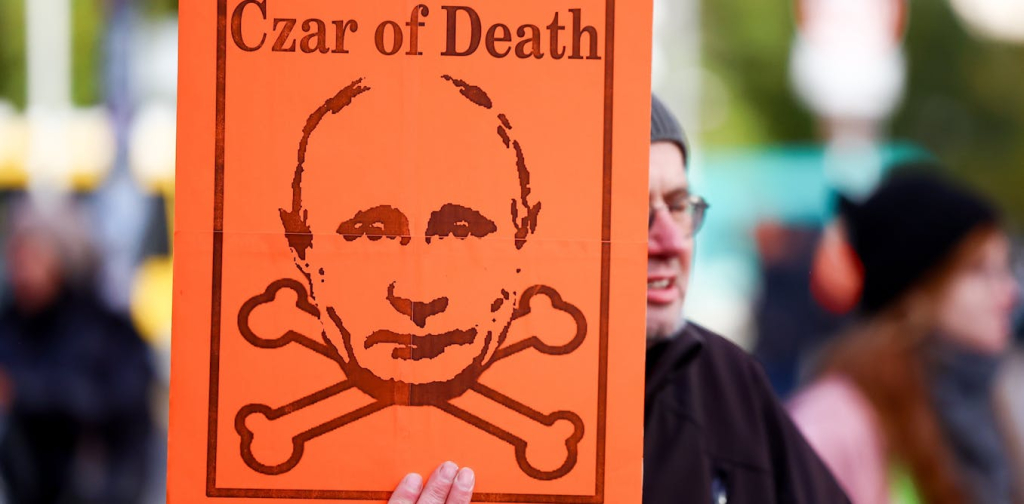

You could be forgiven for thinking everyone in Russia either supports the war in Ukraine or is too scared to do anything about it. A dominant narrative is that Russian civil society is passive, complicit or has been quashed to the point of being neutralised.
Some elements of this may be true. Following the full-scale invasion of Ukraine in 2022, Russian citizens criticising the war or expressing an anti-war position have faced severe prison sentences. These fall under expanded war censorship laws that target the spread of alleged “false information” or the “discrediting of the army”. But this is not the full picture.


For the past two years, I have been researching Russian anti-war resistance. This has involved conducting interviews with activists and other people who left Russia following the outbreak of war and are now scattered across the world. Instead of disappearing into exile, many of these people are mobilising to voice their opposition to the war and resist the regime in Moscow.
Some exiled Russians are sending money and letters of solidarity to political prisoners in Russia and their families. Others have coordinated legal aid to support anti-war defendants inside Russia and are lobbying western governments to distinguish between the Kremlin and Russian civil society.
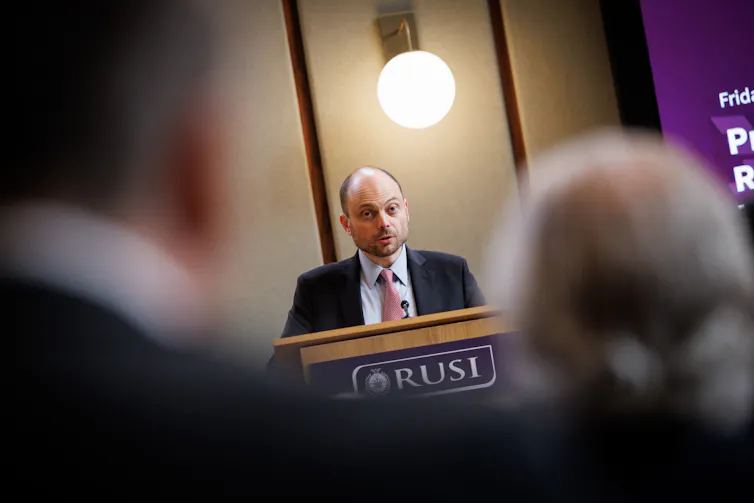
At the same time, elite exiled Russian opposition figures including Garry Kasparov, Mikhail Khodorkovsky and Vladimir Kara-Murza, have worked to form the Platform for Dialogue with Russian Democratic Forces. This is a consultative body in the parliamentary arm of the Council of Europe that, established in 2026, aims to give Russia’s opposition an international voice.
During my research, I have also come across exiled Russians who have been running independent Russian-language media through Telegram channels and YouTube. Though in recent months, Russia’s telecommunications regulator, Roskomnadzor, has severely restricted access to these platforms. It has done so in an attempt to censor outside information and force Russians to adopt the state-controlled Max app.
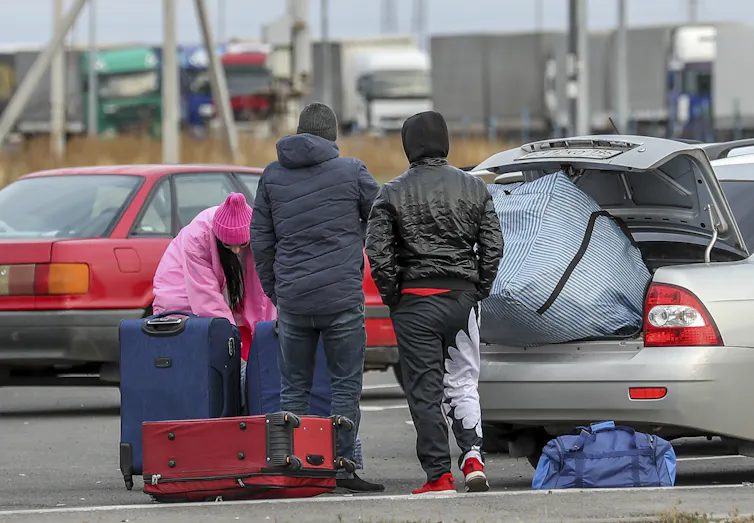
I have encountered instances of anti-war Russians abroad helping people inside the country escape mobilisation by offering shelter and safe routes out of Russia. One of my interviewees, a 22-year-old Russian now living abroad, had even established transnational networks across Europe, the Caucasus and Russia to help criminally prosecuted anti-war Russians flee the country before standing trial.
Indigenous diaspora networks have also informed local communities in regions of Russia where there are large ethnic minority populations such as Tuva, Tatarstan, Buriyatia and Chelyabinsk about the realities of the war. These include the use of underage soldiers and heavy recruitment from ethnic minority regions.
But they also include the extent of Russian and Ukrainian casualties, which Russia’s government has provided almost no official data on. The Center for Strategic and International Studies, an American thinktank, said in early 2026 that Russian forces had suffered nearly 1.2 million casualties since the start of the war.
These Indigenous networks have posted videos on platforms such as Instagram, YouTube and Facebook, as well as messages on Telegram and Signal, to counter official state narratives about the war. Moscow has justified its war in Ukraine by saying it is protecting Russian-speaking citizens there, standing up to western expansionism and returning Russia to its former great power glory.
Meanwhile, anti-LGBTQ+ laws introduced in December 2022 have prohibited any perceived propaganda about non-traditional relationships in Russia. This was followed by a Russian supreme court decision in 2023 to designate the “international LGBT movement” as an extremist organisation. This ruling has made any association or support for LGBTQ+ communities a criminal offence.
In response to this clampdown, exiled Russians have stood in solidarity with LGBTQ+ compatriots inside the country who have faced discrimination. My research has uncovered cases of people providing shelter and safe routes out of the country, creating digital safe spaces for Russian LGBTQ+ communities and lobbying for the protection of these communities in European countries.
Russian resistance
Russians do not fall into a single, neat, complicit mass. Since the start of the war, a diverse resistance movement has worked to counter the Kremlin’s authoritarian practices and propaganda. It reflects a broader variety of voices, values and stances than is currently possible in Russia, offering a crucial insight into the future political aspirations and hopes of ordinary Russians.
This movement will not overthrow the Russian government. But the ability to deliver regime change should not be the only measure of resistance. The movement is challenging the narrative that all Russians support the war, while also helping keep democratic political ideas alive for Russians inside the country for when change becomes possible.
As one of my respondents told me: “We have to stay in touch with supporters in Russia and plan for transition. There will be no time to strategise, so the plan has to happen now. We try to do as much as possible to be prepared.”
The resistance of exiled Russian dissidents matters not just for understanding Russia today. It also tells us how opposition survives in authoritarian regimes more broadly, highlighting the role that diasporas can play in sustaining democratic civil society transnationally.
Dissent does not disappear when it is crushed at home. It relocates, adapts and reconfigures across borders.














Comments are closed.