


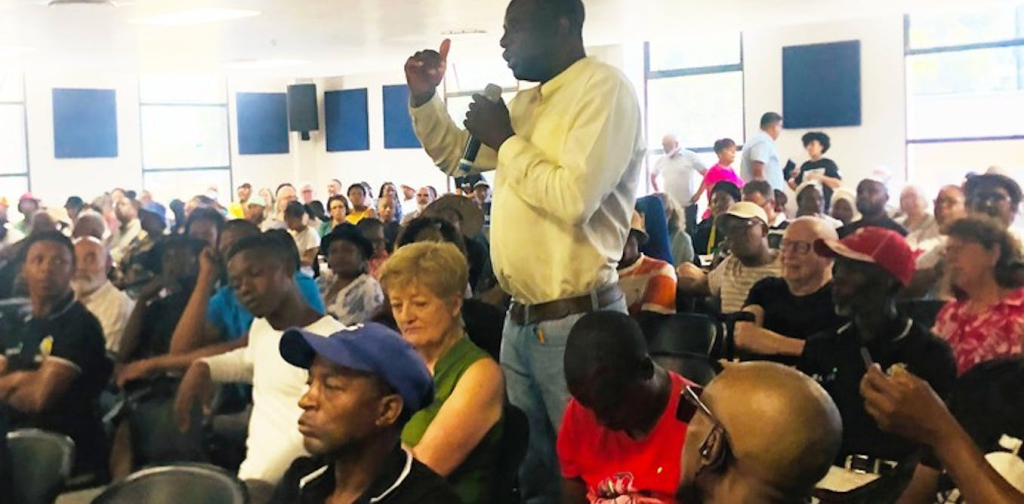

Across South Africa, there are various ways for people to report issues like broken infrastructure, unreliable water supply, failing clinics and poor municipal services. The channels include ward meetings, hotlines, and digital platforms like WhatsApp, Facebook and X. Complaints are often shared publicly and sometimes gain traction.
But are they enough? As a researcher specialising in governance, public policy and citizen-based monitoring, I recently conducted a study examining whether the system in South Africa is working as it should. The study was prompted by the paradox that despite the expansion of citizen participation mechanisms and digital reporting platforms since 2013, public dissatisfaction with service delivery remains high. This raises questions about whether citizen feedback is influencing government decision-making.



Citizen-based monitoring was introduced by the Department of Planning, Monitoring and Evaluation in 2013. It was designed to strengthen accountability and improve frontline service delivery by enabling citizens to monitor public services and communicate their experiences directly to government institutions.
My research shows that the central problem behind persistent service delivery failures is not the absence of public participation. South Africans continue to report problems, attend meetings, engage online and raise concerns about service delivery. The deeper problem is the absence of institutional response. Citizen-generated feedback is rarely integrated into formal government systems such as planning, budgeting, performance management, or service delivery processes. This means many complaints are acknowledged but not acted upon.
The study therefore recommends embedding citizen-generated feedback directly into government planning, budgeting, performance management and service delivery systems so that participation can translate into action.
The systems failures
Our research involved collecting survey data and conducting qualitative interviews with 12 representatives across government, civil society and community media. Participants included government officials responsible for citizen engagement, monitoring and service delivery oversight, leaders of civil society organisations involved in social accountability initiatives and community radio practitioners who regularly facilitate dialogue between citizens and government. The findings reveal persistent challenges.
There is limited integration of citizen-based monitoring into core government systems. In many cases, citizen feedback mechanisms operate separately from formal planning, budgeting and performance management systems. This means complaints are collected but not systematically translated into government action.
There has been a decline in participation. Interview participants reported lower attendance at ward meetings and reduced public engagement with formal participation mechanisms, which they attributed to frustration with the limited government response to citizen feedback.
There are unclear institutional mandates, such as uncertainty over whether municipalities, provincial departments, ward councillors, or national government structures are responsible for responding to citizen complaints. This fragmentation diffuses responsibility for responding to citizen feedback across departments and spheres of government, allowing issues to fall through the cracks and leaving citizens without answers.
There is inadequate follow-through on citizen feedback.
Key drivers of this include:
-
Weak institutional ownership: in South Africa, citizen-based monitoring is managed inconsistently across departments and municipalities. No single institution is clearly responsible for coordinating responses and ensuring accountability. As a result, citizen-based monitoring is frequently treated as a temporary project or pilot rather than embedded within core government functions such as planning, budgeting and performance management. This leads to weak accountability, fragmented implementation and inconsistent responses to citizen concerns.
-
Digital exclusion: digital platforms as WhatsApp, Facebook, X and municipal reporting portals have added another layer to this dynamic. These platforms offer new opportunities for visibility and engagement but also expose the limitations of existing systems. This is highlighted in debates on open government, where transparency does not automatically translate into responsiveness. Institutions such as the UNDP governance programme emphasise the importance of models that combine digital and offline participation. Reliance on digital tools also risks excluding those without access to technology or the skills to use it.
-
Donor dependency: many citizen-monitoring initiatives rely on temporary donor-funded projects. These often collapse once funding ends.
-
Low public awareness: citizens don’t know about platforms they can use to report service delivery failures.
-
Limited feedback loops: citizens don’t get updates on whether their complaint was received, investigated, or resolved.
The consequence is a growing sense of frustration among citizens. They begin to question the value of engaging with formal systems when their participation does not produce visible change. It leads to declining trust in public institutions and, in some cases, increased reliance on protest action.
Signs of progress
The study also identified positive factors such as enabling policy frameworks, structured capacity-building aimed at strengthening the skills of government officials responsible for citizen engagement and service delivery monitoring and the adoption of digital reporting and communication tools by government departments and municipalities.
The study recommends embedding citizen-based monitoring more directly into formal government systems such as planning, budgeting, performance management and municipal reporting structures. This will make it more likely that citizen feedback contributes to decision-making and accountability.
In practice, this would mean that complaints raised through ward committees, WhatsApp groups, municipal hotlines, social media, or community radio are formally recorded, assigned to responsible departments, tracked through digital systems, linked to municipal performance targets, and followed up with feedback to citizens on actions taken.
It also requires recognising the continued importance of local communication platforms such as community radio. These are important channels for engagement in many parts of the country, particularly where digital access is limited.
The success of citizen-based monitoring depends on whether governments respond to what citizens are saying.
The challenge is building systems that require government to respond. In Brazil, participatory budgeting in Porto Alegre linked citizen priorities directly to municipal spending decisions.
In Kenya, the Huduma Kenya service model includes complaint tracking and service-request management. South Africa could adopt similar mechanisms: complaint tracking, response deadlines, public dashboards and direct links between citizen reports and municipal budgets.
Until citizen feedback is embedded into governance systems, participation will fall short of its potential.






















Comments are closed.