


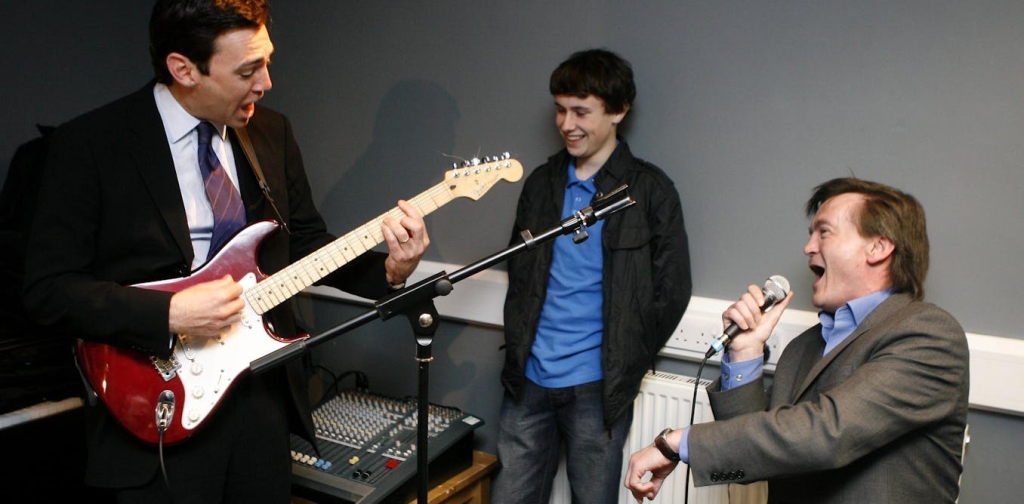

Beyond the rapid turnover of prime ministers in recent years (seven in the last 15 years), there’s been an even higher churn in other roles, notably that of culture secretary – 12 in the same period, and 18 since the post was first introduced in 1997. Of these, Andy Burnham is the first to achieve the top post in British government.
Recent years have also not generally been favourable for the arts in terms of policy, with a general drop in real-terms spending through both Arts Council England and local authorities from 2010-2022 (apart from the Culture Recovery Fund during the pandemic). Culture is, in any case, largely devolved to the UK’s constituent nations – Westminster’s direct reach runs mainly to England, plus reserved heavyweights like broadcasting, digital and media regulation.


While there’s been an upturn since the last general election, this has leaned towards capital investment in buildings and infrastructure, with uneven gains for the recurrent, day-to-day funding that sustains programming, jobs and artists’ livelihoods.
So, what might the sector expect from a government led by a former holder of the culture brief, given Treasury habits of treating culture as a second-order priority, rather than a key part of the national fabric?
More than the Haçienda
Burnham’s more recent record as mayor of Greater Manchester suggests a commitment that goes beyond club anecdotes about the Haçienda and his well-documented indie music fandom. As mayor, Burnham commissioned an independent Greater Manchester Music Review with UK Music, launched in 2018 and published in 2019. This considered financial and equalities barriers, leading to a regional Music Commission with artists, venues, and industry brought into the room with civic decision-makers.
This article is part of our State of the Arts series. These articles tackle the challenges of the arts and heritage industry – and celebrate the wins, too.
He also explicitly backed a £1 ticket levy on major arena-scale events to support grassroots venues, and a VAT cut for music venues, along with supporting the “agent of change” principle, which shifts the cost of soundproofing buildings on to developers making changes to an area, rather than pre-existing venues.
This suggests the application of a relatively consistent understanding of culture beyond a decorative add-on – as economic and civic infrastructure through jobs, the nighttime economy and a touring pipeline.
But translating that into engagement with the sector will be a longer process. Culture secretary Lisa Nandy – retained in the cabinet reshuffle – has faced some scepticism from the sector. She is seen as better at diagnosis than delivery and had previously been mooted for a move.
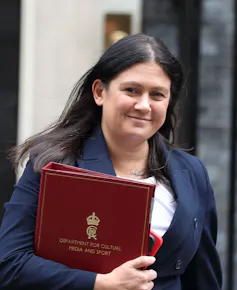
Keeping Nandy in post, though, could be read less as inertia than alignment. The two are political allies, with broadly similar instincts, and Burnham’s reconfiguration of the Department for Culture, Media and Sport (DCMS) to include “digital” – introduced during Theresa May’s government before it lost the brief in 2023 – reflects a deliberate framing that “culture and technology are inseparable drivers of our modern economy”.
The devolution wager
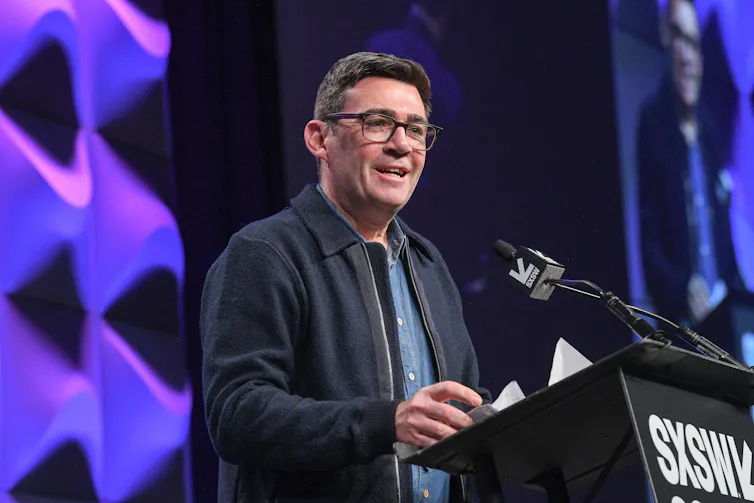
At tech and culture festival SXSW London in June, Nandy spoke publicly about the government’s course correction on AI, rowing back on the “opt-out” plan for AI training on copyrighted work and acknowledging the need for a more nuanced approach to the competing demands of different parts of the creative industries. Retaining Nandy while fundamentally restructuring her department suggests Burnham’s bet is primarily on institutional change and the machinery itself helping to determine outcomes.
The test will be in the execution. Nandy’s publication in July of Turn It Up, the government’s first comprehensive music plan, offers a preliminary gauge.
Its ten priority areas include £45m in targeted grassroots investment, licensing reform and agent-of-change protections. A further £150m of creative funding is devolved through mayoral strategic authorities. Taken together, this suggests a focus on infrastructure policy that moves beyond cultural cheerleading. Whether that machinery accelerates delivery, or simply redistributes the familiar frictions across new layers of bureaucracy, will take longer to establish.
Turn It Up predates Burnham’s premiership, but its devolutionary impetus of funding, routed through mayoral hands, runs with the grain of his wider agenda. Rewiring the State, published within his first fortnight, extends the same logic to the whole of government. Devolution, in this case, refers to England: decisions and funding are shifted from Whitehall to local leaders, with mayors retaining a share of locally raised revenue.
Cautious optimism
There are limits to reading Greater Manchester as a template. What worked there rested on conditions not necessarily replicable nationwide: a large conurbation with an established music economy, strong civic institutions, and a mayor with personal capital in the sector. Devolving decisions on culture to mayors relies on the will to prioritise it and, crucially, on authorities having the capacity and revenue base to act.
For smaller cities and towns outside the combined authority framework there’s a chance that “Manchesterism” could be something of a spectator sport. The talent pipeline is also under pressure from a direction the plan barely touches – arts provision in higher education is contracting as the universities’ financial crisis bites, with courses closing across the country.
Nor does devolution resolve the underlying settlement: day-to-day funding for programming and livelihoods still depends substantially on Treasury decisions, and a first fortnight dominated by the cost of living, social care and the BBC Charter is a reminder of how quickly governmental bandwidth is absorbed.
Even so, there’s cause for cautious optimism. A prime minister who has held the culture brief, run a music review, and defended grassroots venues in planning disputes seems not to need persuading of the basic case.
The structural approach – building culture into how places are funded and governed, rather than leaving it to plead its corner in Whitehall – is at least a plausible wager. Whether it pays off remains to be seen. But for once, the arts seem not to be starting the argument from scratch.




















Comments are closed.