


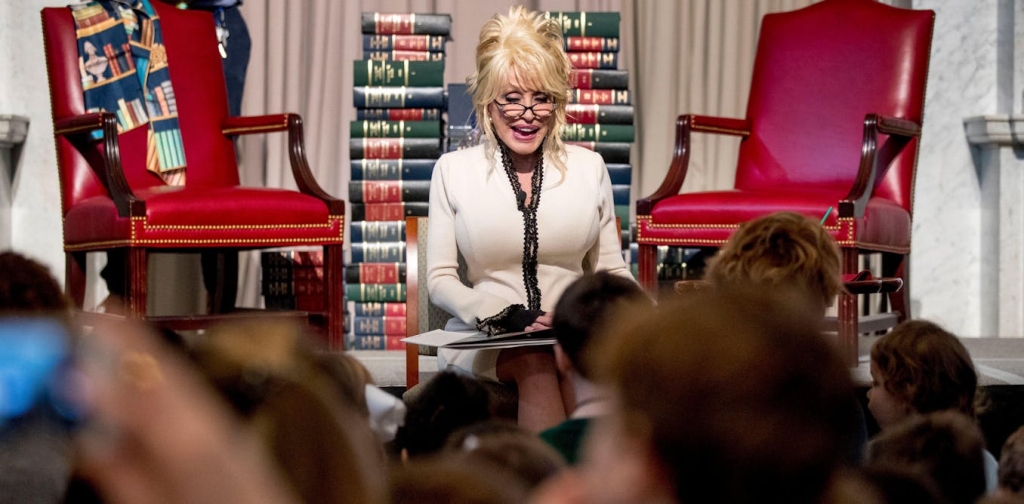

It was sad but strangely fitting that Dolly Parton should have died during the UK’s National Year of Reading, given the way the much-loved country singer used her wealth and influence to promote reading.
Parton’s Imagination Library has provided hundreds of millions of books to pre-school children around the world since 1995. While books are of course important, my work as a reading and language academic makes clear this must be complemented with robust reading instruction and support that is sustained through childhood and adolescence for those who need it.



The singer was well aware that she was judged by her appearance, and used this to her advantage. Behind her almost cartoonish “cover” was an incredibly smart woman who used her profile to address the things she cared about: community, poverty, education and reading.
For her Tennessee community, she built the Dollywood theme park in 1986 to bring employment, the Dollywood Foundation in 1988 to promote education, and the Imagination Library in 1995 to give children access to books.
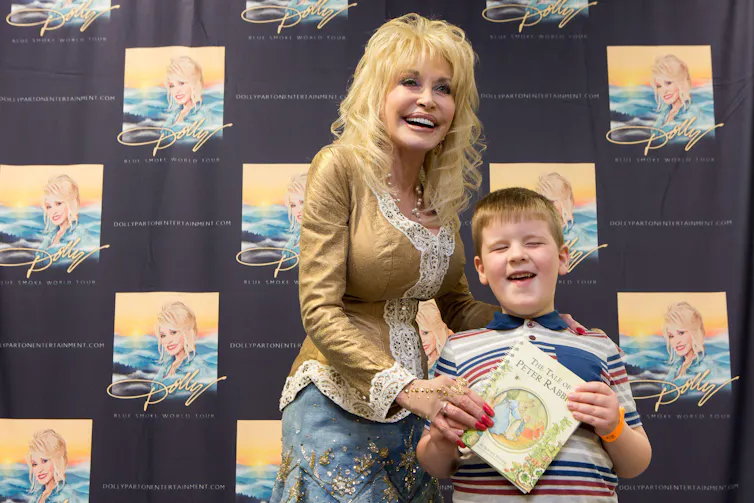
The Imagination Library gifts a book a month to children from birth to five years. What started in Dolly’s home state in the US has extended to Canada, the UK, Australia and Ireland. In any area where there is an active programme partner, parents and carers simply sign up and the rest is taken care of.
In 2025, the programme celebrated its 30th anniversary and hit a milestone of distributing more than 300 million books to children. In the UK, Imagination Library books have found their way into many homes across the four home nations. In her research, Caroline Zwierzchowska-Dod at Swansea University revealed the impact of the programme, including increased shared reading, improved early childhood literacy and boosting school readiness.
Motivation and engagement
Parton created the Imagination Library in tribute to her father, who was held back in life by illiteracy. The singer’s response was to provide access to books, resonating with other initiatives around the world, like the UK’s BookTrust Bookstart programme.
But motivation and engagement is about more than just access to books. In the Nuffield Foundation’s Love to Read project, access was just one of six identified research-informed principles to promote reading motivation and engagement.
Also important are: choice of reading materials; having the time to read; connection and personal resonance; social interaction around books; and the success needed to identify as a reader. Alongside reading materials, we must ensure that children can access printed formats, whether they are reading to one another, or for themselves.
In terms of human evolution, reading is a recent invention, employing parts of the brain that have evolved to support spoken language and vision. But unlike spoken language, reading must be actively taught, and effective early instruction is crucial.
The UK national curriculum mandates systematic synthetic phonics, where children are taught the sounds that link to letters, alongside a rich language and reading environment. Despite high-quality reading instruction, a substantial minority of children have reading needs, with 20-25% failing to meet UK government standards at ages six and 11.
The research I undertook with colleagues Laura Shapiro, Sanne van der Kleij and Adrian Burgess demonstrates reading needs are also prevalent in the teenage years, especially for youngsters from more disadvantaged backgrounds. We have translated our work into two continuing professional development programmes that enable secondary school leaders and teachers to support reading in their pupils.
Both will and skill are important. If both are in place, then young readers can enter a virtuous circle of reading more, getting better at reading, reading more, and so on. Importantly though, our research shows that skill must come first if we want our young people to enter this virtuous circle.
Early experiences, sustained practice
Dolly’s Imagination Library gifts books to all children from babies up to the age of five. Providing access to books from birth helps to establish early shared reading habits.
Research indicates that shared reading of “first word” books is directly linked to infant word learning, and that regular reading routines promote infant interest and parent confidence.
The goals of the Imagination Library and our findings resonate with the importance of early efforts to promote reading. However, early intervention can never be enough. Academics and teachers must sustain the efforts to identify, support and monitor reading progress throughout childhood and adolescence, for at least two reasons.
First, the demands of reading change as children develop. Initially, language comprehension is crucial as children listen to stories. Then, as children learn to read, knowledge of the sounds of their language (phonology) and how they map them onto letters (orthography) comes into play.
As children build their word-reading skills, reading fluency and reading comprehension, a complex array of knowledge and skills becomes important – including vocabulary, comprehension skills and background knowledge of the text. Thus, the barriers to successful reading change.
This means we can’t assume a child who can successfully engage in shared reading experiences will be successful when they learn to read. Reading difficulties or needs can emerge at any point, as the challenge of reading shifts. So, identification and monitoring is an ongoing process.
Second, even if we have robust approaches for identifying reading needs in the early stages of reading, these needs may well be pervasive over time. While early intervention is crucial, we must monitor progress carefully and intervention must be sustained where it is needed.
Dolly Parton may no longer be with us, but her generous Imagination Library has put millions of books into the hands of children all over the world. It has helped foster not just a love of reading, but good reading habits that can set children up for life.























Comments are closed.