




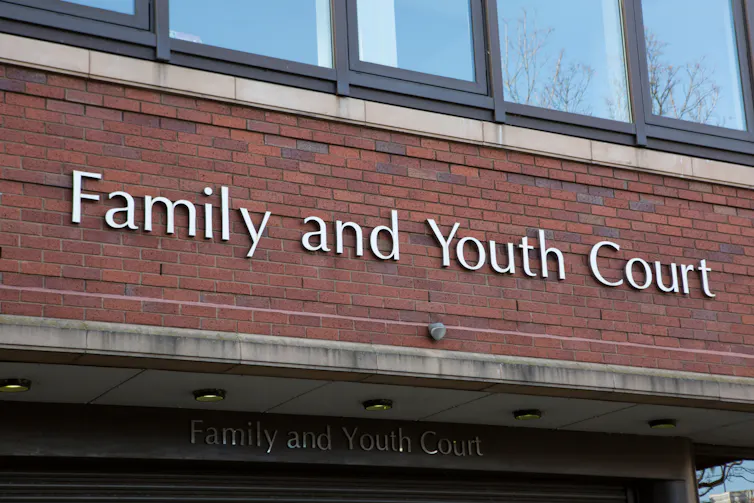
Family courts step in at some of the hardest moments in a child’s life, when parents separate or when there are concerns about their safety.
We already know that children involved in care proceedings are more likely to self-harm. But most children who come into contact with family courts are there because of disputes between parents, not safeguarding concerns. Until now we have known comparatively little about these children or what happens to them after court proceedings end.


For the first time, our research tracked self-harm over time in these children. We found that children who go through the family courts, whether because of parental separation or welfare concerns, are more likely to self-harm than those who do not.
This doesn’t mean the courts themselves are causing harm. This increased risk is more likely linked to the circumstances that lead families to court in the first place. Family courts are an often-missed opportunity to offer help.
We analysed anonymised family court records alongside routinely collected health data for more than 700,000 children between 2011 and 2018. Around 17,000 had been involved in private cases – usually disputes over finances or living arrangements after separation. Another 5,500 were involved in public cases, where local authorities step in over concerns about a child’s welfare.
The risk of self-harm was about twice as high after private cases and more than three times as high after public ones.
Previous research shows that families in contact with courts often face challenges beyond the courtroom. They are more likely to live in deprived areas and to experience mental or physical health problems, in both caregivers and children. These factors are already known to increase the risk of self-harm in young people.
Historically, people designing services for families have not always had enough data to guide the decisions made in family courts. Evidence now shows elevated risks not just of self-harm but for a range of adverse outcomes, including depression, anxiety and poorer educational attainment. Yet family courts receive far less public attention than many other issues affecting young people.
A warning sign we shouldn’t ignore
Self-harm is relatively common in adolescents. Most young people who self-harm do not go on to die by suicide. However, it is one of the clearest signals of distress and one of the strongest risk factors for suicide. This makes early identification and support especially important.
Children who come into contact with family courts should be a priority for support.
Parental separations are common. Many children experience them and their effects can be underestimated and downplayed because of that. Around one in ten separating families turn to family courts to resolve disputes, often as a last resort because of the financial and emotional costs. It may also reflect high levels of conflict between parents.
The decisions made during these proceedings can be life changing for children. Where families reach the point of involving family courts, we should ensure that support is available for the whole family, especially for children.
Family courts are in a unique position. They come into contact with children and families, with complex and intersecting needs, at important moments that have the potential to shape the rest of their lives.
We believe that contact with the courts should be seen as an opportunity to identify the needs of these families and offer practical, timely support to children and their families. This might include wider networks such as schools, community services and primary care or to provide clearer pathways to specialist mental health support where needed.
Decisions made in family courts have the potential to shape children’s lives at critical moments. These moments should be seen as signals of need, not just legal milestones. If we act on them, we have a real chance to support children at the point they need it most.


















Comments are closed.