


In March 1603, Elizabeth I refused to go to bed. For days, she sat on cushions in her Richmond Palace chamber, silent and withdrawn, as her courtiers waited for the end. It’s a final moment that can be read not simply as the failing of her body, but as the last expression of a life defined by the quest for control.
Elizabeth’s vitality had been central to her image, so her retreat marked a striking change. The Venetian envoy Scaramelli and the courtiers John Clapham and Robert Carey describe her prolonged withdrawal from court, sleeplessness and rejection of food. Clapham noted that Elizabeth sat for six days without sleep and wanted to die.



I believe that Elizabeth I’s refusal to go to bed before her death was a deliberate final act, shaped by a lifetime of political strategy, emotional restraint and unresolved reckoning.

Elizabeth’s childhood shaped her formative need for survival. Shaped by a childhood of elite education and emotional neglect, her mother, Anne Boleyn, was killed by her father before Elizabeth turned three. It showed her the dangers of proximity, intimacy and marriage for women at court first-hand.
Ill-fated stepmothers followed. Overlooked and politically vulnerable, Elizabeth learned to observe and speak cautiously. Her position was precarious, and her survival depended less on any expectation of future rule than on careful navigation of court politics.
As historian Helen Castor has argued, these skills became central to her later authority. Indeed, her childhood friend and long-standing favourite Robert Dudley, Earl of Leicester, later recalled that Elizabeth told him at the age of eight that she would never marry. It’s a significant memory from the man most closely associated with her adult emotional life.
Having experienced the reputational risks of her scandalous association with Katherine Parr’s husband Thomas Seymour (who inappropriately pursued the teenage Elizabeth, sparking investigation and court testimony) she was imprisoned by her sister Mary I at the age of 15. She survived through sheer force of character as much as circumstance.
Elizabeth watched the rule of her elder sister, Mary I, the first English queen regnant. She used the underestimation they both faced in a political culture wary of female rule to study what worked, discard what did not, and quietly shape her own approach to power.

Female rulers in this period operated within a political system not designed for them. Evoking her motto semper eadem (always the same), Elizabeth ruled through strict control of her image. She cultivated the “Virgin Queen” persona, carefully managed her access and intimacy, and used courtship strategically. Writing after her death, the philosopher and statesman Francis Bacon characterised Elizabeth as “herself her own mistress”.
Further crises, from would-be assassins, to a bout of smallpox, to the threat of the Spanish Armada, reinforced the demands of rule. By the end of her life, the cost of longevity had begun to show. Ordering the execution of her cousin Mary, Queen of Scots, in 1587 has long been understood as a moment of immense personal and political weight.
We may never know whether Elizabeth’s alleged final exclamations of innocence over her first cousin’s death were expressions of genuine emotion or acts of political performance. In a world where people believed in eternal judgment, it seems plausible that such dying protestations were intended to convince both herself and anyone within earshot.
The cost of rule
Elizabeth’s treatment of other rival claimants to the throne and kinswomen reflects the fragility of dynastic security and the ruthlessness required to maintain it.

Elizabeth sustained an unmatched attachment to Dudley, but the political realities of her position meant that such a relationship could not be fully realised.
At the deathbed of her closest lifetime advisor, William Cecil, Elizabeth uttered that she “did not wish to live any longer than she had him with her”. A fitting indication of a how much Elizabeth depended on him.
In her own remaining days, her lady-in-waiting, Elizabeth Southwell, recounted that when Cecil’s son and successor, Robert, urged her to bed, the queen responded: “Little man, little man, ‘must’ is not a word to be used to princes. Your father, if he had been alive, durst not have used such a word; but you know I must die.”
Elizabeth had outlived those closest to her, including Dudley, whose death in 1588 was a profound loss. She ordered the execution of his stepson, Robert Devereux, Earl of Essex, in 1601 for his treasonous uprising; an act alleged to have affected her deeply. Essex was a dim echo of his stepfather and a sharp reminder of his absence. Catherine Carey, her loyal kinswoman and longstanding lady-in-waiting, died at the end of February 1603, marking Elizabeth’s final downturn. The queen withdrew.
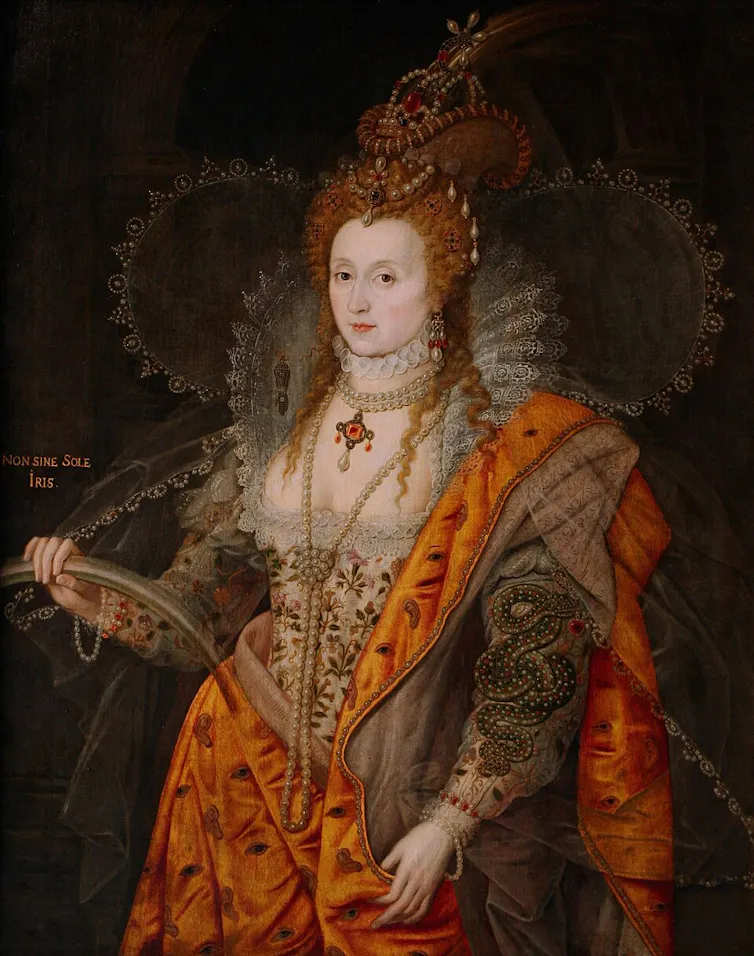
Elizabeth’s reign is often framed as a triumph of stability and strength. Yet her final days suggest something more complex: a rule built on the pursuit of control, sustained through sacrifice and marked by isolation. Her story resonates not only because of what she achieved, but because of what it cost.
Carey’s husband, the Earl of Nottingham, was called for, and only he was able to persuade Elizabeth to bed. In three days, she was gone. In her last moments, stripped of performance, what remained was not the carefully managed image of Gloriana, but a woman confronted with the absence of those she relied on and the cumulative weight of the choices that had sustained her reign.
Elizabeth’s refusal to go to bed can be read not only as defiance of the inevitable but, at her most vulnerable, as a final attempt to maintain control.



















Comments are closed.