



Heat warnings have stretched across Canada this summer, from Atlantic Canada and southern British Columbia to the Prairies, central Canada and the Northwest Territories.
During one mid-July heat wave, humidex readings reached up to 45 C across parts of southern Ontario and western Québec, according to Environment Canada.



For millions of Canadians, those warnings changed day-to-day plans. For many workers, though, the workday continued on construction sites, farms and loading docks, and inside factories, warehouses and restaurant kitchens.
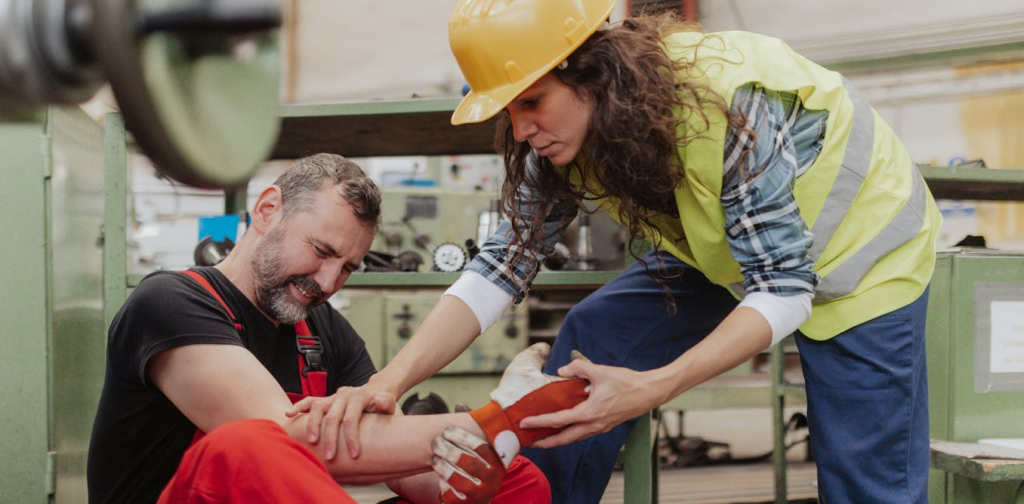
The most visible workplace consequences are heat exhaustion and heat stroke. But heat also creates a less obvious and poorly understood risk: it makes ordinary workplace injuries more likely.
Heat turns routine hazards into injuries
High temperatures cause dehydration and fatigue and impair attention, judgment, balance and reaction time. Research on California workers shows that heat increases injuries seemingly unrelated to temperature, including falls or vehicle crashes — patterns consistent with diminished cognition and attention.
Official counts likely understate the problem, since heat is often the contributing factor rather than the injury named on the claim form.
Canadian evidence shows how easily this burden can hide in plain sight. A peer-reviewed study linked 374,078 accepted workers’ compensation claims in Québec with daily temperatures from 2003 to 2010.
The study found that, for every 1 C increase in the daily maximum temperature, the workplace injury rate rose by about 0.2 per cent. That sounds small, but it accumulates across a heat wave and a large workforce. The increase occurred in both indoor and outdoor industries.

A recent nationwide U.S. study reached a similar conclusion. Researchers geocoded more than 845,000 injury reports and matched them with daily weather conditions.
Compared with a heat index of 80 F (about 27 C), the odds of injury were three per cent higher at 90 F (32 C), 10 per cent higher at 100 F (38 C) and 20 per cent higher at 110 F (43 C). The researchers estimated heat caused roughly 28,000 additional workplace injuries across the U.S. in 2023.
These findings challenge the idea that heat is mainly an outdoor-work problem. Outdoor workers face direct sun and humidity, while indoor workers contend with ovens, machinery, poor ventilation and inadequate cooling. Heavy exertion and protective clothing further increase the body’s heat load.
Protections vary across provinces
Canada has no common minimum standard for protecting workers from extreme heat. Every province and territory requires employers to protect health and safety, but the rules vary considerably.
B.C., for example, requires employers to assess heat exposure and create a control plan when workers may be at risk. The rules call for engineering controls where feasible and for cool drinking water.
Québec sets exposure limits using the wet-bulb globe temperature, which combines temperature, humidity, radiant heat and air movement, and prescribes controls once those limits are reached.
Ontario and Alberta rely more heavily on broad employer duties, hazard assessment and official guidance rather than on province-wide standards.
Federally regulated workplaces are also changing: new thermal-stress rules have been adopted but will not take effect until February 2027 — too late to protect workers this summer.
Other provinces and territories have no heat-specific legislation at all, leaving the issue to fall under employers’ general duty to protect worker health and safety. A general duty states the desired outcome, but it doesn’t say when a hot day requires action or what that response should include. Protection then depends on employers’ knowledge, resources and willingness to act.
Rules need triggers and enforcement
Evidence on regulation is encouraging, but it also warns against symbolic rules. A recent peer-reviewed study compared heat-related deaths among California’s outdoor workers with those in neighbouring states.

California’s initial 2005 heat standard was not linked to fewer deaths. After enforcement intensified in 2010, researchers estimated a 33 per cent reduction in heat-related deaths. After the rules were strengthened again in 2015, the estimate rose to 51 per cent, reflecting the stronger rules and continuing enforcement. Neither period’s estimate was statistically significant on its own, but the two post-2010 periods combined were.
The lesson is not simply to “have a heat rule.” Effective protection requires clear triggers, practical controls and enforcement.
Separate research tracking California workplace injuries from 2001 to 2018 found that estimated injury burden caused by heat fell by about 30 per cent after 2005. The researchers could not identify the cause, but said the finding suggests workplaces may be able to reduce heat-related risks using existing practices and safety practices.
Federal, provincial and territorial governments in Canada should establish a common minimum standard covering indoor and outdoor work. Employers should be required to assess heat using temperature, humidity, radiant heat, workload and protective clothing, and to prepare written response plans. Plans should include water and cooled rest areas, paid breaks, gradual acclimatization, training, and emergency and stop-work procedures.
Workers should help design these plans, since they often know where heat accumulates and which production pressures make breaks difficult to take.
Employers should not wait for legislation. Heat is a foreseeable workplace hazard and the controls needed to manage it are well understood. Telling workers to drink more water is no substitute for redesigning schedules, workloads and workplaces.
Canada’s heat waves are becoming a recurring test of how the country protects its workers. If extreme heat is predictable, the injuries it causes should not be treated as unforeseeable or unpreventable.




















Comments are closed.