




Technological progress has taken more than its fair share of the workload from humans over the years. Washing machines clean our clothes, tractors plough the fields and computers sort out the admin.
Meanwhile, economic growth and redistribution of wealth means most workers in industrialised countries do not need to spend most of their waking hours on gainful employment. The 12 hour working day that was common during the 19th century has been largely reduced.


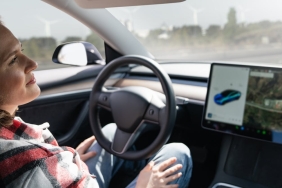
So will developments in AI help us gain even more free time?
Not necessarily. In fact, AI might actually cause working hours to increase.
One reason for this has to do with the effects of AI on people’s bargaining power in the workplace. If workers are fearful that their jobs might be lost to automation, research shows they may be inclined to increase their efforts as a way of signalling to employers that their labour is still valuable.
My research on the rat race suggests that this kind of response is to be expected.
Employers must continuously decide whom to hire, promote or dismiss. In making such decisions, employers seek to reward productivity. But productivity is often hard to measure, so employers rely on alternatives metrics such as the amount of time spent working.
Checking whether a work station is still occupied after everyone else has gone home is much easier than assessing the accuracy of a complex project. And from a worker’s point of view, increasing the time they spend at work seems like an effective way of setting themselves apart from other (apparently less motivated) workers.
But when everyone pursues this strategy, it becomes self-defeating. No one gains a positional advantage, while everyone works more.
The introduction of AI to workplaces can turbocharge this dynamic. Existing AI tools have already automated some tasks, like data entry, creating an expectation that entire roles will be redundant soon.
Against this backdrop, the rat race becomes more cut throat. Workers reasonably expect large scale restructurings of their companies and seek to make sure that they will retain their jobs in the process. Researchers recently found evidence for this, noting that workers in AI exposed industries like financial services and IT are literally switching off their office lights later than those in less exposed industries.
Another problem is that employers can overestimate the extent to which AI boosts workers’ productivity. The availability of AI tools to improve efficiency creates an expectation among employers that workers can do more than they could before in the same amount of time. However, when these expectations are overblown, they can lead to additional work intensification or longer work hours.
Working nine ‘til…?
Finally, the adoption of AI causes significant frictions. Established routines are overhauled, existing roles change and new roles are created. Workers must be trained in the use of AI tools and must learn to work alongside them.
But what makes this particularly challenging is that existing AI tools are continuously being improved and new tools developed at a rapid pace. All of this places additional demands on workers’ time.

It may be sobering to contemplate that AI might not improve our lives by relieving us from toil. Overwork and burnout might even increase over the coming years.
But that situation is by no means inevitable or unavoidable – especially if future control over AI’s design and implementation is not left to employers and large AI firms.
It is possible in theory to design and implement AI in ways that improve workers’ skills, enhancing their areas of expertise, making their work more valuable and thereby enhancing their bargaining power with employers. An empowered workforce would be able to bargain for favourable working conditions, including working time patterns that fit with people’s lives and preferences.
And if developers were to prioritise augmentation and empowerment, AI could be the ultimate tool that helps to tackle widespread resentment and disenchantment with our working lives.





















Comments are closed.