




For the past two years, the Welsh parliament – or Senedd – has been grappling with how to tackle deliberate lying by politicians and how to rebuild public trust in democracy.
There is broad agreement across parties in Wales that the current system offers few real consequences for dishonesty. As one Senedd member put it: “Lying flourishes in politics because we can get away with it”.


That frustration has now translated into legislative action. A bill that would make it illegal to make false or misleading statements during Welsh election campaigns has passed its first stage in the Senedd. But while the principle behind the law commands support, the detail – and the speed at which it is being pushed forward – has triggered growing unease.
The proposed ban will not be ready in time for the next Welsh election in May. Even if the legislation survives its remaining stages, it would not come into force until the 2030 election at the earliest. Ministers have suggested even that timetable may be optimistic.
This has led some Senedd members, including from the governing Labour party, to warn that Wales risks rushing through legislation that may feel symbolically satisfying but is legally flawed. One member cautioned against passing “bad law in a poor way” simply to “make people feel good about themselves”. Others have warned that the bill could unintentionally curtail free speech. If passed, Wales would become the first country in the world to ban political lying.
At the heart of the concern is this: how do you outlaw political lies without undermining democratic debate itself?
What does the bill actually do?
The bill follows recommendations made by the Senedd’s standards committee in February 2025. It called for practical reforms by 2026, alongside longer-term measures to deter deliberate deception by both Senedd members and election candidates.
Crucially, however, the bill does not introduce a general ban on lying by politicians once elected. Instead, it focuses narrowly on statements made during election campaigns. It also gives Welsh ministers the power to create a new criminal offence for false or misleading statements intended to influence election outcomes.
Some safeguards already exist. It is already illegal to make false statements about a candidate’s personal character or conduct during an election. The new proposal goes further. It potentially captures a much wider range of political speech, although exactly how wide remains unclear.
For conduct outside election periods, the committee recommended strengthening the existing system of investigation by the Senedd’s standards commissioner, rather than introducing criminal sanctions.
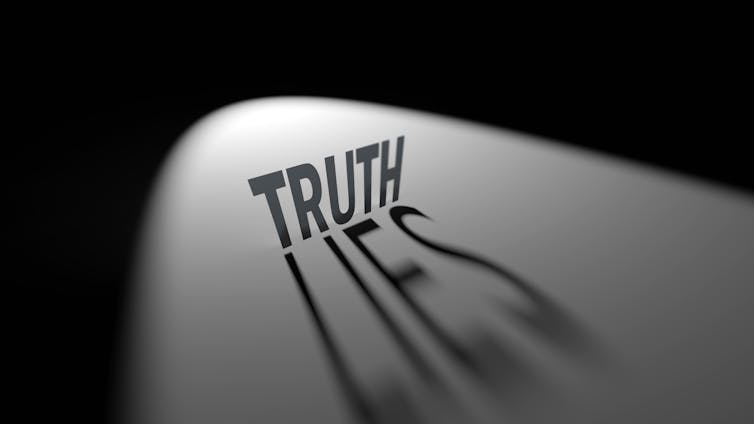
Why free speech is now the sticking point
The bill’s critics are not objecting to the aim of honesty in politics. Their concern is that the legislation, as currently drafted, does not define what counts as a “false or misleading” statement.
Without clear boundaries, some Senedd members fear politicians may simply choose not to speak – or avoid contentious issues altogether – rather than risk prosecution. This concern is especially acute in areas where evidence is evolving, statistics are contested, or political judgement is required.
Political debate often involves thinking on one’s feet, interpreting incomplete information, or presenting one side of a complex argument. These are not the same as deliberate lies. But critics argue that, without precision, the law could struggle to distinguish between intentional deception and legitimate disagreement.
The Senedd’s standards committee – which was asked by the Welsh government to examine the proposal – went further. It said it was “not convinced” that creating a new criminal offence would restore public trust, warning instead that “the risks and unintended consequences currently outweigh the benefits”.
Among those risks are the pressure already facing the justice system. There is also difficulty proving that a statement is objectively false and there are potential conflicts with freedom of expression.
Under article 10 of the European convention on human rights, people – including politicians – have a right to freedom of expression, particularly in political debate. While that right is not absolute, any restriction must be clearly defined, proportionate and necessary. The committee warned that a vaguely drafted offence targeting political speech could be vulnerable to legal challenge on these grounds.
Even those who support tougher standards in Welsh politics accept this tension. If politicians fear that honest mistakes, forceful opinions presented as fact or strategic campaign arguments could later be judged criminally false, debate itself may be cooled. This may weaken democracy rather than strengthening it.
Read more: Wales is overhauling its democracy – here’s what’s changing
Supporters of legal enforcement argue that these risks can be managed, but only with a much tighter definition and stronger safeguards. They emphasise that any offence must target deliberate, factual deception intended to influence voters, not opinion, rhetoric or political forecasting.
Drawing that line is easier said than done, however. Would competing interpretations of economic data be criminalised? What about optimistic promises based on uncertain forecasts? If such speech were caught by the law, it could narrow the space for open political disagreement.
For that reason, some experts and policy groups have suggested alternative models. These include systems overseen by independent bodies rather than criminal courts, or sanctions focused on correction and transparency rather than punishment.
The challenge facing the Senedd is a delicate one. It must decide whether it can craft a law that is narrow enough to target intentional deception, robust enough to withstand legal scrutiny, and flexible enough to preserve the rough-and-tumble of democratic debate.
Whether that balance can be achieved – and whether the bill survives its next stages – will determine whether Wales becomes a pioneer in political honesty or a cautionary tale about legislating in haste.














Comments are closed.