



The national road trauma data for December last year was just released, which means we now have a full picture of Australia’s road safety outcomes for 2025.
The picture is concerning.



For the first time since 2010, total road deaths surpassed 1,300. This marks the fifth consecutive year of growth in road trauma.
But a closer look at how these deaths are distributed across different road users tells an important story.
Fatalities among drivers and passengers have largely plateaued. The rise is being driven mainly by the deaths of vulnerable road users: pedestrians, cyclists and motorcyclists.
In 2025, 197 pedestrians were killed on Australian roads, the highest number since 2007. Almost every state recorded a noticeable spike in pedestrian deaths compared to last year.
Cyclist deaths also climbed to 49, up 32% from last year – the highest since 2013.
This suggests the added risk on our roads is not being shared evenly. Vulnerable road users are absorbing most of it.
What could be causing this?
One key reason appears to be the growing size and weight of vehicles, which can increase the risk of death and injury.
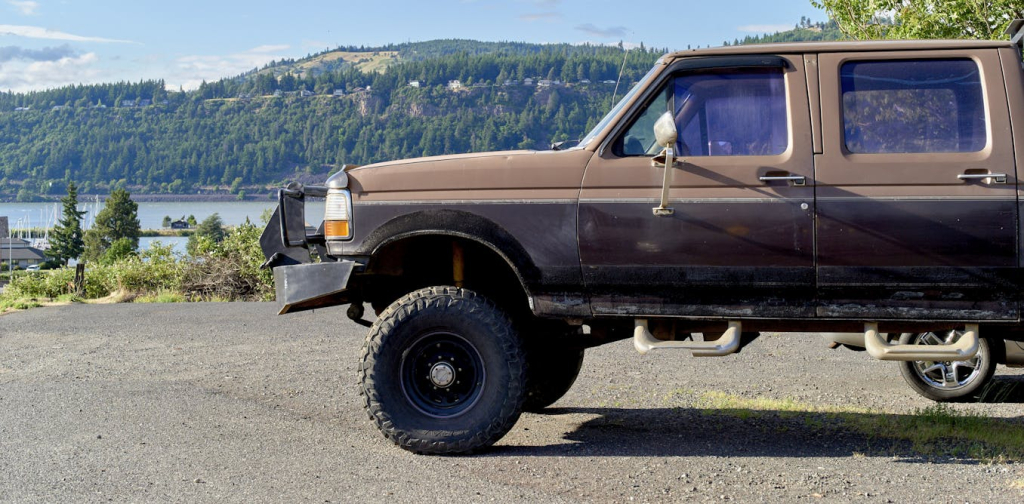
Then there is the not-so-uncommon use of bull bars, especially on four-wheel drives and large urban vehicles.
Research shows they increase the severity of pedestrian injuries and the risk of death when crashes occur.
Which raises a simple question: are bull bars really justified on vehicles driven in our cities?
How common are bull bars?
Bull bars are rigid or semi-rigid metal or composite frames mounted to the front of a vehicle.
They were originally developed for remote and rural areas, where vehicles frequently collide with large animals. They are there primarily to protect vehicles’ radiators, headlights and steering components.
Over time, bull bars became common on large urban vehicles, particularly four-wheel drives and dual-cab utilities, even when they are used almost entirely in metropolitan areas.
While there are no recent data outlining how common they are, an Australian study at pedestrian crash locations in Adelaide back in 2008 showed nearly half of four-wheel-drive and sports utility vehicles were fitted with bull bars.
In contrast, fewer than 2% of ordinary passenger cars had them.
Impact on pedestrian crashes
Evidence shows bull bars can significantly increase the severity of pedestrian injuries, even in low-speed urban crashes.
This is primarily because rigid bull bars concentrate the force of an impact over smaller contact areas and interfere with a vehicle’s energy-absorbing structures. This changes collision dynamics.
Crash-dynamics simulations, modelling full-body pedestrian impacts at 30 kilometres per hour show bull bars increase the speed at which a pedestrian’s head strikes a vehicle by an average of about 23%.
Controlled laboratory testing in Australia simulating crashes at 30km/h reached the same conclusion using physical injury measurements.
The tests show steel bull bars are consistently more hazardous than the vehicle front alone.
The impacts of steel bull bars were in some tests so severe, they exceeded the measuring range of the test equipment. Aluminium and Polymer bars were more forgiving.
Real-world crash reconstructions show the same pattern.
The height of the bull bar matters too. When the upper bar is positioned above the bonnet’s leading edge, it strikes the pelvis rather than the thigh, causing the upper body to rotate around the bar. This increases the speed and severity of the subsequent head impact.
A United Kingdom government study estimated fatalities would be reduced by around 6% and serious injuries by about 21% among pedestrians and two-wheeler riders struck by vehicles if traditional rigid bull bars were banned.
Do bull bars belong to metropolitan roads?
Bull bars are not banned in Australian cities. Instead, they are regulated through design standards that are weaker than European pedestrian-protection rules.
These regulations are not applied retrospectively, so older bull bars fitted before the current standards were introduced remain legal even if they would not meet more stringent pedestrian safety criteria.
The combination of design-based standards and non-retrospective application makes enforcement largely impractical.
Bull bars were designed for a specific purpose: protecting vehicles from animal strikes in rural and remote driving. That function is essentially irrelevant in metropolitan environments.
In cities, the only effect a bull bar has is how a vehicle interacts with people and other vehicles.
It is not clear why a vehicle registered in an urban area would need this kind of frontal reinforcement, particularly when it is most common on large vehicles that have well-established road safety risks.
At a time when our road environment has become less protective of vulnerable road users, every policy lever counts.
Restricting bull bars to rural and regional vehicles, or limiting what can be fitted to urban-registered vehicles, would remove a known source of harm without affecting legitimate remote-area needs.





















Comments are closed.