


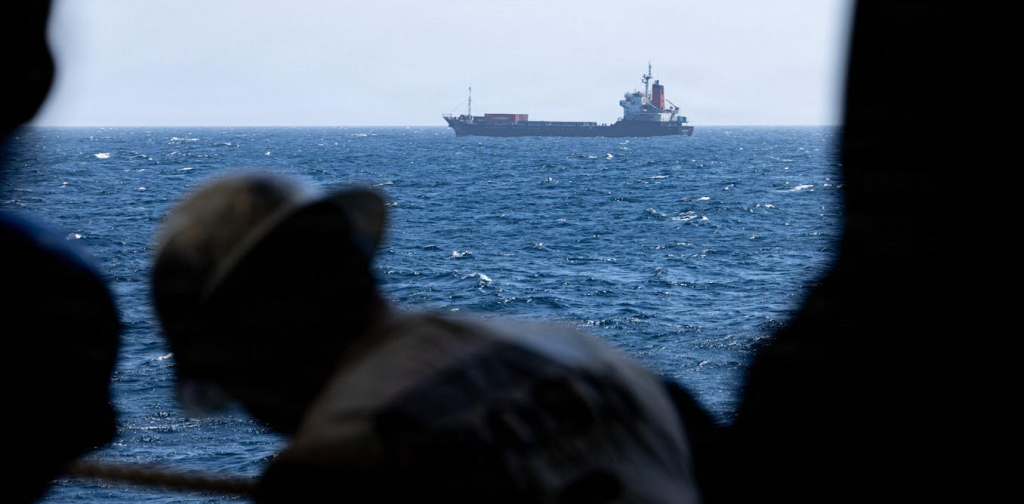

Brent crude oil surged to US$126 (£94) a barrel after US president Donald Trump announced that he was willing to prolong the blockade of Iranian ports for “months if needed”. This conflict has been billed as a matter of who can absorb the most pain. And Trump is betting on it being the US.
Trump has been rather bullish in his public pronouncements of late, declaring that Iran is in a “state of collapse”. Reports that the country’s inflation rate has risen to 50% from 40% since the war began at the end of February would seem to back this assessment.


The damage done to Iran’s economy will be made worse if the country is forced to shut down oil production due to a lack of storage capacity, something Trump is also confident about. He told Axios: “The blockade is somewhat more effective than the bombing. They are choking like a stuffed pig.”
Now in its eighth week, the conflict is having knock-on effects throughout the region and beyond. Perhaps the most telling sign this week was the announcement by the United Arab Emirates (UAE) that it was quitting Opec, the oil producers’ cartel.
Adi Imsirovic, an energy expert at the University of Oxford, believes that while this decision has been brewing for some time – UAE and Opec’s de facto leader, Saudi Arabia, are at loggerheads over the civil war in Yemen and conflicts in Sudan and across the Horn of Africa. But the war has sharpened political sensibilities across the Gulf. Abu Dhabi has been unhappy about the lack of support from the Gulf Cooperation Council (GCC) after being on the receiving end of intense bombardment from Iran.
Meanwhile, it has chafed under production quotas imposed by the cartel, which it sees as being well short – unfairly so – of its production capacity. When the Strait of Hormuz opens and countries begin to restock their reserves, UAE believes it can cash in on increased demand.
For Imsirovic, the episode reveals something deeper: as the transition by much of the world to retool their economies away from dependence on fossil fuels, big producers like the UAE worry about being left with oil in the ground that nobody wants. Hence the desire to pump out more oil without being constrained by Opec quotas.
Read more: UAE’s departure from Opec tells a story about the limited future of oil production
Another question inevitably raised by the Middle East conflict and the chokehold that the Strait of Hormuz has over energy markets is why nobody has figured out an alternative route. After all, Iran has been threatening to close the strait whenever threatened since the early 1980s.
The fact is, various countries have figured out an alternative route, writes David B. Roberts of King’s College London; it’s just not big enough to cope. The East-West Pipeline (or Petroline) can pipe oil across the Saudi peninsula at a rate of 5-7 million barrels a day. This compares with an estimated 20 million barrels that transit the Strait of Hormuz in normal times.

The Abu Dhabi crude oil pipeline, which takes oil from the Habshan onshore field in Abu Dhabi and runs to Fujairah on the Gulf of Oman handles less than 2 million barrels per day. Both pipelines have been damaged by Iran during the war. And both were operating before the Strait of Hormuz was closed, so the idea that these pipelines can replace the strait is not feasible.
Read more: What alternatives do Gulf states have to the Strait of Hormuz?
Trump assassination attempt
It was shocking and depressing to read of another apparent attempt on the US president’s life – the third in two years – at the White House Correspondents’ Dinner on Saturday. It was the first of these dinners that Trump had attended since 2011 when he was famously the butt of Barack Obama’s jokes in the by-now familiar comedy “roast” that is traditionally a highlight of the evening.
A man armed with two guns and a knife attempted to enter the ballroom where the dinner was being held, so the principals were evacuated and the dinner broke up in disarray. It later emerged that the would-be assassin had written a “manifesto” in which he revealed his hatred for the US president.
White House press secretary Karoline Leavitt blamed what she called “hateful and constant and violent rhetoric directed at President Trump”, which she said had “helped to legitimise this violence and bring us to this dark moment”. She pointed the finger at the US Democrats and “some in the media”.
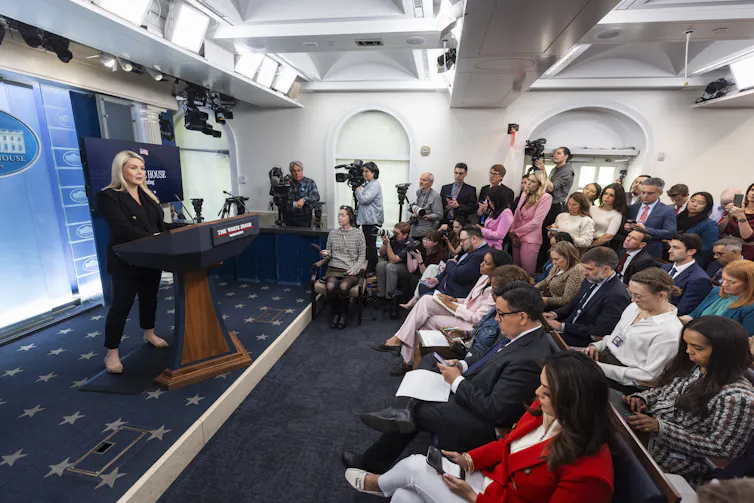
Seeking to link the assassination attempt to political rhetoric is a pretty direct attack on the first amendment to the US constitution, which protects free speech, writes Eliza Bechtold, a US constitutional law expert at the University of Oxford. The Trump administration has a track record of lionising the first amendment when it suits them (the January 6 US Capitol rioters were characterised by some as peaceful protesters exercising first amendment rights). But attacking the media or the Democrats for their criticisms of Trump’s administration is, writes Bechtold, a denial of everything the first amendment was designed to do.
Read more: Trump uses assassination attempt to justify his assault on first amendment rights to free speech
But not everyone in Trump’s Maga movement is now singing from the authorised songbook, writes Clodagh Harrington of the University of Cork. First it was Marjorie Taylor Greene, once a fervent Trump fan in the House of Representatives, now a bitter critic – who jumped ship in 2025, largely due to what she sees as his mishandling of the Epstein files.
More recently, it has been former Fox host Tucker Carlson, who has gone from introducing Trump at election rallies in 2024, to apologising to the US public for “misleading” them into voting for Trump. For Carlson, it’s the Iran war that flies in the face of one of Trump’s core election promises: no new wars.
Mind you, Harrington notes, Carlson’s move may also be dictated by a dream to launch his own presidential run in 2028. A TV personality running for president? Well, it has been known.
Read more: Is Trump losing the support of his Maga base?













Comments are closed.