


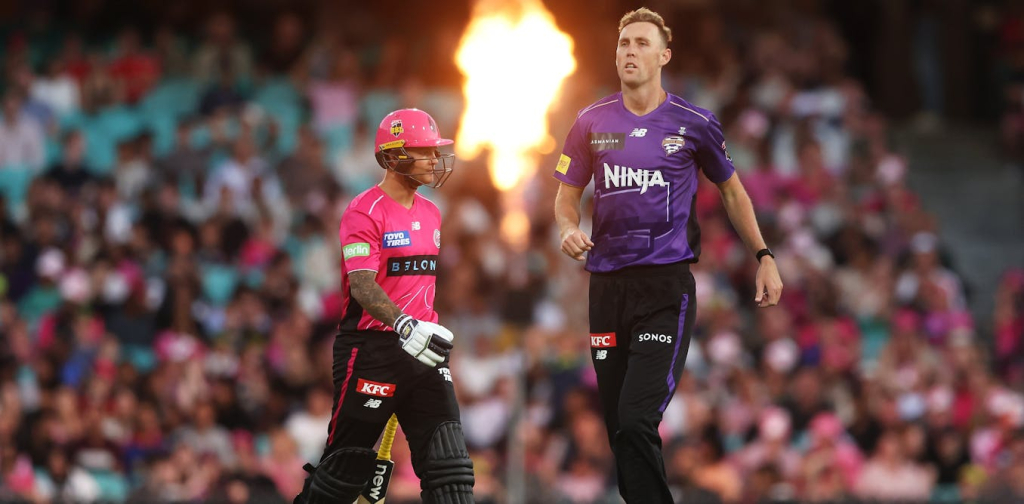

After a year-long push to raise money via private capital, Cricket Australia (CA) has announced it will not sell some or all of its Big Bash League (BBL) franchises.
The news comes after Queensland Cricket told CA it would join Cricket NSW in rejecting the private ownership idea first presented by CA in mid-2025.



So, why was CA looking at private equity, why did the two powerful states reject the idea, and are there any alternatives?
Why did CA pursue private equity?
The BBL was established in 2011 and consists of eight city-based franchises: two each in Melbourne and Sydney, plus teams in Perth, Adelaide, Brisbane and Hobart. CA owns the league and its franchises, while the state associations manage the teams.
In its early years, the competition was a breath of fresh air for cricket fans, with games regularly attracting healthy attendances and prime-time television audiences.
Despite the BBL’s success, CA has struggled financially: it has made annual losses in five of the past ten years and reached what CA described as a low point with the loss of A$31.9 million in 2023–24, before recovering to a smaller loss of $11.3 million in 2024–25.
The governing body has had to cut significant costs in areas such as administration, pathways and community cricket.
There is obvious appeal in a massive cash injection that would boost the bottom line.
As rumours of a possible selloff swirled, CA engaged the Boston Consulting Group to develop a two-tier privatisation model:
-
a 49% partial sale of six BBL clubs, and
-
a full sale of one club in each of Sydney and Melbourne.
CA forecast these options would inject between A$600 million and $800 million into its coffers.
The consultants were able to draw on the experience of existing privatised cricket competitions, including the Indian Premier League, Caribbean Premier League and SA20 (South Africa).
Why did the idea fall flat?
CA needed five of the states to agree to the proposals if it was to move forward with its plans.
South Australia was in favour of a “hybrid” model (with heavy caveats on investment), while Victoria, Tasmania and Western Australia were keen to pursue private investment. NSW had been the most vocal opponent, with Queensland also against the idea.
CA was hoping private investors would be in place for the 2027–28 season.
On Thursday, CA chief executive Todd Greenberg predicted private equity would eventually be brought in:
I do think at some point in our lifetimes that private capital will come in. If we’re going to compete with the rest of the world it is inevitable. Our whole project has been about balancing the risks that come with that and making sure the controls are in place for Australian cricket to bring private capital in but continue to operate the way the game has been governed and should be governed.
Is private investment a panacea?
Many professional sports leagues have turned towards private finance. A recent case in point is Rugby Australia (RA).
RA’s financial issues were not dissimilar to those facing the BBL: RA finished the 2024–25 year with a $38.5 million deficit, on top of a $13 million deficit for 2023–24 and a $13 million negative equity position.
However, RA was successful in raising private capital, but not in the normal manner of selling equity.
Rather it secured an $80 million private credit facility from Pacific Equity Partners, which it later repaid ahead of schedule thanks to the receipts from the British and Irish Lions tour.
The advantages of RA choosing debt over private equity include:
-
it retained 100% of commercial revenues
-
it maintained full control of the sport’s direction
-
it kept the door open for future private equity deals.
Upsides and downsides
It is difficult to find a report from management consultants that does not recommend privatisation. It is a convenient strategy because professional sports can solidify their finances without serious structural reforms.
Private equity investment would have likely led to higher salaries for players, which would in turn attract more elite talent. It wouldn’t be difficult to imagine a better on-field product would attract more broadcast dollars, sponsors and fans.
Yet among the rosy predictions of financial gain, there is often an under-quantification of the downsides. These include:
-
a possible loss of competitive balance. Currently, CA attempts to ensure rough equality among teams. Privatisation will likely favour the big, fully privatised franchises
-
likely alienation of fan bases if new owners rename or rebrand teams, which is what happened recently in England’s Hundred competition after ownership stakes were sold to IPL teams and US investors
-
intangible assets such as the league’s image, reputation and fan appreciation, which are often underestimated, may be impacted by dramatic changes such as private ownership models.
This is not to argue against private investment but rather to point out there are considerable disadvantages to consider.
There are other options
CA does need money but privatisation of BBL franchises would have been risky and premature.
RA, not normally seen as a model of financial efficiency, has shown the use of debt rather than private equity can be a means of establishing financial stability without rushing into privatisation.























Comments are closed.