


 Ninik Yuniati



21 Mei 2026
TL;DR
-
Plastic producers have not seriously fulfilled responsibilities reducing single-use packaging waste.
-
Reuse communities are growing, but government regulations remain weak supporting broader implementation.
-
Consumers bear additional costs caused by the global plastic waste management crisis.
Sophie’s smartphone buzzed, notifying her of a new order from an e-commerce platform: three packs of eggshell powder. The founder of Tani Alit quickly headed to the warehouse to prepare the shipment. She scooped the eggshell powder into cassava-based bags, weighed them, then placed them inside brown paper packaging tied with coconut-fiber string. Even the product labels were made from biodegradable paper.
“The principle is that the packaging should decompose as easily as possible while still ensuring the product reaches consumers safely,” said Sophia Louretta, a Jakarta-born entrepreneur, (18/5/2026).
Sophie carefully considers every detail of her product packaging to ensure it generates as little waste residue as possible. The same principle applies to other products, such as concentrated plant nutrients packaged in reusable or recyclable HDPE plastic bottles.
The eggshell powder and plant nutrient concentrate are products of Tani Alit, created through composting organic waste collected from small food stalls around Cipedak, Jagakarsa, South Jakarta.
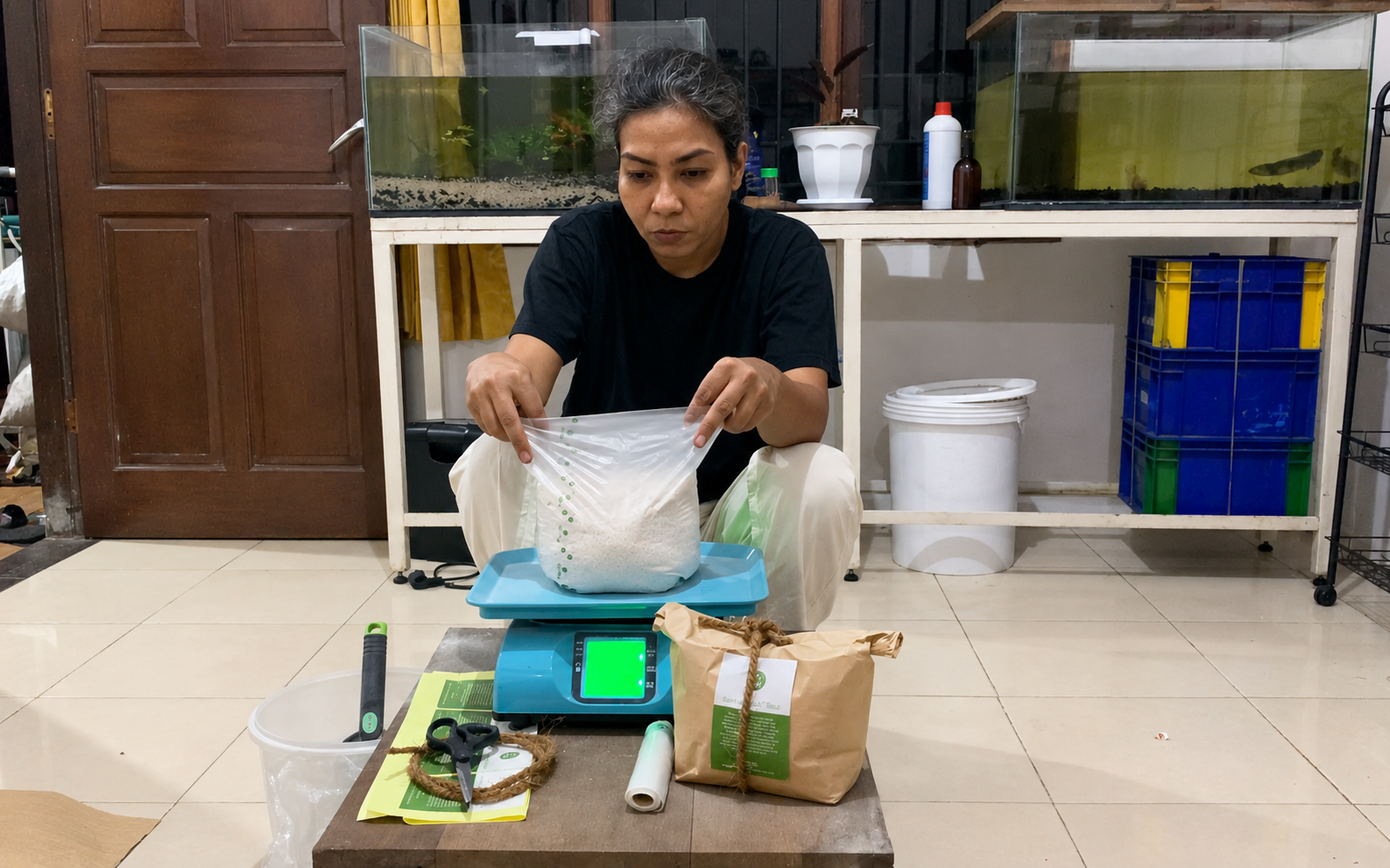 Tani Alit founder, Sophia Louretta packages eggshell powder orders. Packaging materials used by Tani Alit are made from organic materials or recyclable materials.
Consumers are encouraged to return empty bottles to Tani Alit in exchange for incentives such as free products. Through this scheme, Sophie hopes her packaging will not end up as waste polluting the environment or contaminating rivers and oceans. The products may become slightly more expensive, but she believes they offer a more responsible and practical solution.
She communicates this to consumers through messages printed on the packaging. One example reads:
“We sincerely ask for your understanding regarding the additional Rp2,500 charge for the bamboo container. We are trying to avoid using plastic.”
Sophie’s commitment to building an environmentally responsible business stems partly from her own experience as a consumer. She still finds herself relying on products packaged in single-use plastics and multilayer packaging, such as sachets and pouches. She sorts and cleans these waste materials and, once enough has accumulated, sends them to a recycling facility in Parung at a transportation cost of Rp200,000 per trip.
“The transportation cost is expensive because the only recycling facility willing to accept multilayer packaging is in Parung. There used to be a waste bank that accepted it, but now they refuse because it is considered low-value plastic,” Sophie said.
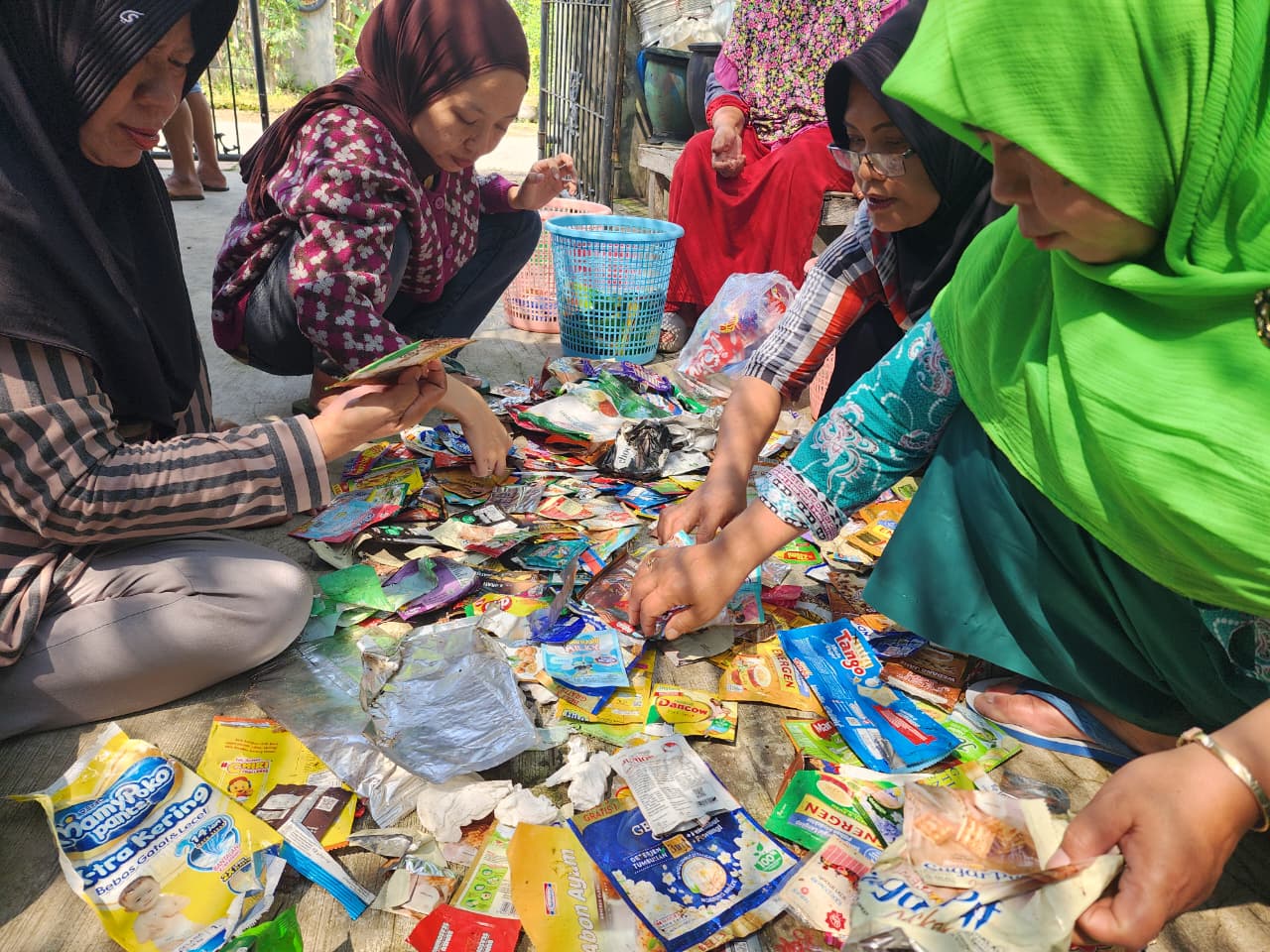 Volunteers from a waste bank in Kediri conduct a brand audit on April 1, 2026. The activity aims to identify the composition and sources of waste, particularly single-use packaging. (Photo: ECOTON).
Flood of Sachets
Single-use plastics and multilayer packaging remain major challenges in waste management. Multilayer packaging is difficult to recycle, causing most of it to end up as residual waste. Brand audits regularly conducted by environmental organizations consistently show that single-use and multilayer packaging dominate waste collected in various locations.
For example, the Indonesia Zero Waste Alliance (AZWI) collected more than 9,000 sachets from 34 locations between October 2023 and February 2024. Most were everyday consumer products such as soap, shampoo, and instant food and beverages produced by major companies including Wings, Mayora, Salim Group, Unilever, and PT Santos Jaya Abadi.
Ideally, these thousands of sachets should not be polluting the environment. Instead, they should be collected and managed by their producers. This falls under the concept of Extended Producer Responsibility (EPR), regulated under Environment and Forestry Ministerial Regulation No. 75/2019 on the Producer Waste Reduction Roadmap.
Under the regulation, producers are responsible for the entire life cycle of products they market—from the design stage through end-of-life management.
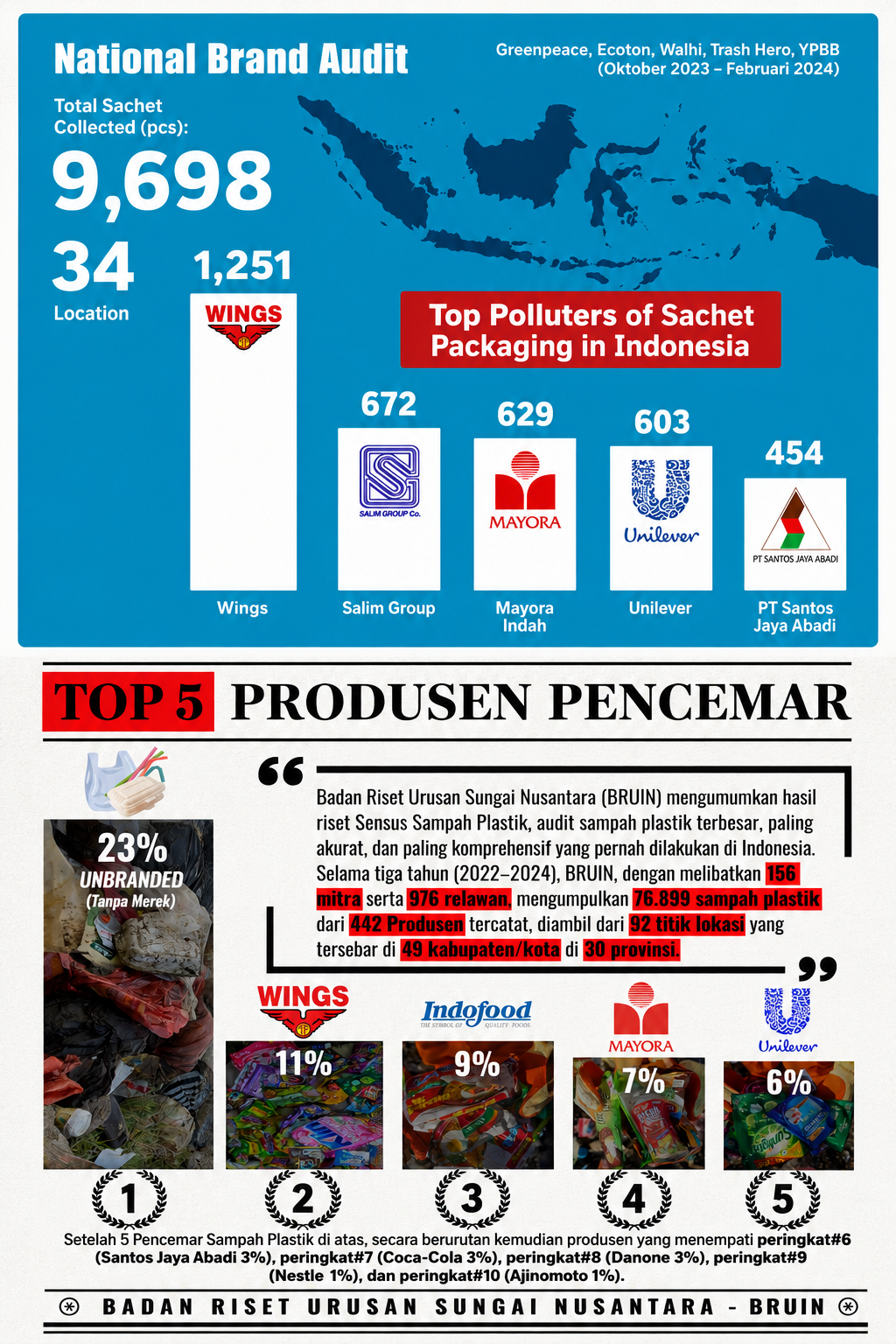
Results of brand audits conducted by the Aliansi Zero Waste Indonesia (top) and Badan Riset Urusan Sungai Nusantara (bottom).
Producers are also required to redesign packaging to become more environmentally friendly, rather than continuing to heavily rely on single-use or multilayer plastics.
They are further required to establish roadmaps aimed at reducing waste generation by 30 percent by 2029. However, according to Rahyang Nusantara, Deputy Director of Dietplastik Indonesia, only around 20 companies have submitted such roadmaps out of approximately 20,000 eligible companies.
Rahyang criticized the implementation of EPR for producing minimal impact because, in practice, it has become largely voluntary despite being legally mandatory.
“There is no strict verification. There is no percentage target specifying how much reduction is required. Because it is treated as voluntary, companies can do whatever they want. As long as they have a roadmap, whether it is legitimate or actually implemented remains unclear,” said Rahyang, who also serves as National Coordinator of AZWI.
He also criticized current EPR practices for focusing primarily on collection and recycling, rather than prioritizing reduction of single-use packaging and reusable systems.
Businesses Respond
Karyanto Wibowo of Danone Indonesia said the company remains committed to implementing EPR. Its initiatives include designing packaging that can be reused or recycled and collecting post-consumer packaging waste. According to Karyanto, Danone regularly submits its EPR roadmap to the Ministry of Environment.
Karyanto also serves as Chair of the Supervisory Board of the Indonesia Packaging Recovery Organization (IPRO), a recycling-focused organization. He stated that most of IPRO’s 22 members have already submitted their roadmaps, with some already receiving approval.
“A small number of members are still in the process of drafting or refining their plans, generally due to differences in business scale, system readiness, and regional infrastructure challenges,” Karyanto said in a written statement.
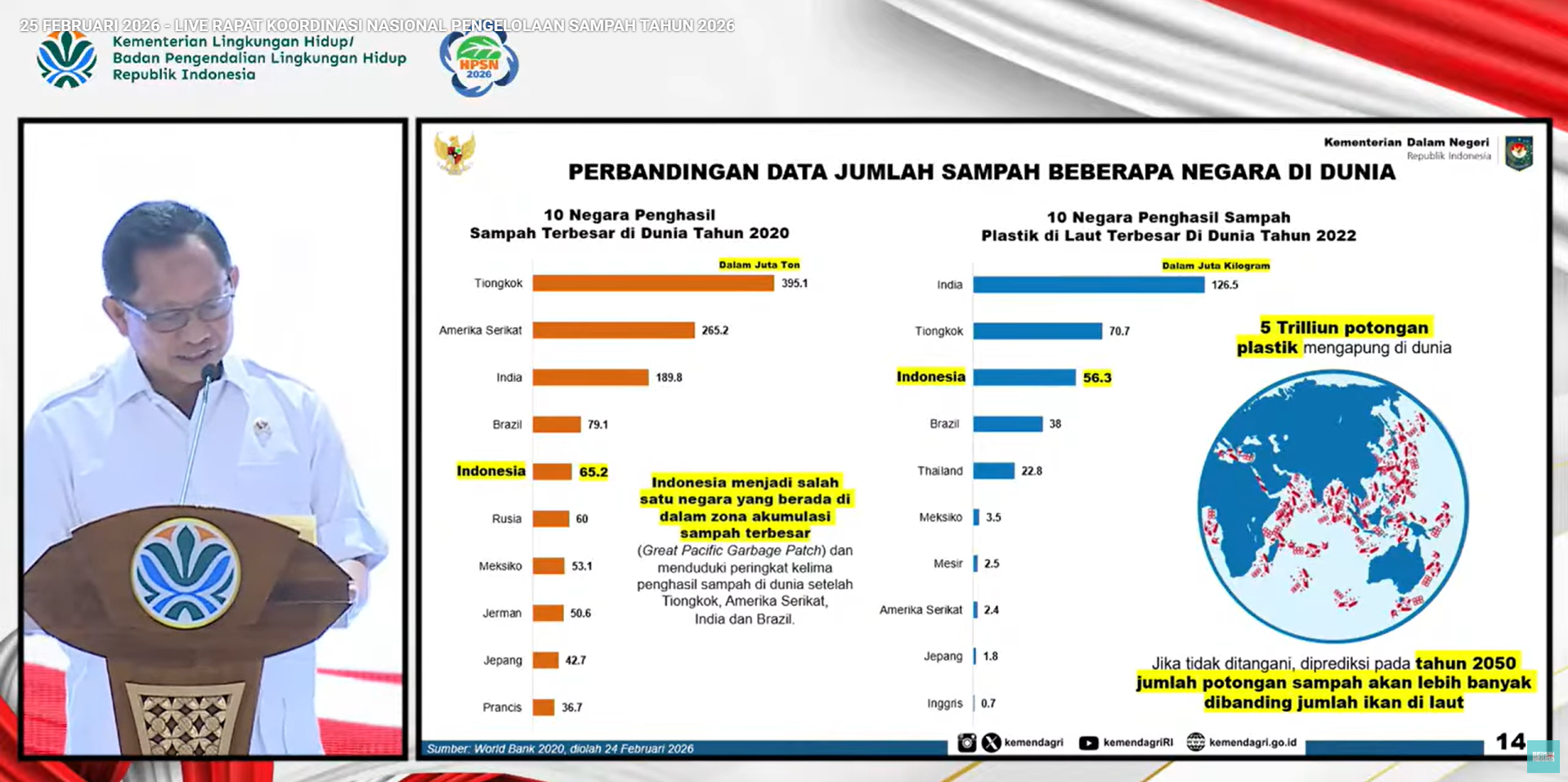
Screenshot from a YouTube video during the 2026 National Coordination Meeting on Waste Management. Tito Karnavian presents data on global waste volume. Indonesia ranks fifth among the world’s largest contributors of marine plastic waste.
Meanwhile, many members of the Indonesian Bottled Water Producers Association (AMDATARA), which he leads, are small and medium-sized enterprises that still require assistance in complying with Regulation No. 75/2019.
“EPR is a relatively new approach that requires changes in mindset, systems, and cross-sector collaboration, meaning not all companies are immediately ready to implement it fully,” he added.
Regarding sanctions for non-compliant companies, Karyanto said they are important to ensure EPR effectiveness. However, enforcement should be proportional, fair, and implemented gradually. Sanctions should also be accompanied by incentives such as easier licensing procedures and prioritized access to government programs.
EPR Management Institution
Karyanto also supports the establishment of an EPR management body, provided its purpose is to strengthen coordination and effectiveness rather than create additional bureaucracy.
He said such an institution should operate collectively under government policy frameworks and involve multiple stakeholders, including industry representatives, government agencies, and independent parties such as academics and NGOs.
“Its main role would be coordinating EPR implementation collectively, facilitating financing and partnerships, and monitoring and reporting EPR performance,” Karyanto explained.
M. Reza Cordova, a researcher at Indonesia’s National Research and Innovation Agency (BRIN), proposed an institutional structure similar to the Indonesian Chamber of Commerce and Industry (KADIN). Such an organization would facilitate and manage EPR implementation across companies, particularly regarding packaging take-back systems and recycling processes.
“From the government’s side, for example, we do not want any leakage (of plastic waste); we want there to be design solutions. Here, submit it to the organization. The organization can then discuss with each producer what actions they can take,” Reza said at the BRIN office in Cibinong, Bogor, (3/12/2026).
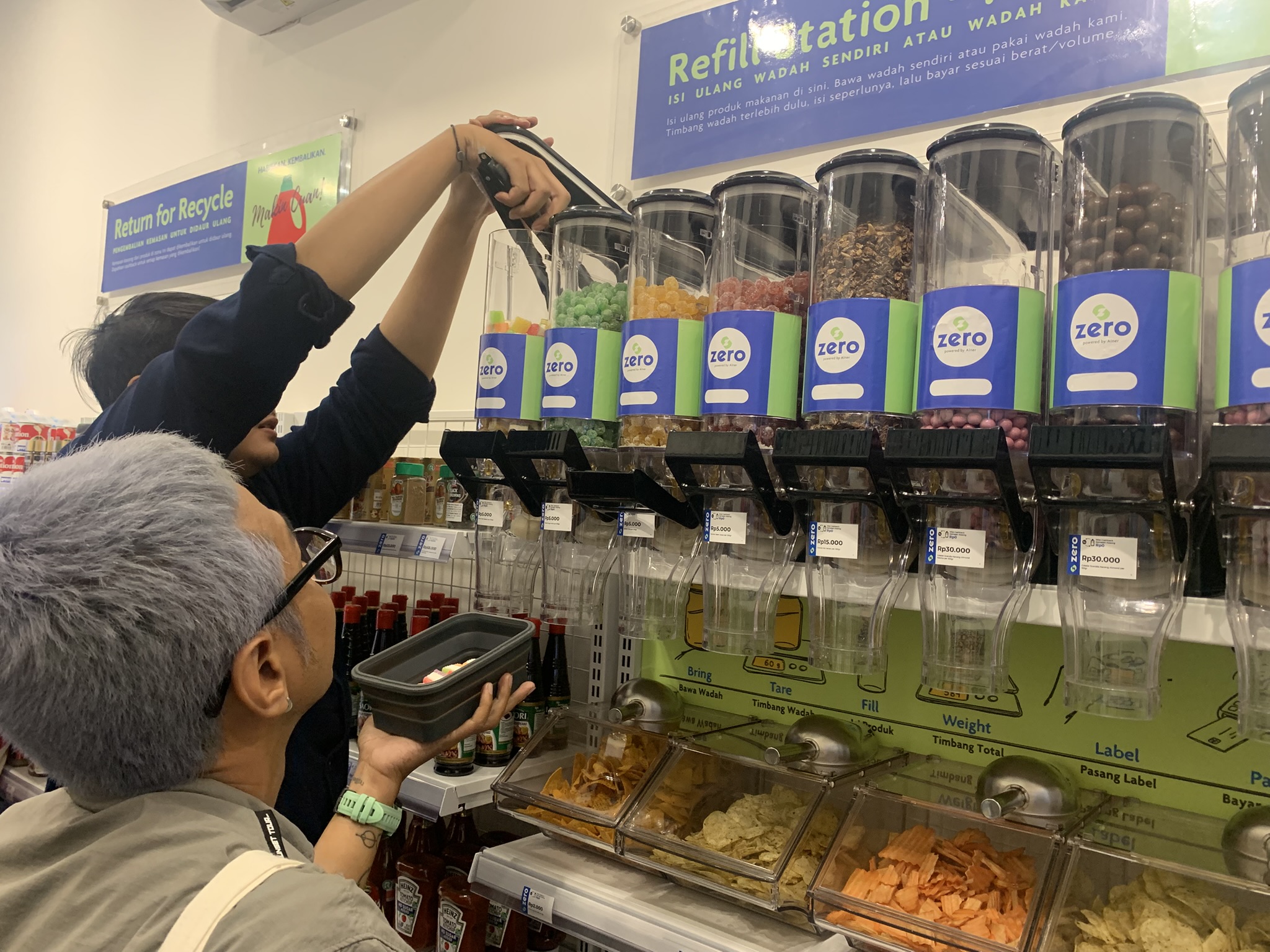
Toko Zero, a member of the Asosiasi Guna Ulang Indonesia, located in South Tangerang.
Reuse Ecosystem
The government is currently drafting a presidential regulation on waste management aimed at integrating three existing regulations: the National Waste Management Policy and Strategy (Jakstranas), marine waste management regulations, and EPR regulations.
Rahyang Nusantara of AZWI hopes the new regulation will clearly define EPR obligations and include strict sanctions. He also believes reuse systems should become an explicit part of EPR obligations.
“The government needs to accelerate the implementation of reuse and refill systems. Reuse is still treated as optional, even though it is one of the most strategic solutions for reducing waste generation,” he said.
In July 2025, the Indonesian Reuse Association (AGUNI) was launched to promote sustainable reuse systems. Its members include businesses providing reuse services for everyday consumer needs across Jakarta, Bali, West Java, East Java, Banten, and the Thousand Islands.
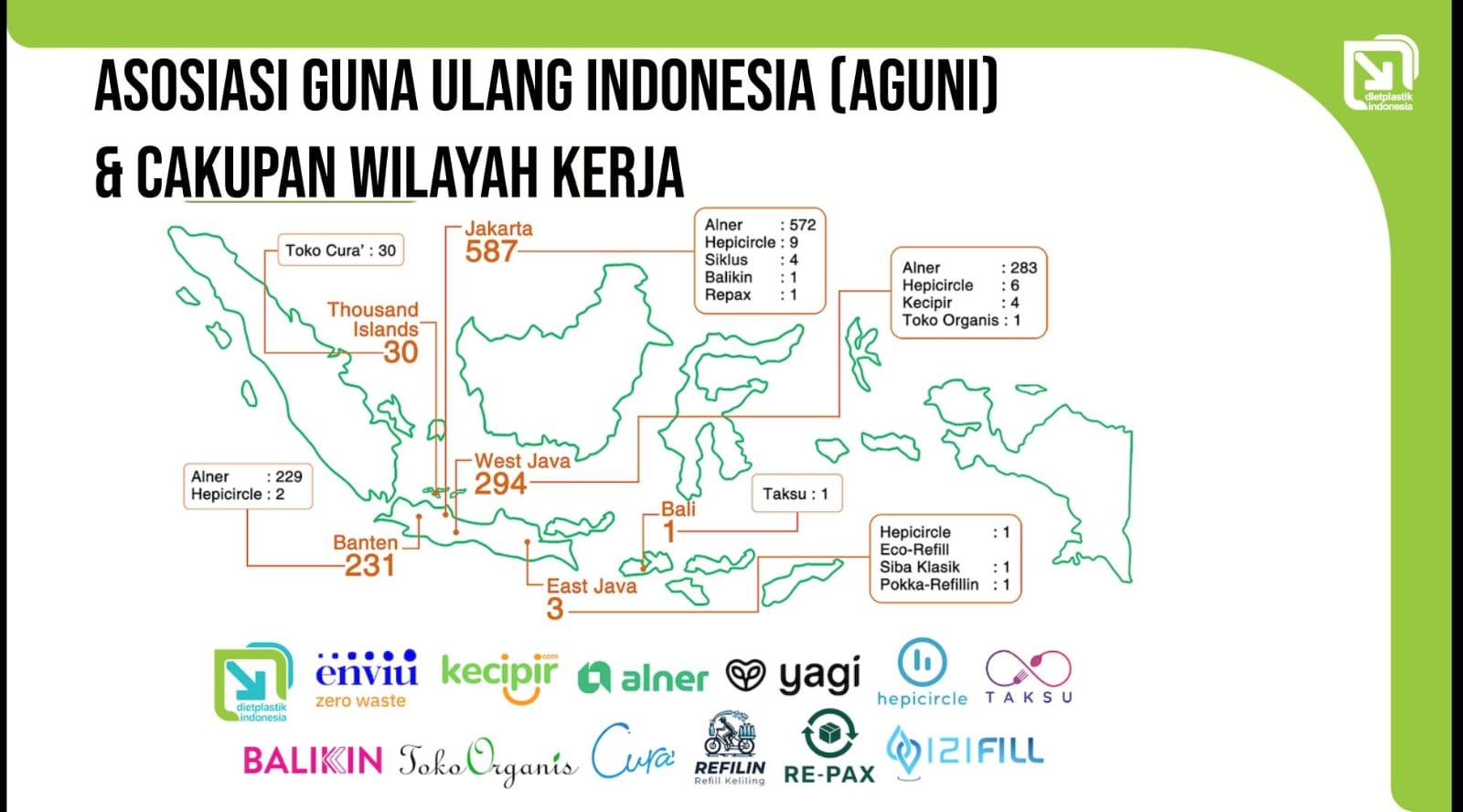
Distribution of members of the Asosiasi Guna Ulang Indonesia across Indonesia.
AZWI believes strengthening the reuse ecosystem should also be accompanied by gradual nationwide restrictions on problematic plastic products such as multilayer sachets and styrofoam.
Karyanto Wibowo of AMDATARA supports limiting or banning products with marginal functions and readily available alternatives, such as plastic straws and thin plastic bags, as long as practical and environmentally friendly substitutes are available.
“Businesses support efforts to reduce these products, but we believe effective policies should be gradual, data-driven, and supported by ecosystem readiness rather than comprehensive bans without mature alternatives,” Karyanto said.
Regarding reuse initiatives, Karyanto said AMDATARA is open to collaborating with organizations such as AGUNI, provided several conditions are met, including product safety and quality—particularly for food and beverage products—economic and operational feasibility, and regulatory certainty.
According to BRIN researcher Reza Cordova, strengthening the reuse ecosystem requires government support through regulations and incentives. Without such support, reuse initiatives will struggle to grow.
“Our society may not necessarily be able to afford reusable products immediately—it can be difficult. But if the government encourages it, for example by ensuring every minimarket has refill vendors where people can buy products for Rp500 per 10 or 20 milliliters, why not?” Reza said.
*This article has been translated using AI. See original.
This story was produced for the SEA vs. Plastics project of the Southeast Asia Editors Network, in partnership with AAJA-Asia and the Temasek Foundation.
Reporter: Ninik Yuniati
Editor: Aditya Widya Putri
Illustrator: Aan K. Riyadi




















Comments are closed.