




A Kodak engineer built the first digital camera in 1975. The bosses said: “That’s cute, but don’t tell anyone”. On inventing a filmless device that would revolutionise photography, the reaction inside the company, was more or less that it was a charming little toy and that they should probably keep quiet about it.
Kodak had owned photographic film for most of the 20th century. That was the problem. They were so attached to what had made them rich that they could not see their own invention for what it was. Bankruptcy followed in 2012.



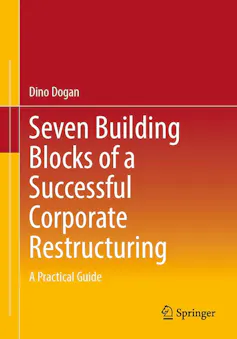
I start my book “Seven Building Blocks of a Successful Corporate Restructuring” with that story on purpose. After three decades running corporate restructurings as a CFO and then a CEO, I am convinced this simple anecdote explains almost everything about why companies die. Not the bad ones. The good ones. The information was sitting there.
The innovation was invented right there in their own laboratory. What was missing was the nerve to act on a signal while it was still quiet. Because that is the whole game. The best crisis management is making sure the crisis never shows up. And that depends on something the strategist Igor Ansoff named decades ago: weak signals. Early, messy, hard-to-measure hints that something is shifting, long before it lands on the balance sheet.
Why does this matter right now?
The EY-Parthenon Restructuring Pulse Survey, which polls more than 200 workout banking professionals across 25 countries, expects European restructuring to keep climbing through 2026, with Eastern Europe as the epicenter. Geopolitical tension as a trigger doubled in six months. None of this is arriving as one dramatic bang. It is piling up quietly, point by point. Which is exactly the kind of weather in which weak signals go unread.
Here is the good news, and it is genuinely good news. Companies almost never fall off a cliff. They slide. Slowly. In the book I lay out the phases of that slide. A comfortable pre-phase: business is fine, everyone relaxes. Then an early phase, when the first cracks form a pattern – quality slips, stock builds, margins thin, suppliers get paid a little later than they used to. The slide is slow precisely so you have time to act, if you are watching.
And the companies least likely to be watching are the ones with the longest winning streaks. I call the people running them fair-weather captains. They have been right for so long they have forgotten that past success guarantees nothing at all. The longer the streak, the louder a weak signal has to shout before anyone hears it, by which point it is no longer weak.
You can watch this happening today. Microsoft cut around 15,000 roles across 2025. Plenty of people inside the building saw it coming months ahead, reading the hiring freezes, the withdrawn resources, and the sudden performance reviews for exactly what they were. The signal was clear. Recognising it was the hard part. None of the tools for this are exotic. That is what frustrates me. A ‘weak signal’ system is not a crystal ball; it is a habit of leadership. PESTEL for the wider environment. Porter’s five forces for the competition. An honest SWOT – and I mean honest – for your own weaknesses.
The framework is never the issue.
The issue is whether you will write down the thing you do not want to be true, and move while moving is still cheap.
Kodak had the analysis. Nokia, king of mobile phones, had everything it needed when Apple turned up with a touchscreen, and bet on the keyboard anyway. Blockbuster could see exactly what Netflix could see. Every one of them could read the signal. Every one of them chose not to.
I run a research project in Luxembourg, the Early Warning Systems initiative, looking at exactly this: whether firms actually gather weak signals from their ecosystem, and whether they do anything with them. The answer, again and again, is that the gap is almost never about missing information. It is psychological. It is organisational. It is human.
Which brings me to the most uncomfortable part of prevention, and the part nobody likes to discuss: the people who commission a restructuring plan.
When the work starts turning up facts they did not want, those same people often start ducking. They deny the information. They bury it. They reframe it. Restructuring action designed to confirm what the boss already believes is worse than no restructuring at all. So before I accept any mandate, I want to understand the real motivation of whoever is handing it to me. Because a plan is only ever as honest as the person who ordered it.
And this is why you measure everything from day one. Business management expert Peter Drucker said it: “if you can’t measure it, you can’t manage it”.
Without clear priorities, real targets, and feedback to track them, restructuring is just a firework. Loud, brief, gone.
Planning does not turn uncertainty into certainty. It does something smaller and far more useful. Fewer loud crises blow up in your face because you had the nerve to listen to the quiet ones.
Dr Dino I. Dogan is an executive and academic who has held CFO and board roles at Vipnet (now A1 Croatia), mobilkom austria, Telekom Austria and Hrvatski Telekom, served as Chief Executive Officer (CEO) of Europlakat, leading major restructuring and merger efforts. He is the author of the Springer book Seven Building Blocks of Successful Corporate Restructuring.

















Comments are closed.