


Earlier this month, the Supreme Leader of Iran, Ayatollah Ali Khamenei, was buried in his hometown of Mashhad after a four-day ceremony. Many international delegations were present, but each country will have chosen their representatives with the utmost care. Sending high-ranking officials would go beyond mere diplomatic courtesy, and possibly signal an alliance.
Only two states sent their prime ministers to the funeral: Iraq and Pakistan, both of whom share a border with Iran. This decision indicates an emerging “Axis of Sympathy” between the countries, a new South-West Asian regional theatre that breaks the simple binaries of the Middle East and South Asia.


India – South Asia’s biggest power and Pakistan’s rival – sent a delegation that did not include Prime Minister Narendra Modi. Modi had also failed to condemn Khamenei’s assassination in a joint US-Israeli airstrike on February 28.
Indian network WIONews – owned by ZEE Media, India’s largest registered news network – gave the impression that Iran-India relations were in a good place. On 6 July 2026, the day of the funeral, one headline stated “‘Iranians will never forget’: Iran appreciates India’s participation in Khamenei funeral”.
Headlines like this fail to acknowledge a more profound geopolitical shift. One of the main consequences of the ongoing US-Israeli war with Iran is that is has forged a Pakistan-Iran alliance.
This was not always the case. In the 1990s, Pakistan and Iran fought one another in Afghanistan. As recently as 2024, Tehran and Islamabad exchanged fire over separatists in the Baloch-inhabited areas that straddle their shared border.
India and Iran were also closer in the past. In 2003, Iran agreed to allow India to develop a deep-water port in Chabahar, providing a transport corridor to Central Asia and Russia that bypassed Pakistan.
Khamenei’s funeral marked a major reconfiguration of all of these alliances.
Read more: How Iran used Ali Khamenei’s funeral as a political and diplomatic tool
Necropolitics, emotion, and keeping Trump happy
Cameroonian scholar Achille Mbembe defines necropolitics as “the subjugation of life to the power of death”. Khamenei’s four-day funeral was not simply the burial of a human body – it was a necropolitical ceremony, choreographed by the Islamic Republic to gauge which nations were willing to send a “delegation of lamentation”.
Dominique Moïsi’s 2009 book, The Geopolitics of Emotion, can help us understand the deep importance of these gestures, especially with the second Trump administration in full swing.
The nations and organisations of the world – from Nato to Fifa – now have to account for and preempt the US president’s tantrums. This extends Moïsi’s “geopolitics of emotion” into a “geopolitics of mollification” – diplomatic structures that largely serve to appease Trump, massage his ego, and avoid his wrath.
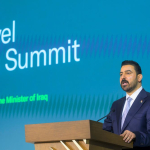
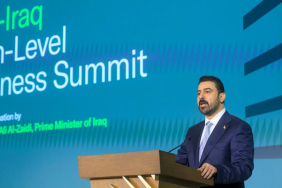
In practical terms, this means any nation sending a head of state to Khamenei’s funeral had to calculate Trump’s reaction. Only two states felt emboldened enough to send their prime ministers to the funeral – Pakistan’s Shahbaz Sharif and Iraq’s Ali Falih Kadhim al-Zaidi were both in attendance.
It is worth noting that India’s delegation was not an affront. The presence of Indian Shi’a general Ata Hasnain in particular showed respect for Iran’s Shi’a majority.
But in forging alliances, geopolitical heft ultimately trumps religious sectarianism.
Pakistan, the diplomatic broker
Pakistan has wielded increasingly firm power in its dealings with Iran over the last year.
First, Pakistani mediation was what gave the Islamic Republic a diplomatic off-ramp during the 2026 conflict that erupted over 40 days in the Gulf. Pakistani officials brought both Iran and the US to the negotiating table in Islamabad.
Second, Pakistan insisted that the ceasefire also apply to Israeli operations in Lebanon. It achieved this, demonstrating that its influence can be felt on the shores of the Mediterranean.
Read more: How Pakistan became the primary mediator between the US and Iran
Even with the US-Iran ceasefire broken as of mid July, Pakistan’s role was vital, and stood in stark contrast to India who, despite military ties to Israel, did not even ask for a ceasefire.
The India-Israel alliance runs deep. In addition to the strategic partnership trumpeted on Modi’s February 2026 visit to Israel’s parliament, the Knesset, many Indian Hindu nationalists are longstanding, fervent admirers of the Zionist nation-state model.
Read more: Why India’s Hindu nationalists worship Israel’s nation-state model
Geography matters
India argues that it is pursuing “multi-alignment”. Unlike its Cold War “non-alignment” policy, India today seeks to maintain cordial relations with every nation – even with rivals such as Iran and the US.
However, there is a major difference in the long-term viability of each alliance within the new southwest Asian regional theatre. India does not border the UAE and Israel, nor does the US. Iran and Pakistan, however, share a long border.
The rapprochement that emerged from the 2026 war means the two nations can actively benefit from the alliance. It will allow them to cooperate on, for instance, managing tensions with the Taliban in Afghanistan and Balochi separatists.
The emerging “Axis of Sympathy” is more symbolic than Iran’s harder Axis of Resistance. The Islamic Republic sees Iraq and Pakistan’s sympathy as part of its neighbours’ delicate balancing act, which will need to keep them on Tehran’s side.
The benefits are already clear. Pakistan allowed Iraq and Iran to achieve the common goal of preventing a prolonged conflict in the Gulf – a goal also shared by the Gulf Cooperation Council. An extended war would benefit nobody in the Middle East or South Asia, but while countries from across these regions worked towards a ceasefire, it was Pakistan that brought about the first diplomatic breakthrough.
Pakistan and Iraq’s decision to send their highest government officials to Khamenei’s funeral does not amount to the two countries picking a side. But for Pakistan in particular, assertive brokering and strategic ties with Tehran and other powers are transforming alliances, signalling a huge shift in the power dynamics of southwest Asia and beyond.

A weekly e-mail in English featuring expertise from scholars and researchers. It provides an introduction to the diversity of research coming out of the continent and considers some of the key issues facing European countries. Get the newsletter!

















Comments are closed.