


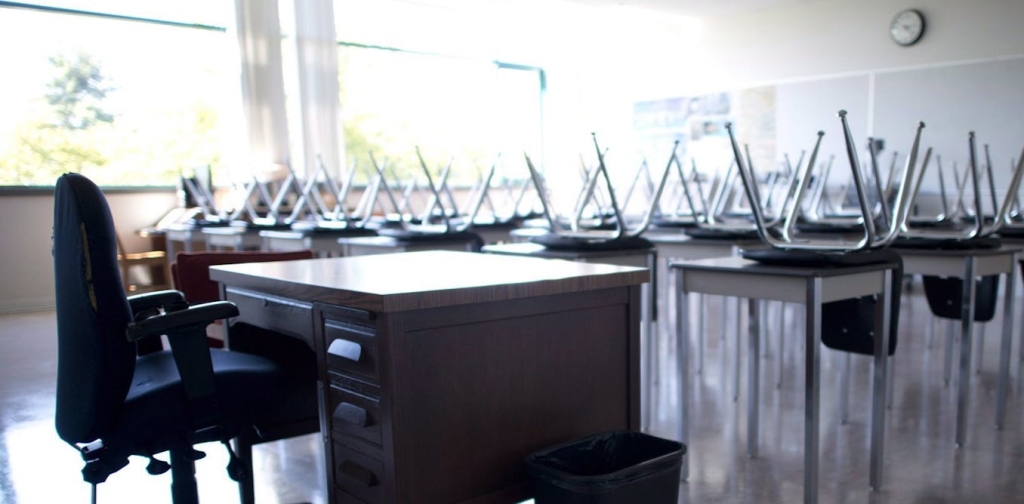

Recent changes to Alberta’s education policies highlight ongoing debates about what can and cannot be taught in classrooms.
In announcing changes to Alberta’s approach to curriculum and learning in May, Education Minister Demetrios Nicolaides issued a statement saying the province would “strengthen accountability, reinforce neutrality and respect and make it clear that politics and ideology have no place in Alberta classrooms.”




At the same time, he emphasized teachers should continue to facilitate discussions involving diverse viewpoints, provided they are conducted “objectively and impartially.”
A suite of amendments were made to Alberta’s Education Act, including those aimed at clarifying “expectations in the Code of Professional Conduct for Teachers and Teacher Leaders to remain objective, present balanced perspectives and support students in expressing different viewpoints.”
This raises an important question for social studies education: what happens when so-called “viewpoints” in policy discourse are, in practice, lived stories and experiences?
As educators whose combined expertise is concerned with the emotional weight of teaching social studies and fostering empathy and peacebuilding through meaningful dialogue and storytelling, we are concerned that “neutrality” does not remove politics from the classroom, but risks determining whose stories can be told and whose are left unheard.
The stories classrooms tell
Research in anti-racist and culturally responsive education highlights that schooling is shaped by race, language and class.
Fostering students’ sense of being seen matters especially for students from marginalized populations who often describe not feeling welcomed in classes, or not seeing their experiences reflected in curriculum. When students don’t see themselves reflected, it becomes more difficult for them to imagine future pathways into education or work. These experiences shape both belonging and possibility.
Educators also have experiences that can affect their sense of school belonging. They may experience racism or other forms of discrimination from staff, students, families or communities. In some cases, educators’ identities and perspectives are treated as “political,” increasing scrutiny over their teaching.
Questions of belonging are closely tied to questions of voice and narrative.
Whose stories?
The question of whose stories get to be told plays out in social studies classrooms across the country.
As a cornerstone of social studies education, the teaching of Canadian history in particular has been shaped by dominant national narratives that inform understandings of Canadian identity.
The first narrative emphasizes western European colonization, nation-building and the English and French as Canada’s “founding” peoples. The second narrative, which emerged in the 1970s, emphasizes Canada’s multicultural identity, where cultural diversity is positioned as a defining national strength.
Both narratives omit the stories of First Nations, Métis and Inuit peoples, a silence that political philosopher John Ralston Saul describes as “the single greatest failure of the Canadian experiment” in reference to failing “to internalize consciously the First Nations as the senior founding pillar of our civilization.” This underscores how longstanding Canadian myth has envisioned Indigenous Peoples as outside colonial narratives.
Read more: Leaked Alberta school curriculum in urgent need of guidance from Indigenous wisdom teachings

Shifts after the TRC
Since the release of the Truth and Reconciliation Commission of Canada report, efforts to decolonize and Indigenize curriculum have begun to shift these narratives.
These shifts intersect with lived experiences of migration, as students of varied identities negotiate understanding where they are and experiences of belonging.
Psychoanalyst and education scholar Deborah Britzman describes encounters with histories of trauma, violence and human suffering as “difficult knowledge,” because they can unsettle how we understand ourselves and the world around us. Hearing experiences of colonialism, xenophobia, Islamophobia or antisemitism can therefore carry emotional weight.
Yet, as education scholar H. James Garrett argues, engaging with our own uncertainty and “bewildering instances of loss, violence and upheaval” is part of how we make meaning of our experiences and our world. These moments point not only to what curriculum has included and validated, but also to how certain stories come to be considered difficult, contested or inappropriate for classroom engagement.
At the same time, neoliberal and neoconservative movements have increasingly pushed for a “just the facts” approach to education that presents itself as objective and neutral.
Claims to ‘neutrality’ can obscure assumptions
Yet stories and history are never neutral. Claims to neutrality often obscure the assumptions embedded within historical narratives. Facts without context are insufficient for understanding.
These tensions shape what becomes possible in classroom encounters with difficult stories, and how students and teachers engage with history.
Stories allow us to understand not only events, but how individuals and communities make meaning of them. Emotion is always present in this process and cannot be separated from learning, given that emotion is essential to the ways we make sense of our world.
For example, teaching about the Holocaust or apartheid involves not only historical content, but also ethical and emotional engagement. The push for neutrality can both narrow discussion and shape how students encounter their peers and the historical realities they are shaped by.
Making space
Educational thinkers such as Paulo Freire remind us that learning is a collaborative process, and involves action and reflection upon the world in order to transform it.
Classrooms are not neutral spaces; they are shaped by social and political conditions that influence whose experiences are centred. This means that creating space for multiple perspectives is central to meaningful learning.
This work starts by having discussions about how we communicate and create shared norms for dialogue. From there, students and educators can create a space for dialogue to share stories and connect lived experiences to the existing curriculum. This helps learners explore whose voices are present, whose are absent and how different narratives shape our understanding of history and identity.
Supporting agency, respecting boundaries
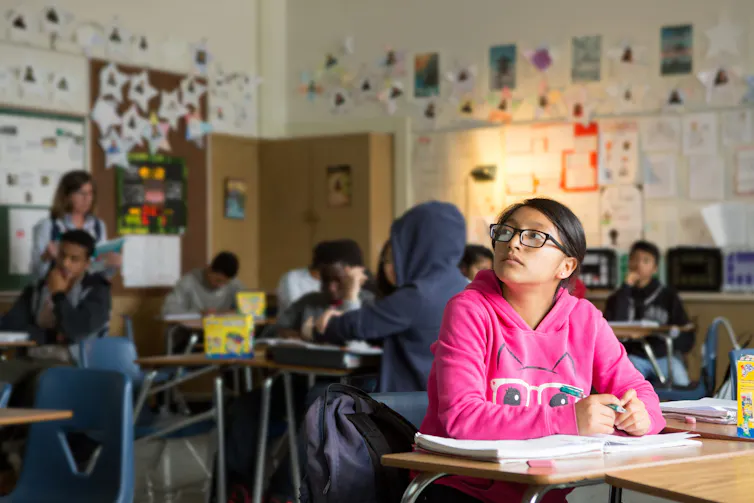
Approaching stories in this way can support students’ sense of agency. Being explicit about norms for dialogue contributes to creating spaces that may allow students to share from their own observations or experience when — and if — they are ready, and to invite classmates and teachers to listen or accompany them on that journey.
This also means recognizing and respecting that marginalized students, in particular, should not be put on the spot to speak or be expected to educate others about experiences that may be deeply personal or connected to trauma.
Instead, educators can invite class-wide sharing without expecting students to do so. If or when students choose to share on their own terms, this can become an act of self-reclamation, fostering a sense of healing, empowerment or reconciliation.
It’s also important to move beyond critique toward creation, inviting students to compose new narratives, especially when it comes to Canadian history and identity.
Difficult stories, therefore, are not obstacles to democratic education. Learning how to communicate about them are conditions for it.
















Comments are closed.