



Transboundary waters — rivers, lakes and aquifers residing in more than one country — are facing challenges due to climate change, with conflicts over these waters increasing.
Existing analyses of water conflict usually focus on basins in Africa and Asia, rather than those in North America and Europe, which have typically been more co-operative. But that could be changing.



Analysis from the Intergovernmental Panel on Climate Change shows that climate change’s most pressing impacts in the coming decades will be on water resources, with implications for governance. This isn’t just an issue for rivers like the Nile: these impacts are happening everywhere, including North America.
Read more: The imperialist past that started dam politics between Egypt, Sudan and Ethiopia
Current analyses of water conflict do not properly consider the 21st-century landscape. My doctoral research focuses on transboundary water governance, climate change and water conflict.
I believe there are three distinct factors that may increase the likelihood of conflict over shared waters in North America and Europe in the coming decades: an increase in generative AI-driven data centres, a decline in democratic processes and debate, and climate-related uncertainty.
Transboundary waters in the 21st century
Droughts and water scarcity have long been considered factors in water conflict. In North America, the Colorado River basin is experiencing extreme water shortages, and water demands within the Great Lakes basin are increasing.
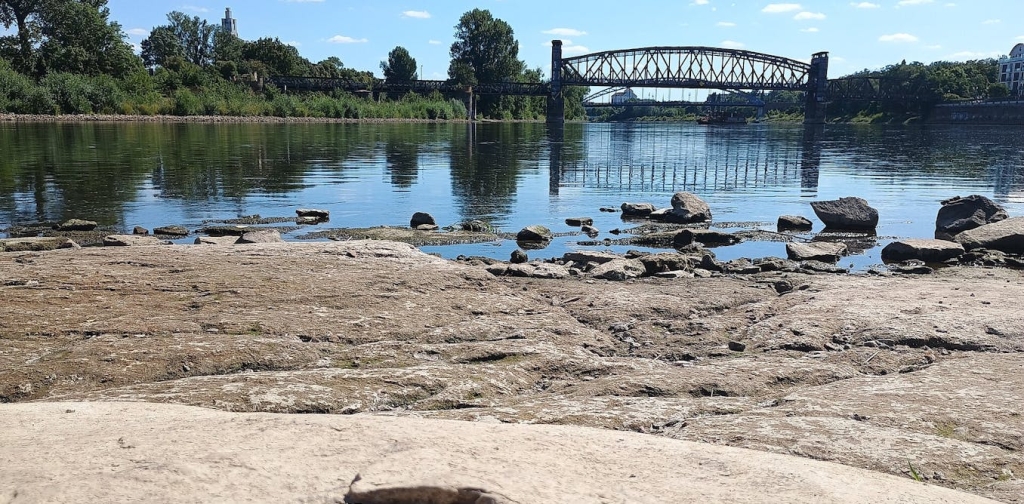
The Danube River, spanning 10 European countries, has seen record-low water levels this summer, causing power plants to shut down due to a lack of water. A recent United Nations report has warned that the world is in a state of “water bankruptcy,” as more than half of the planet’s large lakes have declined in storage size since the 1990s.
At the same time, water conflict events are also on the rise around the world. We need to better understand the factors causing it. Scholars have noted that while water scarcity or variability could indeed increase tensions between countries that share water resources, political and economic factors are more likely to spark actual conflict.
Read more: The world is in water bankruptcy, UN scientists report – here’s what that means
Data centres
Generative artificial intelligence (genAI) technologies like AI chatbots and their infrastructure — data centres — require massive amounts of water. A recent study has estimated that AI could consume 1.7 trillion gallons of water globally by 2027. This would have catastrophic impacts on water resources.
A recent assessment by Stanford University researchers shows that of the 9,500 data centres on Earth, a majority are concentrated in North America and Europe, and one-quarter “already sit in locations where water demand exceeds local supply for at least part of the year.”
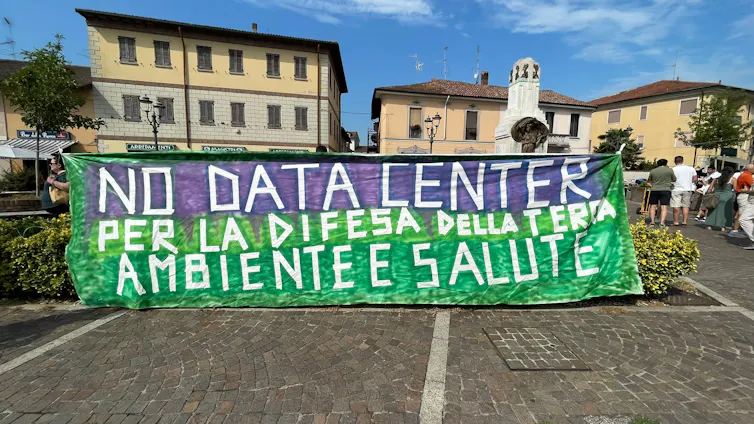
Data centres and genAI are becoming flashpoints of conflict. Local communities are pushing back against the construction of massive data centres that act like “server farms” for AI technology.
Protests have happened in major cities like Vancouver, in the working-class boroughs of New Jersey and villages in Lombardy, Italy. Communities are skeptical of the benefits of these centres, as reporting has shown their presence is linked to high water use and water pollution.
Local council meetings have become the new battlefield, where citizens are pushing back against data centres in their backyards, and urging pauses to construction or full moratoriums as New York State recently enacted.

Democratic decline and illiberalism
As right-wing populists, parties and policies gain traction in North America and Europe, liberal democratic institutions are weakening. The hollowing out of institutions in the United States and other western countries could impact the stability of longstanding water agreements between nations.
Combined with rising climate skepticism and a rejection of science as a basis for decision-making, this narrows the space for public and inter-state engagement.
In North America, U.S. President Donald Trump’s “America First” policies and climate denial are eroding co-operative norms and processes in the Great Lakes and on the Mexico-U.S. border.
Read more: Zombie water apocalypse: Is Trump’s rhetoric over Canada’s water science-fiction or reality?
Deep uncertainty

Experts have defined climate-related uncertainty as the “inability to predict the scale, intensity, and impact of climate change.” As the effects of climate change grow, previous predictions will no longer be adequate guides for future scenarios.
This means that the information and models that North American and European institutions have — once considered a key advantage in co-operative basin management — can no longer be relied upon to accurately manage transboundary waters.
There’s also disagreement on the very nature of climate problems and “which future state of the world will actually materialize.” This ambiguity means that there is no shared agreement on how to prioritize climate actions vis-à-vis national sovereignty concerns and water rights.
The fate of the 2015 Paris Agreement reinforces this point. No North American or European state is on track to keep emissions below 1.5 C and the U.S. has again withdrawn from the agreement. These uncertainties could disrupt transboundary water governance institutions (whether weak or strong) in the coming decades.
So, should we prepare ourselves for the “water wars” of the 21st century? No, not in the way that’s perceived in popular media. The picture is much more complex, but the absence of full-scale war doesn’t mean we’re in the clear.
The backdrop of the 21st century will be one where the world around us changes dramatically, and to protect our planet’s waters, we need to better understand these new economic and technological factors that underlie water disputes. That’s because the seeds of conflict are all around us.



















Comments are closed.