



The United States has now withdrawn from 66 international organisations, conventions and treaties, illegally invaded Venezuela, and promoted an “America First” agenda in its new National Security Strategy.
This all signals the collapse of a global system that has operated for the past 60 years. The old world order – driven by hyper-globalisation and US hegemonic power – is in its death throes, but a new era is yet to be born.



We now face a deepening ideological, strategic and military conflict over what shape it will take. The global “free trade” regime, overseen by the World Trade Organization (WTO), is one such battleground.
Largely designed to serve its strategic and corporate interests, the US now sees the WTO as a liability because of the economic ascendancy of China and a domestic populist backlash against globalisation and free trade.
But US antipathy to the current multilateral trade regime is not exclusive to the Trump administration. America has long resisted binding itself to the trade rules it demands other countries obey.
Congress reserved the power to review US membership when it authorised joining the WTO in 1994. Since then, both Republican and Democrat administrations have undermined its operation by:
-
calling for an end to the Doha Round of negotiations launched in 2001
-
breaking the WTO dispute mechanism by defying rulings that go against it, and refusing to appoint judges to the WTO Appellate Body so it is now moribund (effectively allowing rules to be breached)
-
and starving the WTO’s budget during the latest US review of international organisation memberships.
To date, Trump has not withdrawn the US from the WTO. But his administration seeks instead to reinvent it in a form it believes will restore US geostrategic and economic ascendancy.
Rewriting the rulebook
In December 2025, the newly-arrived US Ambassador to the WTO warned its General Council:
If the WTO does not reform by making tangible improvements in those areas that are central to its mission, it will continue its path toward irrelevancy.
“Reform” in this context means abandoning the cornerstone most-favoured-nation rule that requires all WTO members to be treated equally well, which is the bedrock of multilateralism.
The US wants to reinterpret the WTO’s “security exceptions” (which apply to arms trade, war and United Nations obligations to maintain peace and security) to allow countries absolute sovereignty to decide when the exception applies – effectively neutralising the rules at will.
The WTO would also cease to address issues of “oversupply” and “overcapacity”, “economic security” and “supply chain resilience”, which the US believes have enabled China’s growing economic dominance, leaving the way open for unilateral action outside the WTO.
In the stripped-down WTO, decision-making by consensus would be abandoned and multilateral negotiations replaced by deals that are driven by more powerful players on cherry-picked topics.
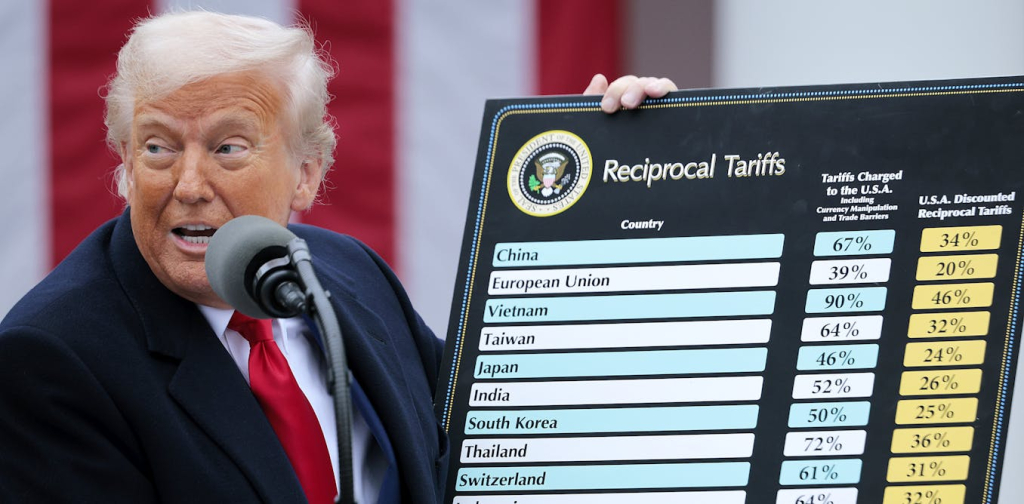
Unilateral action is not an idle threat. Trump has imposed arbitrary and erratic tariffs on more than 90 countries for a variety of “national and economic security” reasons, demanding concessions for reducing (not removing) them.
Those demands extend way beyond matters of trade, and impinge deeply on those countries’ own sovereignty. There is nothing the WTO can do.
Weaponising tariffs is also not a new strategy. President Joe Biden maintained the tariffs imposed on China during the first Trump presidency, triggering WTO disputes which remain unresolved.
But Trump’s embrace of raw coercive power strips away any chimera of commitment to multilateralism and the model that has prevailed since the 1980s, or to the development of Third World countries that have been rule-takers in that regime.
Where now for the WTO?
Some more powerful countries have bargained with Trump to reduce the new tariffs. China’s retaliation generated an uneasy one-year truce. Brazil held firm against Trump’s politically-motivated tariffs at considerable economic cost. Australia made a side-deal on critical minerals.
The European Union remains in a standoff over pharmaceutical patents and regulating big tech. India has diversified to survive relatively unscathed, ironically forging closer ties with China.
Less powerful countries are much more vulnerable. Among other obligations, the full texts of “reciprocal trade agreements” with Malaysia and Cambodia, signed in October, require them to:
-
replicate US foreign policy and sanctions on other countries
-
consult the US before negotiating a new free trade agreement with a country that “jeopardises US essential security interests”
-
promise to make potentially crippling investments in and purchases from the US
-
involve the US in regulating inward investment and development of Malaysia’s rare earth elements and critical minerals (Malaysia has large unmined repositories, an alternative to China)
-
and not tax US tech giants, regulate their monopolies or restrict data flows.
If implemented, these agreements risk creating economic, fiscal, social and political chaos in targeted countries, disrupting their deeply integrated supply chains, and requiring they make impossible choices between the US and China.
In return, the 2025 tariffs will be reduced, not reversed, and the US can terminate the deals pretty much at will.
This poses an existential question for WTO members, including New Zealand and Australia, at the 14th ministerial conference in Cameroon in late March: will members submit to US demands in an attempt to keep the WTO on life support?
Or can they use this interregnum to explore alternatives to the hyper-globalisation model whose era has passed?













Comments are closed.