


One Sunday morning, Juliet* woke up to an eager delivery driver with a large package she had no recollection of ordering. She was quick to dismiss it as an e-commerce mistake before the card inside helped solve the mystery: “To Sober Juliet, from your friend, Drunk Juliet.”
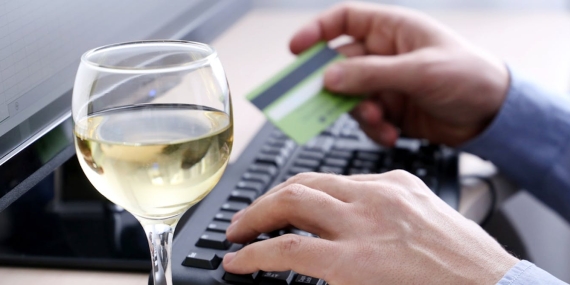
The fact this story was recounted to us while researching this topic illustrates the rise of a cultural trend that surprisingly few academics have explored. But drunk shopping is a rapidly growing consumption phenomenon.


Intoxicated consumers generate billions of dollars in annual revenue: by one US survey estimate, around US$45 billion a year. In the latest research I carried out with colleagues, we attempted to explore this phenomenon and its ethical implications further.
How alcohol affects a shopper
When alcohol enters the human body, it acts as a general disinhibitor, causing people to “let go” of the inhibitions that would normally constrain their actions and increasing the likelihood of engaging in foolish and risky behaviour. Psychologists call the underlying mechanism alcohol myopia: short-sighted information processing that is part of alcohol intoxication.
Alcohol reduces the scope and focus of attention, limiting both the range of cues that can be perceived and the ability to process them. Behaviour is based only on the most salient and impelling “go” cues in the environment, not the less salient and inhibiting “no go” ones.
While driving, this might mean missing the dog running into the road. Behind an electronic platform, it can mean that the inviting “buy now” button crowds out anything else on the screen.
People shopping while drunk may pay a great deal of attention to the payment process at the expense of other significant details, such as the amount of money they will spend or the selection of a preferred item. And this is not ordinary impulse buying.
We define drunk shopping as a context-specific form of impulse purchasing, distinct from consumption when tired or stressed. It reflects a situational, temporary impairment, not a chronic, trait-based vulnerability, such as being materialistic.

An environment built to remove inhibition
Prompts such as one-click purchasing, storage of credit card details, limited-time countdowns (for example, “offer ends at midnight”), and scarcity prompts like “only two left in stock” may merely increase the likelihood of purchasing out of convenience or persuasion when a person is sober.
But to alcohol-intoxicated consumers these prompts may have a disproportionately stronger effect by narrowing their attention and weakening their self-control. Intoxication does not create new stimuli; it alters the weight of these effects in the purchase decision.
While the transaction may appear voluntary, the underlying decision process is shaped by temporary impairment and digitally engineered environments that amplify impulsivity. You click the button, but all the conditions around it were carefully designed to make clicking as easy as possible.
Retailers probably know
Online platforms can anticipate when some users are operating under the influence of alcohol, through signals such as late-night contexts and jerky mouse movements.
But as companies can benefit from drunk shoppers, they may not do much to address it, and may instead effectively promote drunk shopping, for instance through late-night flash sales.
The obvious and defensive company response is that shoppers who bought something online can return the product. Yet most consumers never or rarely return such products, to avoid the hassle of the return process.
Existing consumer protection does not really cover this either. Current thinking treats consumers’ vulnerability as a given trait or a socioeconomic condition, and assumes rational, informed communication.
It does not fit a case where cognitive capacity is only temporarily reduced, or where the impairment is likely detectable from digital alerts.
What responsible retailing would look like
While consumers initiate the transaction, firms operate in environments designed to anticipate, amplify and monetise behavioural tendencies. This raises the question of whether firms should be held accountable not only for facilitating such behaviour, but also for failing to mitigate predictable harm.
In our paper we prescribe a “vulnerability mitigation mandate” for digital retailers: detect, disclose and defer impaired transactions. In practice that could mean impairment detection that pauses transactions, time-based ad restrictions, “cooling-off” periods before an order is finalised, or spending limits on platforms.
Some consumers already build such defences themselves: heavy drinkers may develop protective mechanisms to prevent unnecessary purchases, such as putting up a password barrier every time they try to buy. Even after a year of studying this topic we don’t have an answer as to why the burden of protection should fall on the impaired shopper rather than the profiting platform.
Juliet laughed off her “gifted” parcel, and most drunk purchases end as good stories as illustrated by the countless similar narratives on social media. But behind each such decision sits a platform that probably saw the signals, took the money, and asked no questions.
The next time “Drunk Juliet” goes shopping, the shop that never closes could at least learn to say: “Maybe sleep on it and let’s confirm in the morning.”
*Not her real name

















Comments are closed.