


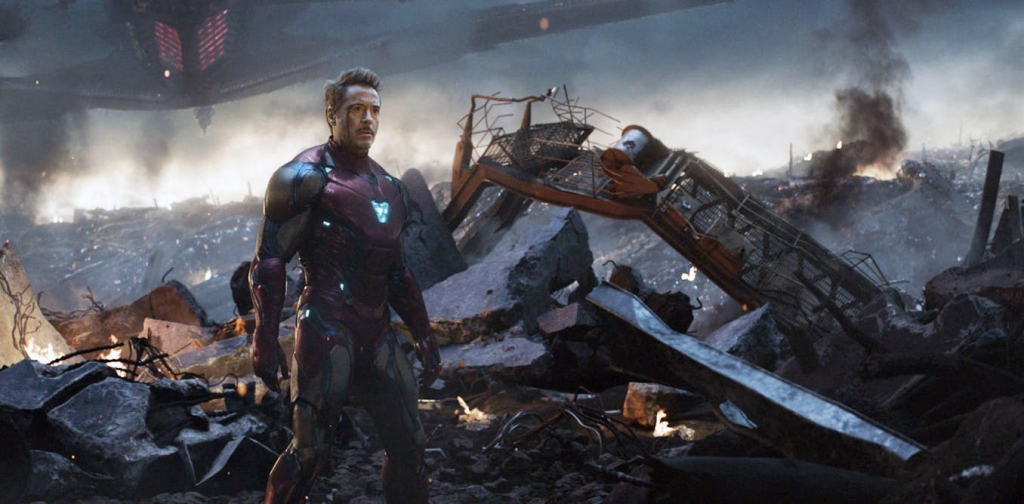

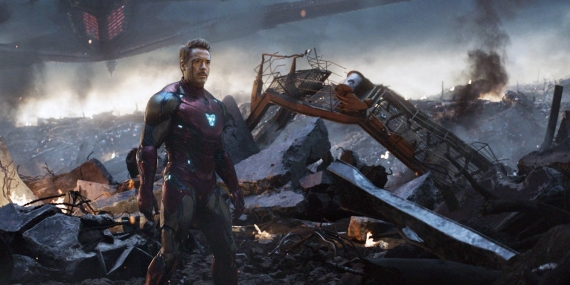
The rumours have been swirling around for several months, and now they’ve been confirmed with a shiny new trailer: Marvel is re-releasing 2019’s Avengers: Endgame on September 25 2026 – three months before its epic Christmas showdown, Avengers: Doomsday.
On the one hand, the encore edition of Avengers: Endgame makes perfect sense. Endgame was the epic culmination of the first leg of the Marvel Cinematic Universe (MCU) and the Infinity Saga – a pioneering cinematic project of 23 interconnected films starting with 2008’s Iron Man.



Iron Man, starring Robert Downey Jr, saved Marvel from impending bankruptcy and catapulted it back into the cultural mainstream. In addition, Avengers: Endgame is the highest-grossing film of all time and the highest-rated Marvel film with a 94% “fresh” rating on Rotten Tomatoes.
On the other hand, as someone who researches superhero fandom, the encore edition speaks volumes about how Marvel sees the past seven years of its cinematic oeuvre.
Essentially, the most recent Multiverse Saga (2021-) that followed the Infinity Saga (2008-2019) held great promise. In it, the surviving characters (like Loki or Doctor Strange) are continuing their stories and new characters (like Moon Knight and Ironheart) are expanding upon them across the Multiverse.
The Multiverse Saga also promised a more immersive experience with not just films, but also television series, offering in-depth explorations of characters both niche and mainstream. Needless to say, all share the same continuity in line with Marvel’s decades-old storytelling approach.
Disappointed fans
But my ongoing work on Marvel fandom reveals a lukewarm perception of the Multiverse saga. As the first slate of television series started hitting Disney+ in 2021, keeping track of so many characters spread across so many intersecting plotlines across both films and TV series became overwhelming for most fans.
Indeed, in characterising the Multiverse Saga, many Marvel fans I interviewed described watching it as akin to “doing chores” or “doing homework”.
Crucially, many have changed their Marvel strategy. As such, it went from gradual, serial immersion for most to something much more focused. Now one or two favourite characters are followed closely while all the others are blatantly ignored or, in the best case, “checked out” on Wikipedia or internet forums. This problem traditionally plagues many serial narratives, but seemed to have escaped the Marvel Cinematic Universe in its Infinity Saga days.
This consumption dynamic is well-reflected in both media coverage and box-office performance. Here, media headlines such as, There is no getting back on this ride (The Aftermath) and How Marvel lost its way (TIME), are revealing.
With regards to box-office performance, the tide started turning with 2023’s The Marvels and has reverberated ever since. To date, several flagship Multiverse Saga releases barely made their money back (2021’s The Eternals, 2025’s Thunderbolts* and Captain America: Brave New World). And, some are significantly underperforming relative to expectations and Marvel’s track record (like 2025’s Fantastic Four).
This poor performance cannot be explained away as mere “superhero fatigue”, since Marvel is doing better than ever in both comics and video games, while Spider-Man: Brand New Day is currently breaking box-office records.
Quiet admission
In this context, the re-release of Avengers: Endgame may be interpreted as Marvel’s quiet admission of its Multiverse Saga failures and the desire to shift everyone’s attention to the “good ol’ days” of the Infinity Saga, where everything worked as intended.
Several more facts support this interpretation, such as the overwhelming nostalgia factor of the upcoming Avengers: Doomsday, with Infinity Saga darlings Thor and Steve Rogers making a surprising comeback.
The encore edition will also feature new footage tying the events of Endgame directly to Doomsday (and thus bypassing some of the most recent developments). Not to mention the fact that Robert Downey Jr. – the legendary embodiment of the Infinity Saga’s Iron Man – is being wildly recast as Dr Doom, Doomsday’s main villain. Finally, many of the newly introduced Multiverse Saga characters (like Moon Knight, Echo, and Iron Heart) are conspicuously missing from the Doomsday roster.
To people familiar with superhero culture, the sudden break in continuity, immense nostalgia drive, and the discarding of the accumulated narrative is sad, but not surprising. Indeed, in the comic book days, both Marvel and DC (Batman, Superman) often resorted to a similar toolkit to give their franchises a fresh start or connect the “good parts” together while throwing out those that didn’t work out.
Perhaps the biggest example of that is the Crisis on Infinite Earths 1985-86 event in DC Comics, where the entire preceding DC Universe was abruptly scrapped and a new one was built in its place, with some heroes and villains dying off, some disappearing, and some starting brand new trajectories.
Whether Avengers: Doomsday will amount to a full reset of the Marvel Cinematic Universe remains to be seen. But the Avengers: Endgame encore edition suggests that Marvel is already reaching for a familiar solution – when an expanding universe becomes too difficult to navigate, return to the narrative moments, characters and relationships that once made it coherent, and ignore the rest.
In that sense, Marvel’s challenge into the post-Doomsday future is not simply to make good films (as it often does) but to make its sprawling media empire feel like a proper universe again. And that is one in which audiences understand how the pieces fit together, why those connections matter, and, crucially, why they should keep following them.


















Comments are closed.