


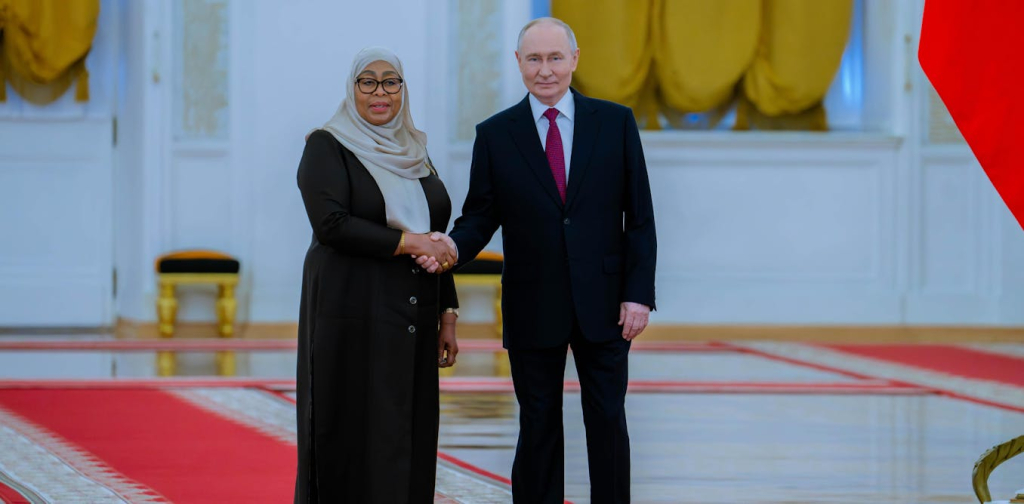

Tanzania’s foreign policy has changed in the past five years. There is a clear break from the mood, tone and actions of President John Magufuli, who ran the country from 2015 until his death in 2021. His rule was marked by challenges to foreign investors, an emphasis on sovereignty, reduction in international engagement and withdrawal from important legal commitments.
His successor, President Samia Suluhu Hassan, has adopted a different tone. Her administration has courted investors, repaired diplomatic relationships and presented Tanzania as open for business and cooperation.



It is tempting to explain this simply as a change in leadership style. Magufuli was combative; Hassan is more diplomatic.
But I argue that the change in leadership is only part of the story.
I am a scholar of international relations and African politics, and in a recent research paper I investigated the connection between Tanzania’s domestic politics and its foreign policy.
I found that the change in diplomatic approach reflected a change in the domestic distribution of power. That suggests foreign policy should not be treated as something separate from domestic politics.
This matters now because Tanzania has prevailing internal political pressures. The country is also seeking new investments, regional influence and global partnerships. Its future foreign policy will likely continue to reflect this balancing act.
Why foreign policy is also domestic politics
My analysis draws on fieldwork, interviews and document reviews. This uncovered how what was happening inside the ruling party and among elites shaped foreign policy choices. These choices have influenced policies on resource management, international legal commitments and regional engagement.
The idea of political settlements is helpful here. A political settlement refers to the informal bargain among powerful groups over who gets access to authority, resources and influence, and what compromises keep the political order stable.
These bargains are rarely written down. They are not the same as constitutions, elections or formal institutions. But they often shape how power really works.
In many countries, including Tanzania, political stability depends on embracing important groups. They may include ruling party factions, business elites, state officials, security actors, regional networks and social groups.
National leaders must constantly manage these relationships. Policies are chosen partly to reward allies, weaken rivals, build legitimacy or keep a coalition together.
This is why political settlements matter for foreign policy. A government’s relationship with foreign investors, international courts, regional organisations or major powers can strengthen some domestic groups and weaken others. International engagement can bring resources, legitimacy and opportunities. But it can also bring scrutiny or empower domestic opponents.
Foreign policy is therefore part of the struggle over power at home.
How domestic power struggles shaped policy abroad
Tanzania is a useful case because its foreign policy has changed several times since independence in ways that reflect domestic political priorities. Founding president Julius Nyerere’s foreign policy was shaped by African socialism, Pan-Africanism and support for liberation movements. Later governments moved towards “economic diplomacy” in the early 2000s. Investment, trade and development partnerships became more important. Business-oriented networks within the ruling party, Chama Cha Mapinduzi, had more influence.
The Magufuli period marked another shift. Magufuli came to power in 2015 as a compromise candidate after factional struggles within Chama Cha Mapinduzi. He moved quickly to centralise authority. He weakened party factions, sidelined some powerful business networks and concentrated decision-making around the presidency.
His political settlement was narrow and highly personalised. Rather than relying mainly on elite consensus, his appeal came from an anti-corruption and nationalist agenda.
This domestic strategy had clear foreign policy effects. One important example was the mining sector. Magufuli’s government passed laws asserting greater state control over natural resources.
Read more: Tanzania-South Africa: deep ties evoke Africa’s sacrifices for freedom
Magufuli presented himself as defending ordinary Tanzanians against foreign exploitation. His policies also weakened business networks associated with earlier governments.
A second example was Tanzania’s withdrawal from the African Court on Human and Peoples’ Rights. The court, based in Arusha in northern Tanzania, had become an important channel for cases challenging state actions. The withdrawal closed off an avenue for opposition political figures and civil society organisations to challenge the state.
Hassan’s rise to power changed the domestic equation. The constitution provided for the vice president to take over after Magufuli’s death. But her position was not politically secure. She lacked a strong faction and faced resistance on multiple fronts.
To consolidate power, she sought to:
-
rebuild consensus within her party
-
bring sidelined actors back into the political fold
-
restore confidence among bureaucratic, business and diplomatic communities.
This required a different foreign policy.
Hassan’s administration moved to repair relations with investors and international partners. It returned to a language of economic diplomacy, regional cooperation and international engagement. The government reopened communication with foreign companies, promoted Tanzania as a destination for investment and linked external engagement to national development goals.
Yet the shift has not meant a full reversal of Magufuli’s policies. In mining, for example, the government softened the nationalist approach but retained some rules introduced under Magufuli.
Hassan must satisfy groups that favour renewed international engagement, as well as nationalists.
Why this matters beyond Tanzania
The significance of these findings extends beyond Tanzania. Many African foreign policies are still explained mainly through external pressure. They are also put down to presidential personality or abstract “national interest”. These factors matter, but there are others.
The Tanzanian case shows that foreign policy can stem from managing domestic coalitions. This helps explain why governments sometimes make choices that seem economically costly, diplomatically puzzling or inconsistent. A confrontational stance towards foreign investors may damage friendships. But it can help a leader build domestic legitimacy or weaken rival networks.
On the other hand, re-engagement with international partners may look like a technocratic policy shift. But it can also help rebuild elite consensus and attract resources needed to stabilise a broader coalition.






















Comments are closed.