


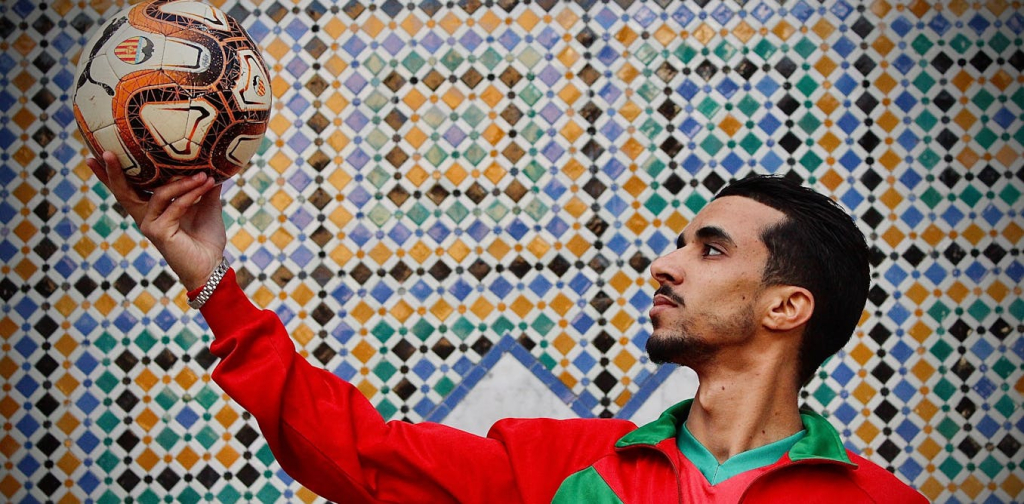

There was a dramatic increase in the number of countries able to qualify for the final stages of the 2026 men’s football World Cup. Of the 48 teams to qualify, global football body Fifa decided that nine would be African countries. This has functioned as a natural experiment for north Africa.
Four teams from the region arrived at the expanded tournament. They were Morocco (ranked 7th ahead of the cup), Algeria (28th), Egypt (29th) and Tunisia (46th). These are four neighbouring countries with comparable football cultures, but four different institutional choices – and four different outcomes.



Morocco consolidated its place as a top world team, Egypt made a breakthrough, Algeria was frustrated and Tunisia collapsed. These results reveal competing models of football development, and reopen an old debate about who should coach African national teams.
I’m a scholar whose research focuses on the intersection of football, politics, business and society, with an emphasis on north Africa. It’s clear that the region’s emergence as Africa’s most successful performer at the World Cup reflects more than sporting achievement. It offers valuable insights into long-term football development strategies, governance, talent pathways and investment models.
Morocco: winning on and off the field
Morocco’s historic 2022 semi-final run was framed as a fairytale. The 2026 tournament has shown it was the maturing of a system.
The Atlas Lions held Brazil, survived a penalty shootout against the Netherlands, then dismissed co-hosts Canada to reach a second consecutive quarter-final. Their campaign ended with defeat to France in the knockout stages.
Read more: Morocco’s fabulous football year – what’s behind their success on and off the field
Two features of this consolidation stand out. The first is coaching continuity. Mohamed Ouahbi, a Moroccan coach who built his reputation through youth development, was promoted after leading the country’s Under-20 national team to a World Cup title. His appointment reflects the Royal Moroccan Football Federation’s confidence in its own coaching pathway and long-term technical strategy.
The second is squad composition. Homegrown talent was combined with players of Moroccan descent who were born to migrant parents in other parts of the world. Among those domestic stars was Casablanca-born Azzedine Ounahi, a proud product of the state-driven Mohammed VI Football Academy.
This was not simply a “diaspora team” but a deliberately constructed hybrid. It combined sustained investment in domestic player development with the strategic recruitment of elite dual-national talent. Ayyoub Bouaddi exemplifies the latter. Developed in France through Lille’s academy and youth system, the 18-year-old midfielder chose Morocco in 2026 after protracted negotiations. His commanding World Cup debut demonstrated Morocco’s ability to attract some of Europe’s brightest young talents.
For Morocco, winning battles for allegiance has become as strategic as winning matches.
Egypt: milestones under a domestic legend
Egypt arrived without a single World Cup win in three previous appearances. Under coach Hossam Hassan – a national icon and pointedly domestic appointment – milestones came in succession. A first-ever win, against New Zealand; a first knockout qualification; then a first knockout victory, against Australia.
Their remarkable run ended in a spirited quarter-final defeat to Argentina. But Egypt clearly demonstrated growing competitiveness on the global stage.
The breakthrough was powered substantially from within. Emam Ashour, scorer of two goals, is an Al Ahly and Egyptian Premier League product. He’s proof that the region’s strongest domestic club league can still produce World Cup-level talent without routing it through Europe first.
Algeria: the glass ceiling remains
Algeria’s return after 12 years ended, once again, without a knockout win. A draw with Austria was followed by defeat to Switzerland. The irony was sharp: Algeria’s coach Vladimir Petković managed Switzerland for seven years, and his former team read his current one comfortably. The result has reignited a perennial Algerian debate over whether costly foreign technical direction delivers returns. Or might domestic coaches with deeper cultural anchorage achieve more?
Algeria continues to attract exceptional young talent. Take Ibrahim Maza, or “Mazadona” to Algerian fans. The Berlin-born, 20-year-old Bayer Leverkusen playmaker finished the group stage as the tournament’s most prolific dribbler, having chosen Algeria over Germany.
The challenge is therefore not identifying talent, but building institutions. Algeria will need to strengthen its domestic academies, coaching pathways and professional clubs while continuing to attract elite dual nationals.
Tunisia: a cautionary tale
A 5-1 opening defeat to Sweden prompted Tunisia to sack coach Sabri Lamouchi. Hervé Renard was parachuted in but the gamble failed. Defeats to Japan and the Netherlands completed a group stage with 12 goals conceded. Renard resigned after 18 days as, remarkably, the federation’s seventh coach since qualification began.
Tunisia’s collapse is less about players than institutions: chronic coaching turnover, a reported toxic atmosphere, and the reflex of reaching for a foreign saviour – at considerable financial cost – point to a governance failure no single appointment could repair.
Without greater institutional stability and a coherent long-term football strategy, Tunisia risks squandering a talent base that has historically been one of the strongest in Africa.
What the pattern suggests – and what it doesn’t
The two teams led by domestic coaches progressed; the two led by foreign coaches went home. Four cases do not make a law, and coach nationality is entangled with federation stability, academy investment and diaspora strategy. But the tournament complicates the long-standing assumption of dependency on European technical expertise as a precondition for African success.
Read more: World Cup history: a timeline of Africa’s greatest moments on the field
The more robust lesson concerns development models. Morocco’s academy-diaspora hybrid has produced consecutive quarter-finals and the tournament’s most coveted teenagers. Egypt shows that a strong domestic league remains a viable foundation. Algeria demonstrates that diaspora talent without institutional continuity hits a ceiling. Tunisia shows what happens when there is no model at all.
The region’s federations have four instructive case studies in how football nations are – and are not – built.
In my view, the gap between African football’s immense talent and its inconsistent international results is increasingly institutional rather than technical. North Africa’s contrasting experiences at this World Cup suggest that the continent’s next breakthrough will belong not simply to the nation with the best players, but to the one with the strongest football ecosystem.




















Comments are closed.