


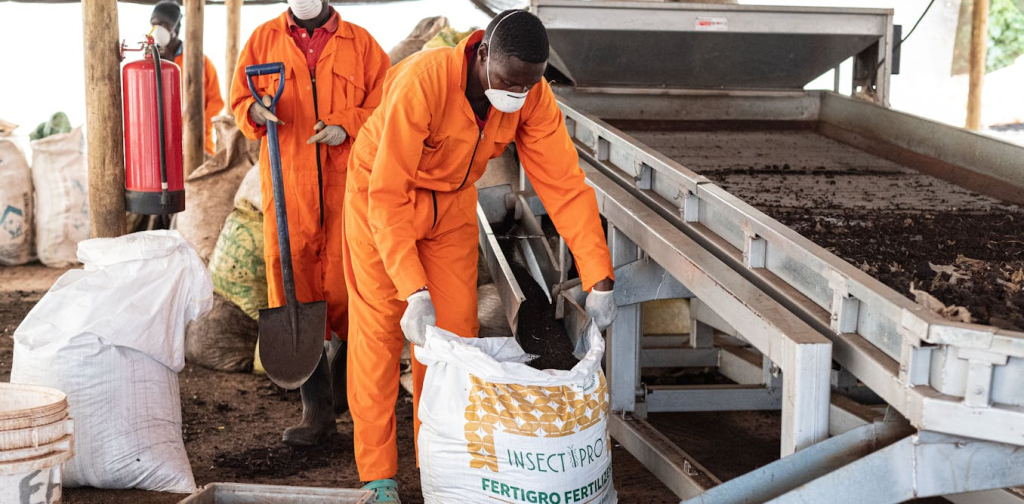

Conflict in the Persian Gulf is disrupting fertiliser supplies, and Africa’s food systems stand to lose.
Agrifood systems (the activities that connect the people, investments and decisions involved in producing and delivering food and agricultural goods) rely on a steady flow of inputs like fertiliser, along with markets, infrastructure and policy and trade decisions.

These food systems can absorb shocks and find new ways to keep supplies flowing under pressure. But they are also sensitive. A disruption in one part of the system has an impact on others, as the conflict in Iran that erupted in late February 2026 shows clearly.
Read more: Iran has a powerful new tool in the Strait of Hormuz that it can leverage long after the war
This is how the war on Iran affects sub-Saharan African farmers and food systems: the Gulf countries (which include Iran) are the biggest exporter globally of fertiliser ingredients. Iran alone is the fourth biggest global exporter of urea, a key ingredient in fertiliser – and one of the cheapest suppliers. Nigeria, Ghana, Togo, Kenya, Tanzania and North Africa all buy urea from Iran.
Qatar is another key urea producer and exporter but stopped making urea in early March 2026 because it needs gas to do so – and its gas plants were hit by Iranian missiles.
Shipping in the narrow Strait of Hormuz shipping channel next to Iran is down by 95% since the start of the war. This means the fertiliser that is still being made in Gulf countries has been prevented from leaving the region.
This is bad news for sub-Saharan Africa which imports about 80% of the fertiliser it uses. This comes from countries including Russia,, Europe, Ukraine, India, China and the Gulf states. Malawi, for example, imports 52% of its fertiliser from the Gulf. Morocco, Nigeria, South Africa also import ingredients from the Gulf states and use it to make fertiliser that they export.
Read more: Has the Strait of Hormuz emerged as Iran’s most powerful form of deterrence?
Fertiliser prices have already increased. And, unlike oil, there is no internationally coordinated strategic reserve for fertiliser. When the supply is disrupted, it stays disrupted.

I am a researcher and practitioner who looks at how evidence and policy can be used to make better decisions in food systems and agriculture. Recently, I was part of a team that investigated how to end hunger and all forms of malnutrition through changing the agrifood system so that nutritious food becomes more available, affordable, or accessible to poor and often rural communities.
We are especially interested in the kinds of interventions that attract investment from both the private and public sectors.
Read more: Africa’s superfood heroes – from teff to insects – deserve more attention
Our research found that food in Africa is often available but not affordable, safe, or diverse enough to make up healthy diets. For example, over the past 50 years government policies have pushed subsidies, price incentives and procurement programmes towards growing staple crops (maize, wheat, rice). But on their own, these crops are not very nutrient-dense. Focusing mainly on them means that more nutrient-dense foods have been crowded out.
Our research found a number of ways that Africa’s agrifood systems can provide more nutritious foods in future. This can also happen when fertiliser supplies are limited. We highlight some of them below.
From pandemic to war to Hormuz: Africa’s fertiliser shocks
Fertiliser disruptions and the damage to agrifood systems in Africa have happened before.
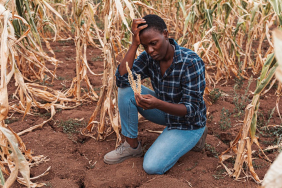
Between 2020 and 2024, fertiliser supply chains were strained by COVID-19 and then the war in Ukraine. African farmers absorbed those shocks through reducing the amount of fertiliser they used on their crops. But this led to lower yields, lower earnings and tighter household budgets.
Read more: Russia’s war with Ukraine risks fresh pressure on fertiliser prices
It’s important to remember that fertiliser supplies are entangled with decades of subsidy policy, public investment and debates about what kind of agriculture African governments should be promoting. They’re highly contested and politicised, shaped by history and power as much as by agronomic evidence and household economic choices.
The current threat of shortages is only part of the picture.
Ten ways for African countries to cope using less fertiliser
The food systems in Africa that survive the fertiliser crisis linked to the Iran war will be those that put in place nutrition-focused programmes and continue investing in innovations that reduce dependence on fertiliser.
Our report identifies ten high-impact interventions that improve nutrition and dietary outcomes. Several are particularly relevant right now:
- Farmers should start growing fruit, vegetables and pulses, and farming with trees (agroforestry). This improves the health of the soil and produces nutrient-dense food.
-
Home gardens can improve diets and household food security, if people get training and nutrition education.
-
Sustainable aquaculture (fish) and livestock farming, including poultry, boosts production and protein consumption.
-
Bio-fortified crops, such as high-iron beans grown in Rwanda and vitamin A-rich, orange-fleshed sweet potatoes in Mozambique, build nutrition directly into the crop during production. Because they contain more nutrients, they don’t waste as much fertiliser.
-
Storage and distribution infrastructure reduces spoilage of food. It also improves the quality of food.
Read more: Scientists are breeding super-nutritious crops to help solve global hunger
-
Foods can be fortified (have essential vitamins and minerals added) when they are being processed. These improve nutrition without requiring any changes in how food is grown.
-
Food and agricultural handling practices must be introduced to keep crops safe to eat.
-
Nutrition education helps people make better everyday food choices so that, when food is available, people eat more varied and nutritious diets.
-
Social protection programmes, such as cash transfers and food vouchers, help families during times when prices rise.
-
Providing school meals specially designed to be nutritious offers a high return on investment.
What needs to happen next
Our research emphasises that these interventions can only work as a bundle or package of support. Gender matters too; our research found that women don’t always get to eat nutrient dense food even when there is more available at home.
These interventions represent what we know works today. But governments and researchers should look beyond these too. For example, scientists at the Centre for Research on Programmable Plant Systems (including scientists at Cornell University) are engineering specialised plants known as “reporter” plants. A reporter plant is typically placed strategically in a field of crops to act as an early warning system.
They have developed a tomato plant, for example, that turns vivid red when soil nitrogen levels drop to critically low levels. This plant gives farmers precise, real-time information about what their fields need.
Tools like these could transform that relationship farmers have with fertiliser: reducing waste, cutting costs, and building a form of fertiliser intelligence into the farming system itself.





















Comments are closed.