



Long before sunlight sustained life on the surface, Earth’s internal heat powered the deep-sea vents where scientists believe life began.
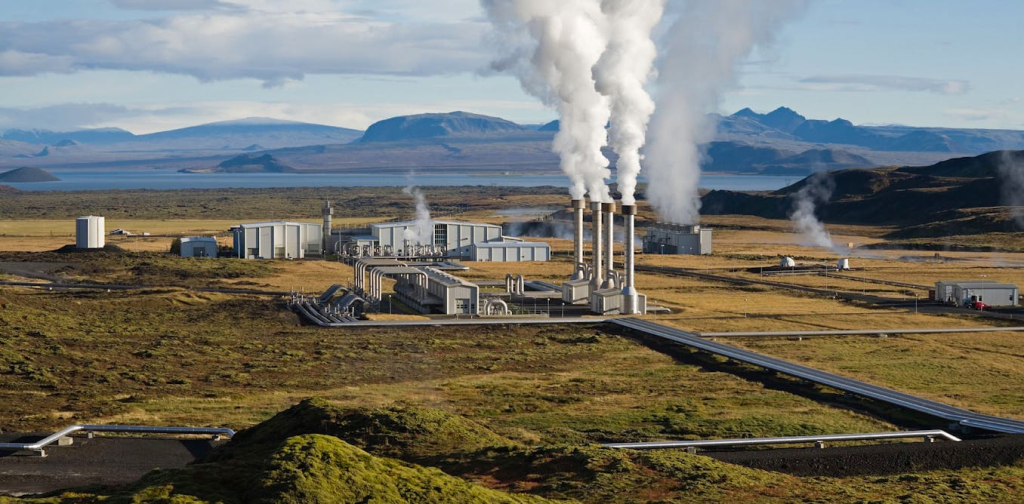
The immense reservoir of heat inside Earth keeps the planet geologically active. But it can also be very useful to humans. Geothermal energy represents a huge and largely untapped source of clean electricity available around the clock. The concept is simple: drill wells down to the heat and use heated water to drive turbines to make electricity.



As the world grapples with a major fossil-fuel energy crisis, governments and companies are looking for alternatives for a more secure future. After decades of development, geothermal is now ready for prime time.
Until recently, geothermal was limited to areas where heat was close to the surface – think geysers and volcanoes. But new deep drilling techniques are revolutionising the sector, opening up access to superhot rocks at temperatures above 350°C.
Our collaborative research with the Clean Air Task Force, a research nonprofit organisation, provides the first global overview of superhot rock geothermal potential, showing how much of this energy is available – even in regions with little or no volcanic activity such as Australia.
Why look to geothermal?
Unlike wind or solar, geothermal can produce power steadily, unaffected by weather or day-night cycles. It can also be built much faster and more cheaply than nuclear power. For countries looking to build cleaner energy systems, this combination is hard to ignore.
Conventional geothermal plants produce power in more than 40 countries. Iceland gets almost a third of its electricity from geothermal, while the United States and Indonesia have the largest installed geothermal capacity.
But geothermal is a minor player globally, providing only around 1% of renewable electricity generation.
That’s likely to change rapidly. Next-generation geothermal removes many earlier limitations. The International Energy Agency forecasts that it could rapidly become a major source of clean power, provided the industry can cut costs as solar, wind and batteries have done.
US researchers estimate geothermal could supply up to three times as much power as nuclear within 25 years.
More than two dozen countries are working to build more next-generation geothermal power. This is likely to accelerate. Superhot geothermal pioneers include Iceland, New Zealand, the US, Japan, China and several European Union nations.

What does next generation geothermal look like?
Older drilling techniques required months to drill the wells. The new technologies make this much faster, at up to 30 metres an hour.
New geothermal technologies make it possible to drill into much deeper and hotter parts of the crust than ever before.
Drillers can now reach depths of 5 kilometres to target superhot rocks, whose temperatures can exceed 350°C. Still newer methods could reach depths of 10km.
Under extreme heat and pressure, water at these depths changes into a supercritical fluid. In this form, it can carry up to ten times more energy than either steam or liquid water.
If every litre of water carries much more energy, geothermal becomes much more powerful – and scalable. Researchers estimate tapping 1% of the world’s superhot rocks could meet global electricity demand eight times over.
Better drilling technologies have another benefit – access to these superhot rocks in a far wider variety of settings. You don’t need to drill near active volcanoes any more.
But superhot geothermal also has challenges. If not carefully managed, wells can lose flow, pressure or temperature over time. But if well-managed, superhot systems could operate for 30–50 years at costs comparable to wind-generated electricity.
Where could it work in Australia?
The technology isn’t totally new to Australia. Small geothermal power plants have been trialled, and underground heat is used to heat pools.
Large areas of Australia have strong potential for geothermal heating and electricity generation, according to assessments by the Australian Renewable Energy Agency, the Australian Geothermal Association and Geoscience Australia.
Preliminary estimates by the Clean Air Task Force indicate tapping 1% of Australia’s superhot rocks would provide the equivalent energy of 3 billion barrels of oil or 20 times the nation’s electricity use as of 2021.
Across parts of Victoria, Tasmania, Queensland, New South Wales and Western Australia, superhot rocks are likely to be at depths of 4–8km, meaning they should be reachable with new technologies.
As a major mining nation, Australia has vast experience in subsurface exploration, world-leading geoscience research and strong engineering and technical capabilities.
The clear overlap between geothermal and Australia’s existing capabilities means scaling up the industry could also provide jobs for workers leaving fossil fuel industries.
Why hasn’t it happened yet? Upfront costs and uncertainty.
Deep drilling is still relatively expensive, and predicting target temperatures at depth remains difficult. To date, there hasn’t been enough private investment to kickstart large-scale geothermal. Some promising resources in remote areas such as the Great Artesian Basin would require new transmission infrastructure.
Recent progress in countries such as the US, China and Germany show these challenges can be overcome.
Tapping Australia’s deep geothermal resources could unlock new sources of net-zero-emissions electricity for homes, industry and transport, as well as hydrogen production, data centres and critical minerals processing.
What would need to happen?
If Australia is serious about a cleaner and more secure energy future, it’s worth looking at the advances in deep geothermal.
The first step would be to create a new Australian roadmap for deep geothermal energy. This would bring together recent advances in drilling and subsurface exploration, support pilot projects, and encourage collaboration with global leaders.
If this succeeds, the heat that has powered Earth for billions of years could help protect its future.















Comments are closed.