


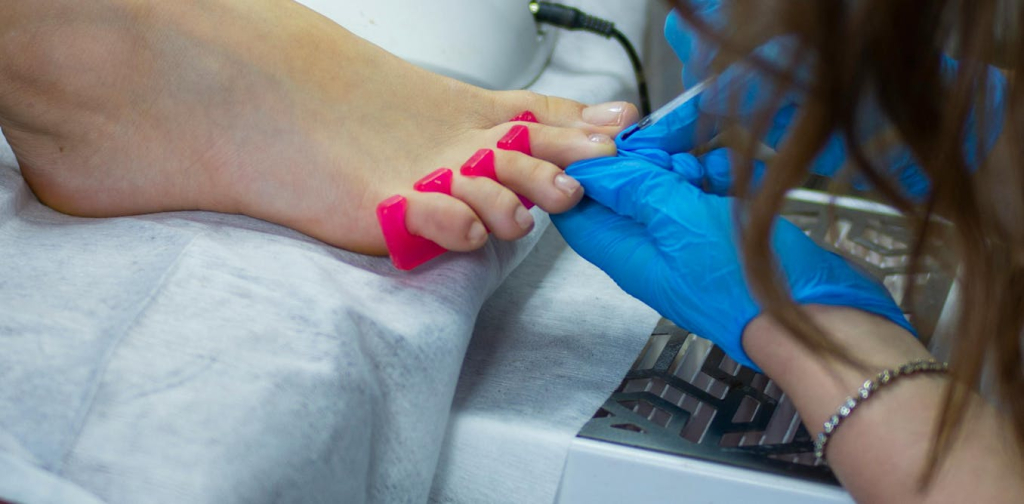

Manicures and pedicures are big business, with the global nail care market estimated to be worth US$23.5 billion.
But sometimes clients visiting nail salons come away with more than beautiful nails. Several women from Perth recently told the ABC they contracted severe infections after visiting nail salons for manicures and pedicures.



Western Australia Consumer Protection says it has received eight complaints about nail salons so far this year.
This has left some people wondering whether it’s still worth getting their nails done at a salon. So what are the health risks of getting a manicure or pedicure, and what should you look out for?
How can germs spread in nail salons?
Nail technicians have physical contact with multiple people over a short period in the same space. If someone has a bacterial, viral or fungal infection of their hands or feet, it can transfer to surfaces and be picked up by the next person.
This is more likely if surfaces and equipment are not cleaned or sterilised between clients.
The skin on our hands and feet is different to the skin on other body areas. It’s thicker and more sweaty, which bacteria, viruses and fungi love.
Skin on the feet can produce a quarter of a cup of sweat per day, and feet are often kept in dark, warm, damp shoes. This makes pedicures more of an infection risk.
Manicures and pedicures can challenge our natural defences. Any breach of our skin, nails or cuticles risks infection. Nail and cuticle cutting, irritation from nail polishes and removers, and skin or nail buffing can all cause trauma to our skin and nails.
Even a warm soak can cause the skin of our feet to become too soggy, especially between our toes, and more likely to let bugs in.
The nail salon environment also can upset our microbiome, which is a diverse community of bugs, including bacteria, fungi and viruses, that live on our skin. The members of this microbiome live in a delicate balance with each other, and with us. Introducing new bugs to our skin can upset this balance.
The use of electronic nail drills and files dislodges skin and nail fragments, and the bugs that live on them, into the air and onto our skin and other salon surfaces.
How hygienic are beauty salons?
International research has found beauty salon surfaces often contain fungi and bacteria.
One Polish study found 30% of the pedicure bowls contained the bacteria Staphylococcus epidermidis. This is common bacteria in our microbiome but can cause sepsis if it infects the body.
Sepsis is an extreme inflammatory response to an infection. It causes fast breathing, sweating, shivering and confusion. If left untreated it can progress to septic shock. This is when blood pressure plummets and organs begin to shut down.
Another Polish study found 70% of samples collected from the hands of beauticians contained mesophilic bacteria, a category of bacteria that grow best at body temperature and can cause severe illness if ingested. This includes E.coli, salmonella and listeria.
However it’s unclear if these findings directly apply to nail salons in Australia, as there don’t appear to be any studies that have investigated this.
What happens when you get an infection?
Reports from WA note bacterial infections of the skin around or under the nail led to one person needing to have their nail removed. In another case, a person was hospitalised with sepsis.
Bacterial skin and nail infections cause redness, swelling and pain, sometimes involving pus.
While most are treatable with antibiotics, if the bacteria is resistant or the person has health issues that delay healing, infections can cause permanent damage, or misshapen nails, fingers or toes.
Bacterial infections that don’t heal may require surgery to flush out the infection or, in rare cases, amputation to remove the dead tissue and stop infection spreading to other areas or organs.
Manicures and pedicures can also cause fungal nails. This fungal infection presents as a discoloured patch on or under the nail. These can be treated with over-the-counter anti-fungal nail medication, applied over several months. Without successful treatment, these infections change the nail structure, making it thick and crumbly.
While there are some reports of viruses such as human papilloma virus (which causes warts), hepatitis or HIV being contracted in beauty salons overseas, we aren’t aware of any confirmed cases related to manicures or pedicures in Australia.
I still want a pedicure. How can I reduce the risk?
Most risk associated with infection can be reduced by cleaning, sterilising and hygiene protocols.
Before you sit in the chair, check surfaces are being cleaned between clients.
Technicians should wash or sanitise their hands and use new gloves after each customer.
Make sure a new disposable bowl cover is applied before the pedicure sink is filled.
Ask about the instruments that will contact your skin. Are they single use? Or are they sterilised between clients, and if so how? Sterilisers that use chemicals or UV light are not as effective as steam sterilisers.
These precautions are likely to come at a cost: cheaper nail salons may be less likely to offer these protections.
Unfortunately, while there are state- and industry-based codes of conduct for the beauty industry, and nail salons must comply with work health and safety and public health acts, the industry itself is unregulated.
If a nail salon is disregarding public health by reusing instruments on multiple clients, complaints can be made to state-based health consumer agencies. If injuries occur, then the only recourse is seeking compensation through the civil courts.

















Comments are closed.