



Whatever your politics or profession, leaders who dominate our collective memory are rarely the quiet, methodical ones. They are the ones who stepped on stage or screen and made people believe in a vision, a company, a movement or a future. They all had charisma.
Think of leaders who have captivated the public imagination: Martin Luther King Jr, Steve Jobs, Margaret Thatcher. Not universally liked, but they all had something.



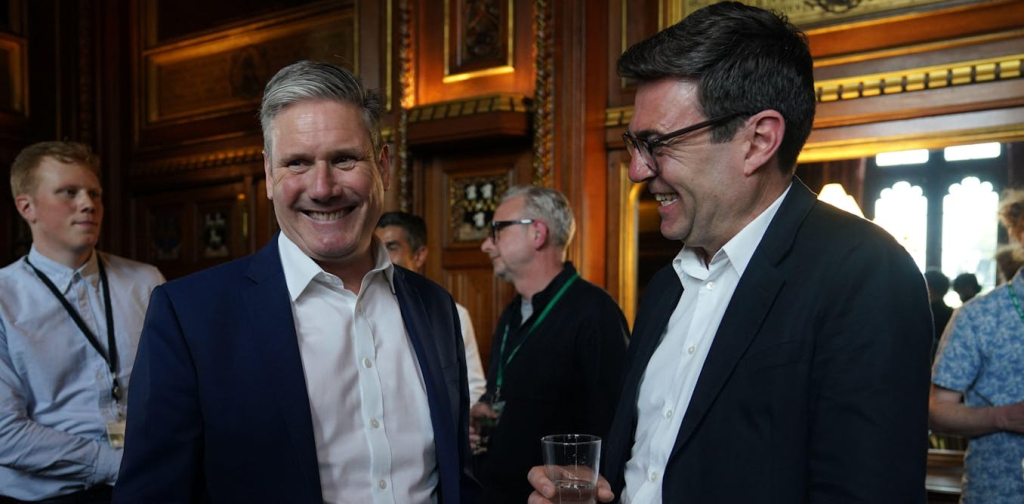
In contrast, the UK’s “deeply unpopular” prime minister, Keir Starmer, has suffered for his widely perceived lack of charisma.
So what, exactly, is this seemingly magical quality? And why of all the characteristics we might prize in a leader – competence, integrity, careful judgment, ethical courage – do we so consistently fall for it?
The word “charisma” comes from the Greek khárisma, meaning a divine gift or grace. The German sociologist Max Weber first applied it systematically to leadership in the early 20th century. He described charismatic authority as a form of influence rooted not in any formal rules, but in a leader’s extraordinary personal qualities.
Today, psychologists recognise charisma as a cluster of characteristics and behaviour that signal authenticity, emotional competence, persuasiveness, passion and enthusiasm – and which together mobilise followers towards a shared goal or activity.
Success influences perceptions of charisma, of course. Perhaps more worryingly, how someone looks is also important, and we form those judgments in an instant.
Ratings of charisma based on five-second silent video clips were found to correctly predict how some people judge leaders over much longer periods, using richer observations. In other words, we often decide very quickly whether someone “looks like a charismatic leader”.
Charisma is teachable
However, not everyone agrees that charisma is so superficial. Others, like the British sociologist Max Atkinson, believe it is primarily a social skill that can be taught. Perhaps, even to those who don’t have the requisite looks.
Indeed, few experts have done more to strip the mystique from charisma than Atkinson. His work focused largely on the content and delivery of political speeches – another key determinant of how people view a leader’s charisma.
In his 1984 book Our Masters’ Voices, Atkinson used systematic analyses of political speeches to demonstrate that what audiences experience as charisma in oratory is, to a considerable degree, the product of identifiable rhetorical techniques that reliably trigger applause and emotional engagement.
Atkinson identified a small number of structures that generate spontaneous applause in political speeches. These include two-part contrasts (“not this, but that”), three-part lists (“government of the people, by the people, for the people”), and the packaging of praise or attack in ways that signal to the audience when to respond in an immediate, unified way.
Such techniques have an immediate impact on judgments of charisma. They are not, however, accidents of natural talent. They are rhetorical devices at least as old as Cicero, and as teachable as any other communication skill.
Atkinson put this to a striking test in a 1984 Granada TV programme. He coached a speaker with no prior public speaking experience to deliver a conference address to the Social Democratic Party’s annual conference.
The coached speaker won multiple rounds of applause and a standing ovation. BBC commentator Sir Robin Day called it “the most refreshing speech we’ve heard so far”. The audience had no idea they were responding to a method.
This anticipated what researchers such as John Antonakis would later confirm: charismatic leadership involves specific, teachable behaviour. He identified both verbal features (including use of metaphor, storytelling, and rhetorical questions) and nonverbal ones (animated voice, open gestures, facial expressiveness).
Speeches that used more of these features received significantly higher ratings for trust, competence and leadership potential from independent raters. This work points to the same uncomfortable conclusion: much of what we experience as a leader’s natural magnetism is, in fact, a performance based on specific features that can be deliberately scripted.
Evolved strategy
Why, then, are we so susceptible to these signals? One answer comes from evolutionary psychology. Charismatic leadership is thought to be an evolved strategy for group coordination.
Our brains evolved in small-group environments where following an inspiring, confident individual in times of threat may have helped us survive because we acted together.
This may help explain why we are more susceptible to charismatic leaders in times of crisis. When things feel uncertain or dangerous, people might reach for the visionary. Yet the very leaders we feel most drawn to in those moments – the boldly confident, the certain, the inspiring – may not always be well-suited to navigating such complexity, if they resist the open-minded, ambiguity-tolerant thinking that difficult problems require.
There is another important consideration. The qualities that make someone appear charismatic overlap with some less flattering personality profiles. Studies have revealed positive correlations between charisma in leaders and narcissism.
While narcissism may help leaders rise to positions of power, it does not predict effectiveness once in those roles. Indeed, an inverted U-shaped relationship between charismatic personality and leader effectiveness has been found.
Charisma is clearly not without value. The ability to communicate a compelling vision, build trust and mobilise people towards a common goal is very important, as is the resultant hope.
But the modern obsession with charisma as a primary criterion for leadership can be distorting. We can end up giving too much weight to charisma in selection decisions, and too little to qualities like integrity, intellectual humility, and the willingness to say “I don’t know”.
The task of a sophisticated follower, whether in a boardroom, a ballot box or a town hall meeting, is surely to slow down, look past the performance, and ask harder questions. Remember, first impressions are not always right, but they are incredibly sticky.


















Comments are closed.